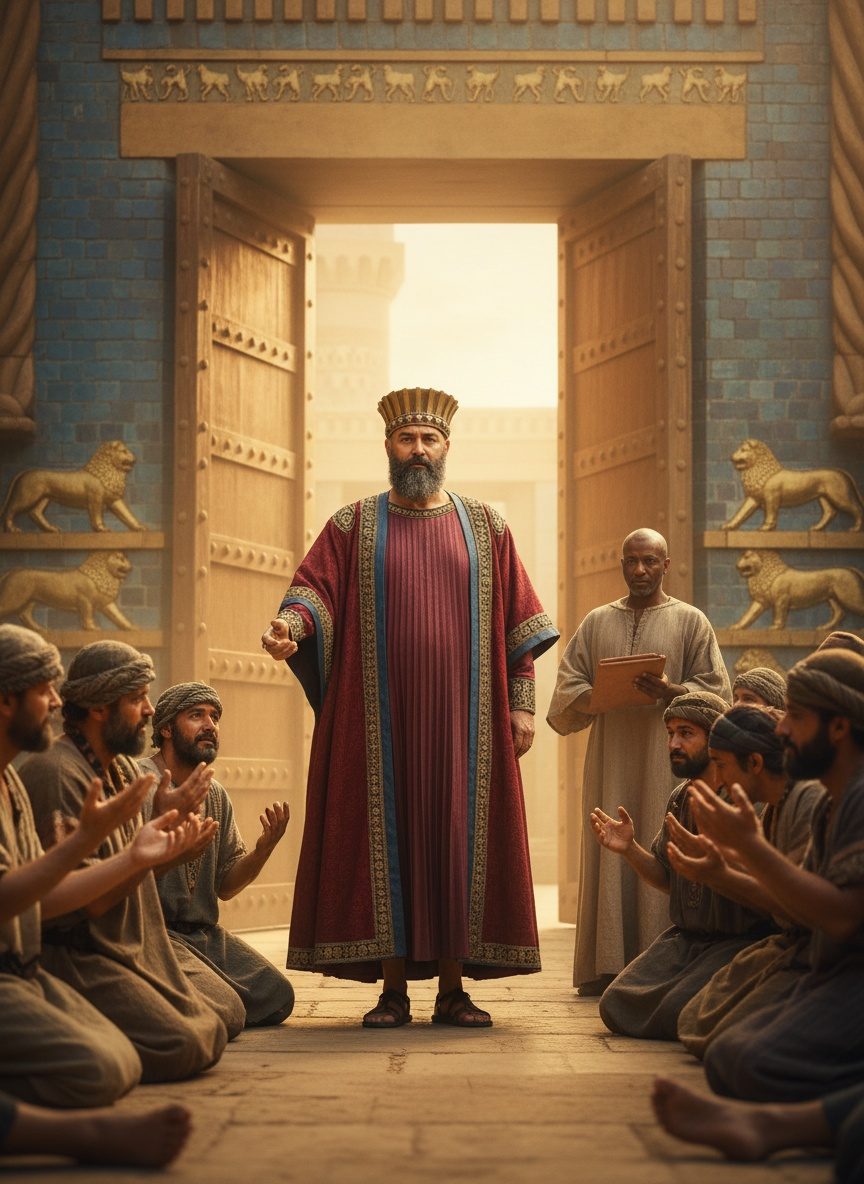
The sun beat down relentlessly on the dusty streets of Babylon as Cyrus the Great rode through its gates, the towering walls now bearing the standard of the Achaemenid Empire. The air was thick with anticipation as he approached a gathering of thousands, captives whose fate had hung in the balance. Among them, Hebrews, Assyrians, and Elamites stood shoulder to shoulder, their eyes fixed upon the man who, with a single decision, could change their lives forever.
The Crescent of Compassion
As Cyrus dismounted, his regal bearing commanded attention, yet there was a warmth in his eyes that belied the steely veneer of a conqueror. He steadied himself against the palpable mix of fear and hope that permeated the crowd. The Babylonians had long held sway over these people, nurturing an empire that thrived on their toil and submission. Now, with the city captured and its former king dethroned, change loomed on the horizon.
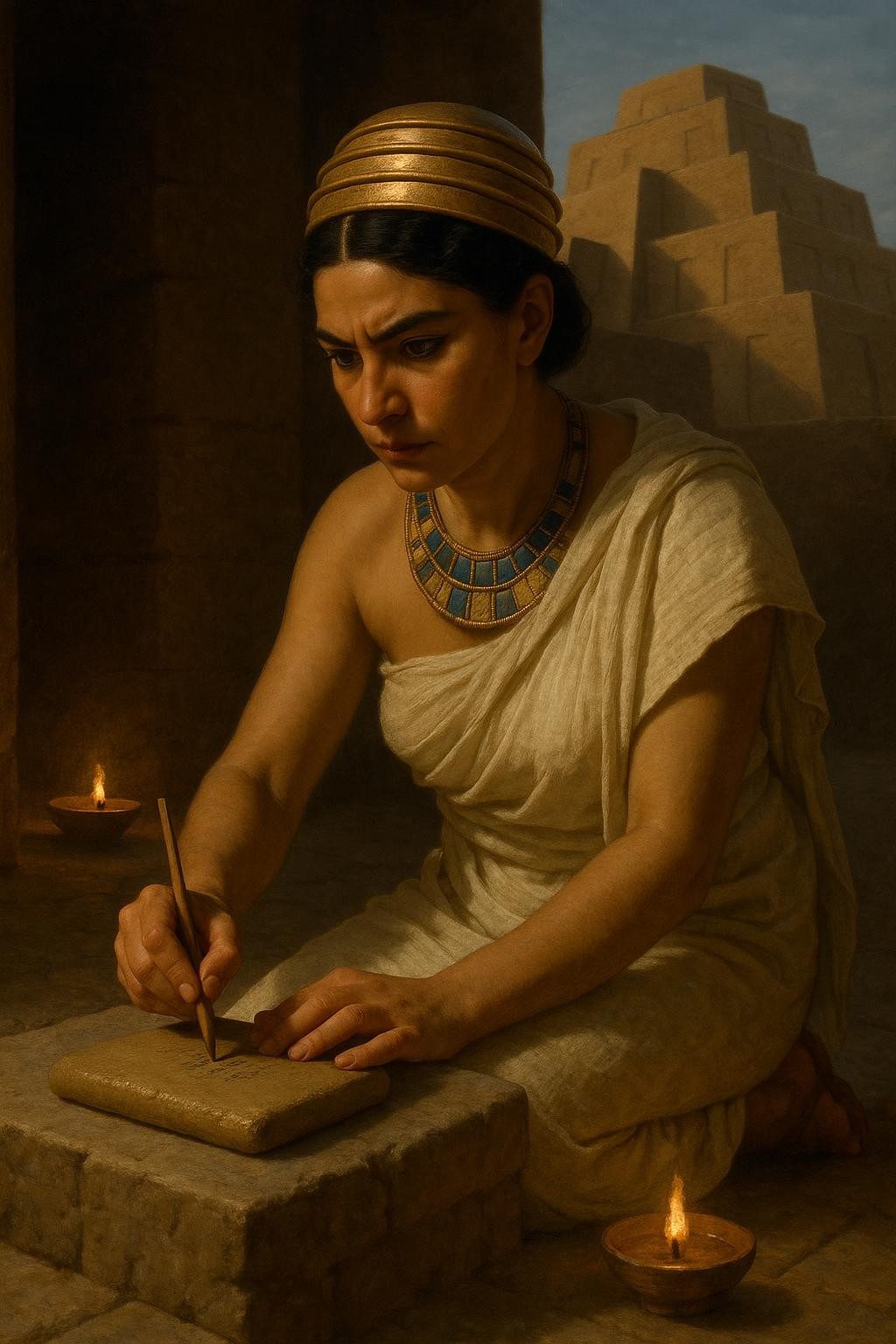
Cyrus's gaze swept over the throng. Their varied attire and accents told stories of lives lived far from this Mesopotamian capital. He was presented with tablets etched with the names of those who had been enslaved for decades. As he began to read aloud, his voice echoed with authority tempered by empathy. With each name, a little piece of shackled history was brought to light. The captives, whose existence had been reduced to mere ownership, stood in awe as they were addressed as individuals—as people with a past and perhaps a future once more.
The sight was unprecedented. No conqueror before him had publicly uttered the names of the subjugated, much less freed them. But Cyrus, with his sense of justice intertwined with political acumen, understood that true greatness lay not in submission through fear, but in unity through freedom. It was a calculated mercy, yet nonetheless genuine. He declared that these peoples—each culture a vibrant mosaic of the wider empire—would be freed to return to their lands. Amidst gasps and murmurs of disbelief, reality began to dawn; they were going home.
Treasures for the Liberated
Amidst the jubilant clamor, Cyrus raised a hand, and silence fell over the multitude. “To return empty-handed is no true return at all,” he declared, his eyes scanning the hopeful faces. To aid their journeys, he distributed gold coins, the glint of metal reflecting the newly rekindled light in their eyes. This was a stark departure from the norm, where victors often plundered and impoverished those they conquered. Yet Cyrus seemed determined to not merely release his prisoners but equip them to rebuild their shattered lives.
The very act served a dual purpose—facilitating the resurrection of stable frontier regions that could undergird the newly expanded borders of the Persian Empire. In providing resources for their renewal, Cyrus enhanced regional trade and goodwill, establishing a legacy of tolerance and integration that would become the foundation of his empire.
The freed captives were supplied with not only gold but, where needed, animals and provisions for the road. Ancient chroniclers, though tempered by the biases of their time, describe this act of benevolence as one that sparked a bond transcending the traditional dynamics of conqueror and conquered. It was one of the earliest recorded instances of a ruler implementing restorative policies to unite disparate peoples under a single political paradigm of dignity and shared prosperity.
As the crowds dispersed, laden with newfound hope and material means, Cyrus remained in Babylon, the once-mighty city that was now a living testament to a new kind of rule. Wisps of conversation floated through the air, recounting tales of support and respect; his acts had cemented his rule not just in force, but in the hearts of multitudes.
Weeping with the World
In the days that followed, chronicles tell of Cyrus meeting directly with the elders of various communities. From the Hebrews who had faithfully kept their traditions alive under the yoke of Babylonian oppression, to the Assyrians whose historical animosities ran deep, all found in him a ruler attentive to their stories. The anecdote goes that he openly wept with them, expressing genuine sorrow for the injustices they endured.
This anecdote, though perhaps embroidered through centuries of retelling, speaks to a profound truth about Cyrus’s approach; he was not just reshaping territories, but remaking relationships. By acknowledging the pain of the past, he allowed these communities to envision a future coalesced under his rule. His decisions echoed beyond the confines of Babylon's walls, embedding a legacy in which power was complemented by compassion—a balance that would inspire leaders long after the syllables of his name faded from common parlance.
Cyrus's enlightened governance sowed seeds of mutual respect, and later generations would benefit from the stable, diverse milieu he championed. His actions stand as a poignant reminder of the potential inherent in choosing empathy over dominance, an approach that remains rare in the chronicles of time. By freeing his so-called enemies, he claimed a far greater victory than any forged by the sword—a legacy immortalized not just on clay tablets, but in the hearts of a humbled, yet hopeful, world.