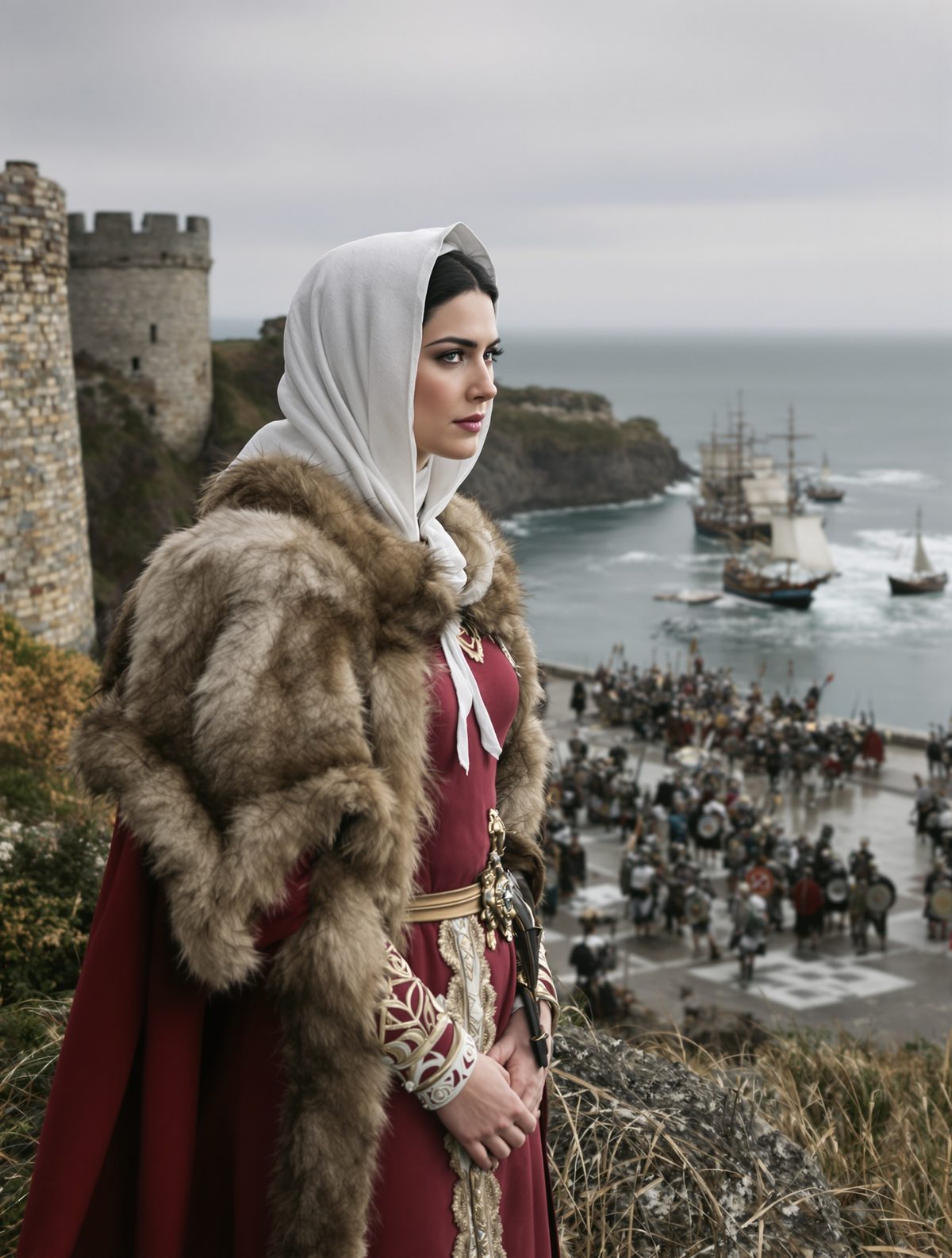
The chilly November air of 1095 carried a palpable tension as an eager audience gathered in a field outside the city of Clermont, France. Among them stood peasants, knights, and nobles alike, all anticipating the words of one extraordinary man—Pope Urban II. What they heard that day would ignite a firestorm across Christendom, journeying thousands in pursuit of a singularly holy mission. By the sermon’s close, thousands of men committed their very lives to a war unlike any before. This was not just a call to arms; it was the inception of a crusade.
The Unassuming Stage: Clermont, 1095
Though Clermont was little more than a town then, its role on November 27, 1095, was pivotal. In an era where communication was sparse and life was local, the pope’s unusual call for a council in France was the stuff of rumors and a unique opportunity for many to hear him speak firsthand. Crowds swelled as representatives from various realms arrived, each curious about the pope’s mysterious summoning that day. They stood, shoulder to shoulder, united in anticipation beneath the autumn sky.
The scene was both humble and monumental—a gathering in an open field, presided over by a man without an army, treasury, or a crown. Yet, it was here that Pope Urban II began his oration, guided not by any visible power but by divine authority and singular conviction. As he spoke, he wove a tapestry of spiritual need and promised salvation, igniting a spark that would soon consume Europe.
The Fiery Words: Igniting a Crusade
Pope Urban II addressed the throng in stirring tones, painting a vivid picture of the suffering of Eastern Christians at the hands of Muslim forces. He described the Holy Land, cherished by all, as being desecrated and urged the listeners to take up the cross—literally sewing the symbol onto their garments—as a personal pledge to liberate their sacred sites from “the infidel.” His words thundered through the assembly like a call to arms, an invitation to glory and eternal reward, offering those who would go the promise of full remission of sins.
It's believed that Urban emphasized a dual promise, both spiritual and earthly. His powerful rhetoric tied the notion of knighthood with pilgrimage—a pilgrimage not only of piety but one that was a warrior’s campaign. As he spoke, reports tell of cries from the crowd, shouting, “Deus vult!” or “God wills it!” a motto that would become the battle cry of the crusaders.
The Call to Arms: Preparing for a Holy War
The impact of Urban's sermon was palpable; across the European landscape, its ripple effect was immediate. Knights and common folk alike, seized by religious fervor, began preparations for the arduous journey ahead. Towns and villages buzzed with activity as metal was forged into armor and weapons, and ships were prepared for the maritime journey. Even women and children were not absent; entire families often joined the march, believing in the sacred cause. The promise of adventure and redemption transcended the ordinariness of their lives. For many, it was a path to holiness, a way to secure favor in God's eyes.
The crusade attracted some famous names, including Raymond IV of Toulouse, Bohemond of Taranto, and Godfrey of Bouillon. These leaders would soon emerge as figures of legend and lore, each drawn, like the masses, by the religious and martial allure espoused by Urban. Remarkably, this mass mobilization was achieved through sheer oratory prowess and religious zeal—Urban’s words had forged a mighty army without coin or coercion.
The Journey East: Trials and Tribulations
The road ahead was anything but assured. The assembled forces faced logistical nightmares, from sourcing food and water to the sheer challenge of traversing unknown lands. Thousands of men and women set off, marking a period where the fabric of society was tested as never before. Many would never reach Jerusalem. Along the way, accounts describe interactions—some peaceful, others violent—with local populations who were both curious and fearful of the passing tides of crusaders.
The first wave of crusaders, often termed the "People’s Crusade," was largely comprised of untrained peasants led by figures like Peter the Hermit. Driven by faith but lacking military acumen, they faced numerous perils and suffered greatly. Many perished long before reaching the Holy Land, a grim testament to the immense challenges of the endeavor Urban had initiated.
Legacy of a Sermon: Why It Matters Today
The reverberations from Pope Urban II's address in Clermont echo through history. The First Crusade set the stage for centuries of conflict and cultural exchange between East and West. It redrew the map of the medieval world and sowed seeds of religious tension that some argue persist to this day. These crusades marked one of the first major attempts at European unity under a common cause, albeit a martial one, highlighting both the unifying power and the potential peril of ideological zealotry.
From a single sermon, a movement was born—one that shaped medieval geopolitics, economics, and interfaith relationships. Today, it poses reflections on how words can marshal actions, sway destinies, and ignite transformative waveforms across time. At a moment when the power to influence masses seems boundless, the tale of Pope Urban II serves as a timeless reminder of both the potential and peril that comes from the pulpit of leadership.