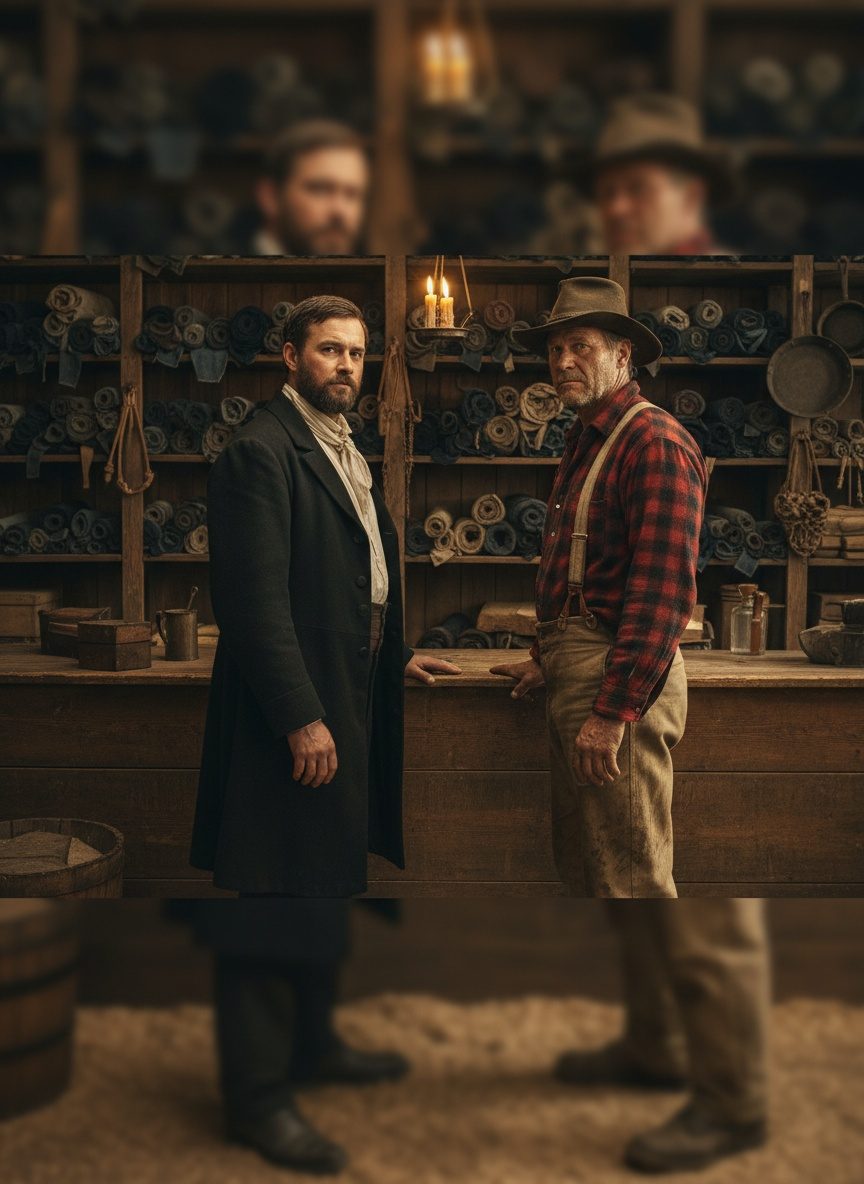
The air hung heavy with the scent of salt and opportunity, as fog rolled in from the Golden Gate, masking the feverish energy of San Francisco's docks. Sailors and fortune seekers jostled for space as they disembarked, their eyes fixed on the promise of gold hidden in the California hills. It was 1853, and the Gold Rush was at its height, transforming a sleepy settlement into a bustling hub of commerce and ambition. Among the throng was a young Bavarian immigrant, Levi Strauss, whose arrival with bolts of canvas and a dream would soon stir the world as much as the hunt for gold.
A New Arrival in the Promised Land
San Francisco in 1853 was an unruly tapestry of tents, wooden shacks, and burgeoning enterprises, all woven together by a singular goal: getting rich. The city pulsed with the incessant rhythm of hammers and saws, the bleat of mules transporting goods, and the boisterous exchanges of diverse peoples converging from every corner of the globe. Amongst this clamor, Levi Strauss, the son of a humble Jewish family from Bavaria, quietly sought his fortune not by panning for gold, but by providing for those who did.
Originally setting out to sell canvas for tents and wagon covers, Strauss found a different demand pressing among the rugged miners. Their arduous labor in the hills and creeks demanded a specific kind of clothing—something sturdy enough to withstand the rigors of their toils. Traditional work pants, often made of thin cotton, were shredded to tatters by the rough conditions and relentless demands of gold mining.
Strauss recognized a need, pivoting from his original plan. Taking the canvas he had, he fashioned trousers tough enough to stand up to the environment. While the first iteration was appreciated for its durability, the fabric proved too rigid for comfort. This small venture highlighted the spirit prevalent among the pioneers—adaptability in the face of rough, untamed land that held not just gold, but potential in every corner.
A Denim Revelation
The story might have ended with stiff canvas pants, had it not been for Strauss's willingness to innovate. Observing the miners' struggles with ill-fitting and easily destroyed garments, Strauss sought a different approach. He acquired heavier cotton twill fabric, known as denim, which combined durability with flexibility. These trousers offered the miners a surprising balance of resilience and comfort—a welcome change in their hazardous and tough living conditions.
Not content to stop with just his choice of fabric, Strauss coupled practicality with an innovative design feature that would become legendary. Teaming up with a Latvian-born tailor named Jacob Davis, Strauss introduced rivets at key stress points on the pants: the pockets and the button fly. This simple addition fundamentally transformed the pants, ensuring they wouldn’t burst at the seams when put to the test by the brute force applied by hard-working miners.
The combination of durable denim and reinforcing rivets created a garment well-suited for the rugged individualism of the Gold Rush era—a testament to the needs and desires of a frontier society demanding not just riches, but reliability in every aspect of life. As word of mouth spread through miner communities and beyond, these “waist overalls” became synonymous with the gold seeker’s uniform. Unbeknownst to Strauss and Davis, they had crafted an enduring icon that would outlast the very era that spawned its creation.
The Birth of a Legend
Over time, the practical design of Levi Strauss's trousers transcended the muddy mining fields and took root in mainstream American culture. As decades passed, the garments evolved in style and adaptation, yet their essential toughness and function never waned. The riveted denim pants became more than a miner's gear—they became a symbol of American grit and ingenuity.
The transition from the Gold Rush to the industrial revolution saw more occupations adopting Levi's rugged design. Railroad workers, cowboys, and later, during the Great Depression, those in search of any kind of employment, all found solace in these reliable trousers. They echoed the broader American narrative of perseverance and adaptation, transforming over the 20th century into universal attire.
Movie stars like James Dean imbued them with an air of rebellion during the mid-20th century, and by the late 1970s, they symbolized youth culture itself. Through generations, Levi's jeans—originally birthed from a need for durability amid the Gold Rush—became a canvas for self-expression with every rip and patchwork telling stories of individuality.
Today, the garments' journey from the muddy pits of California to the high fashion runways is a testament not just to their quality, but to an enduring ethos of innovation sparked by necessity. Levi Strauss’s legacy is more than a tale of commercial success. It’s a narrative about recognizing potential and reshaping industry from the most unlikely of places.
In a world constantly evolving with fashion's ebb and flow, the indelible mark of those first riveted denim pants reminds us of the power of practical innovation—a legacy underscoring how a simple solution to miners' woes crafted a garment of global cultural significance. The jeans tell of human enterprise in its essence: to forge something lasting and impactful from the humble thread of ordinary need.