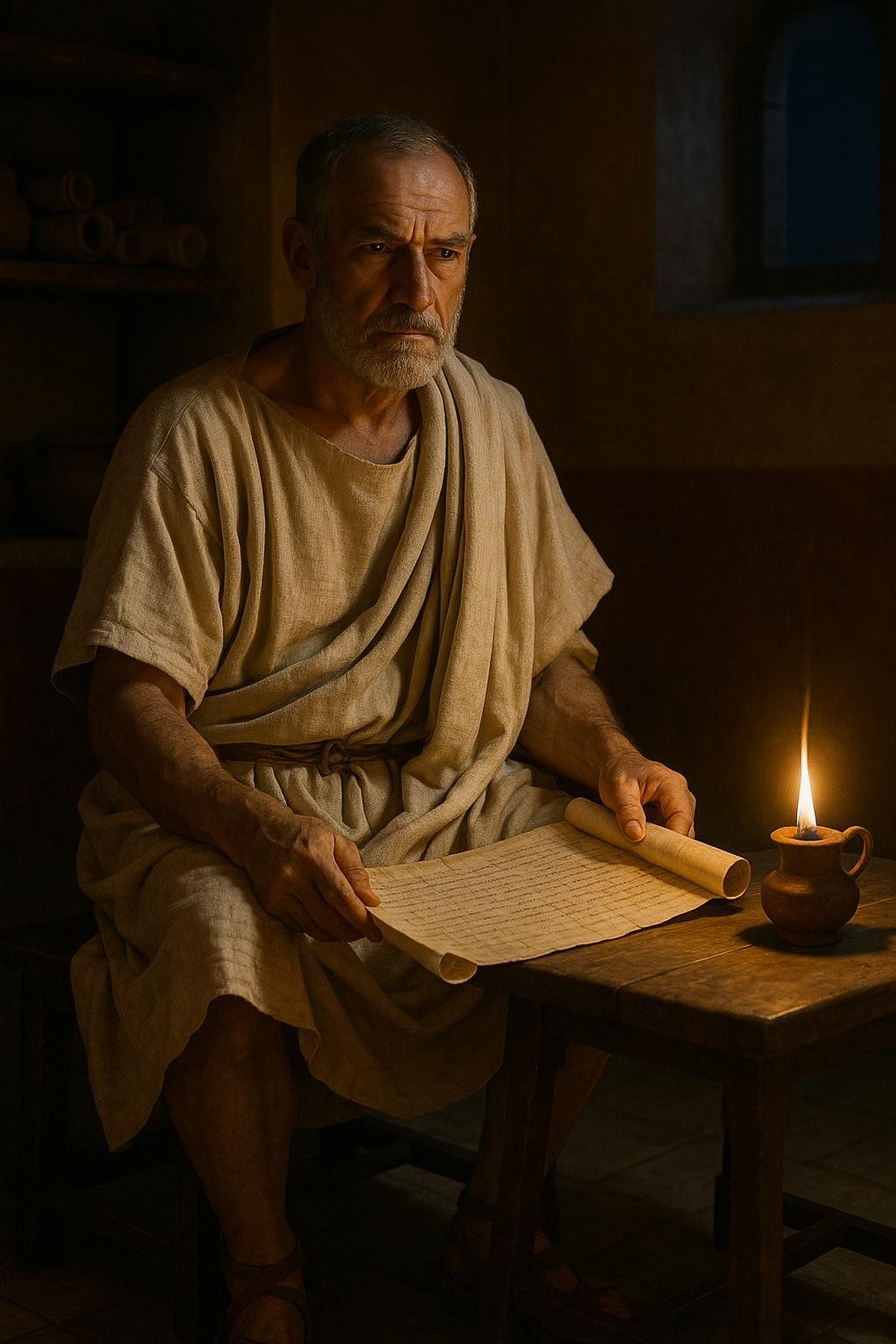
The candle flickered on a crowded writing desk, casting dancing shadows on the walls of the room. The brisk night air rustled the curtains as Cato the Younger thumped a book of philosophy onto the table, the sound echoing in the cavernous silence. Outside, the encampment of Julius Caesar's legions lay in anticipation, surrounding the city of Utica as men settled down for the night. Unfazed by the encroaching dawn of an empire raised on military victory, Cato's determined gaze remained fixed on his book, seeking solace in the timeless wisdom of ancient texts. Here, in this secluded corner of North Africa, a man stood in defiance, seeking a last refuge in the thought and stoicism that had sustained him throughout his life.
The Shadow of Defeat
Utica, situated in the fertile lands of North Africa, was anything but silent. The clatter of soldiers preparing for war permeated the air while anxious residents whispered rumors of surrender and survival. Yet in his quarters, Cato maintained a demeanor as steady as a stone pillar. For many years, Cato had served as the steadfast embodiment of the old Republic's virtues. To Cato, Rome was not a place of emperors ruling for personal glory; it was a republic governed by principles of civic duty and shared power. These principles had been eroded, crumbled by Caesar's relentless march of domination and ambition.
In 46 BC, Caesar stood triumphant, having squashed his opposition across battles whose names echoed fear. His ability to conquer and bring once-mighty generals to heel was unmatched. In the aftermath of the devastating battle of Thapsus, many of the Republic's ardent supporters chose paths of surrender or safety — some fled to distant lands, while others threw themselves upon Caesar's mercy. But here, in Utica, Cato found himself at a crossroads. He understood that after the steadfast struggle, standing against Caesar's tide seemed almost quixotic. Yet the prospect of kneeling before such raw ambition was an intolerable blow to Cato's unyielding spirit.
A Quiet Resilience
Cato's world was defined by his principles. A man of unmatched integrity, Cato had been steadfast in his opposition to corruption and decay within the Republic. He once stood in the Senate, his voice like thunder as he condemned the moral failings that rotted the heart of Roman politics. This was a man who understood that power was a responsibility, not a privilege to be wielded for personal gain. His battle against Caesar's authoritarian dream was less about personal enmity and more about defending a centuries-old way of life — a rigged game he had refused to play.
In his final days at Utica, Cato turned to the familiar words of Stoic philosophy. He read passages that spoke of virtue, duty, and the indomitable human spirit. The writings of philosophers like Zeno and Seneca offered him a comforting roadmap, guiding his thoughts to a place where he could find peace with his situation. While others debated and wavered, Cato remained unmoved, letting the written philosophy fortify his immortal convictions. It was as though the essence of these cherished texts held the key to unlocking his next actions, laying the path forward with lucidity and grace.
The Final Stand
In the dim light creeping across his room, Cato set the book aside, resigning himself to a future devoid of the Republic he cherished. The legions of Caesar outside his gate may have been an unstoppable force, but he possessed something the conqueror could never grasp: unwavering loyalty to the cause of Republican freedom. Choosing life under the weight of tyranny was a burden unbearable to his principles.
The decision his mind sought crystallized with the dawn. Cato knew that his end would be remembered: not as an act of despair but as the ultimate manifestation of his values. Apart from the noise and chaos, Cato chose to end his life on his own terms, embracing mortality in a manner befitting the noble heart and soul of the Republic. It was a resolution known only to a handful of trusted companions, carried out with the same calm dignity he exhibited in the face of worldly disappointment.
Echoes of Defiance
The sun climbed higher in the sky over Utica, casting its golden light on a city slowly rousing to the news of Cato's fate. At once, his act became the stuff of legend, interpreted and reinterpreted throughout the generations as the ultimate sacrifice at a time when personal ambitions sought to extinguish civic virtue. Despite the arrival of an expanding empire and new ruling echelons, Cato's decision rang loud in the annals of history, a venerated reminder of what it meant to remain defiant in the midst of decay.
For Rome, Cato's last resolve did not simply vanish into the ether; it lingered as a philosophical quandary — a poignant testament(!) to the unwavering commitment to ideals greater than oneself. In choosing liberty over life under dictatorial rule, Cato's legacy transcended the military conquests and power struggles, inviting future generations to reflect inwardly. What, after all, is the value of power if it demands the cost of freedom? These questions ensure his memory romped far beyond the sandstone walls of Utica, sparking debates over fidelity, governance, and the human spirit across the corridors of time.