The sun hung low in the afternoon sky over Deir el-Medina, casting long shadows across the arid landscape. Tiny clouds drifted lazily, offering brief moments of shade in the heat of the day. The ancient village, nestled on the west bank of the Nile, sat in silence, its mud-brick homes preserving secrets of those who once lived there. Beneath this solemn stillness lay a hidden love story that would remain untouched for millennia.
A Craftsman and His Devotion
In the New Kingdom, around 1400 BCE, Deir el-Medina was home to a special community of workers. They were the craftsmen entrusted with the construction and decoration of the royal tombs in the Valley of the Kings. Among these skilled artisans was a man named Kha. Regarded for his expertise as a "Chief in the Great Place," Kha was a master builder whose hands shaped the resting places of divine kings.
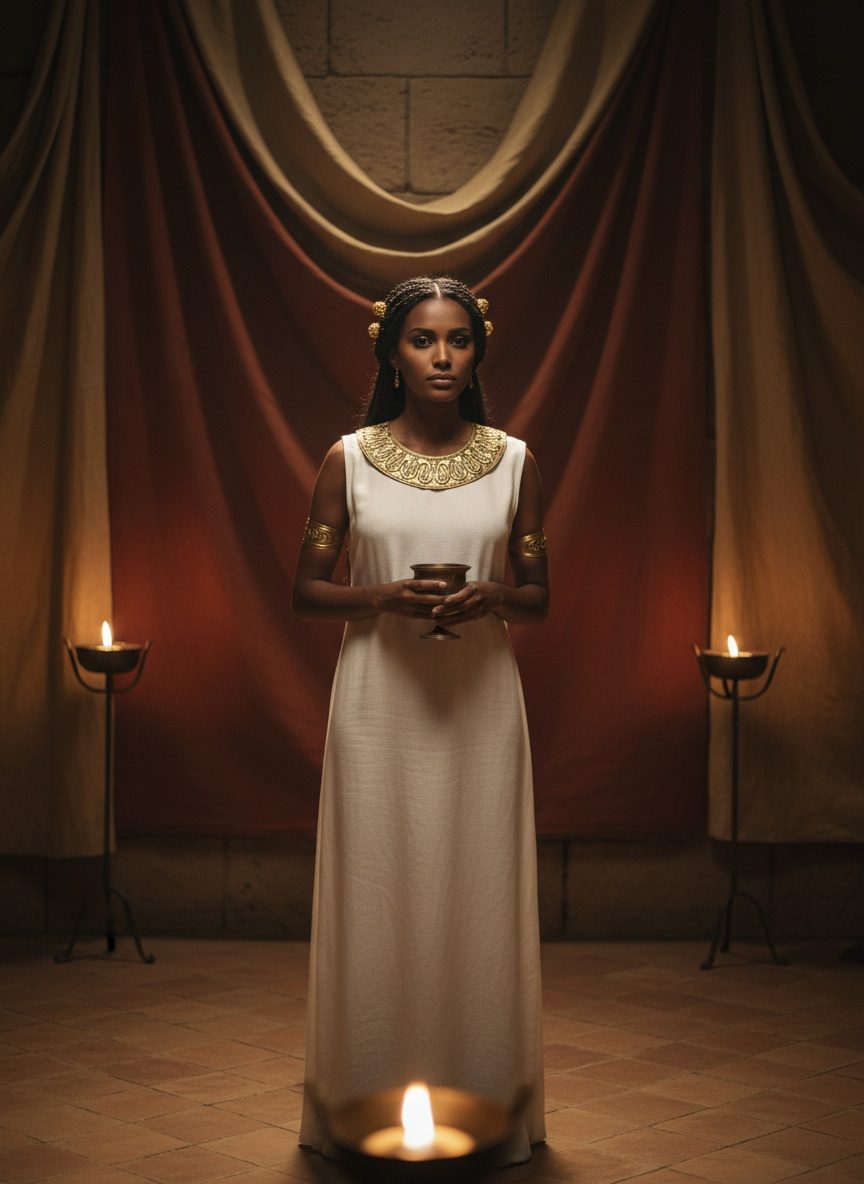
Yet, long before history would remember him for his work, Kha was part of a quieter tale. This was the story of his devoted marriage to Merit, whose name means "beloved." Their lives were intertwined not only through love but through shared purpose. Merit played a vital role in Kha's life, managing their household and storing the fruits of their labor. Their partnership was one of mutual respect and affection, reflected in the way Kha chose to honor her after death.
The Sealed Tomb
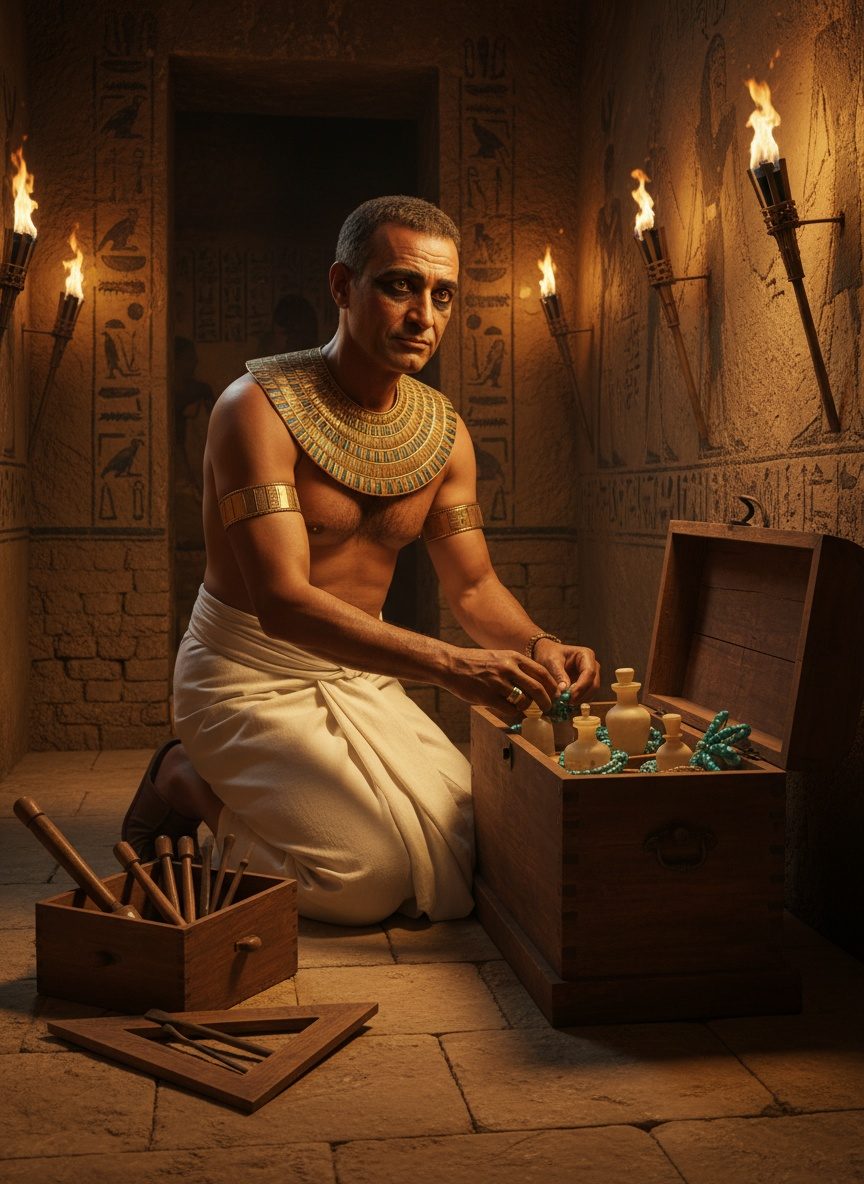
When Merit passed away, Kha's heart must have been heavy with grief. Still, he focused on ensuring that she would enter the afterlife with all that she needed. Tradition was that those entering the eternal realm were buried with items useful in life. For Kha, this meant leaving Merit not only with the beautiful jewelry and perfume that adorned her but also with all the tools he had used in his craft. Metal chisels, wooden staffs, measuring rods — he placed these in her tomb as a tribute to their shared life and work.
This tomb, chosen with care by Kha, was exquisitely prepared. It lay beneath the harsh desert surface, carved into the earth, a sacred room of rest. What set Merit's tomb apart was the care with which Kha sealed it. Ensuring the wealth within would remain unmoved, this act of sealing was more thorough than many a pharaoh's tomb. For centuries, robbers scourged the area, yet not a finger touched Merit's chamber. The love Kha enshrined within remained untouched by time.
A Time Capsule Unearthed
Fast forward to 1906, nearly 3,400 years after Kha had lovingly packed the tools into Merit's tomb. The quiet village of Deir el-Medina came alive again when famed Italian archaeologist Ernesto Schiaparelli uncovered the entrance to this undisturbed time capsule. Sunlight streamed into the dusty chamber for the first time in millennia, illuminating artifacts from a parallel world.
The spectacle was nothing short of breathtaking. Surrounding the elegantly prepared body of Merit were the objects that spoke of a vibrant life: containers of cosmetic powders, intricately crafted jewelry, and the tools from Kha's workshop. Each item told a story of daily life, from the mundane to the sacred, and of a household functioning harmoniously under Merit's care.
Schiaparelli’s findings profoundly impacted our understanding of ancient Egyptian life. These artifacts, untouched for thousands of years, revealed the material culture of a people known primarily for their monumental achievements. It provided a complex, intimate view of a world otherwise seen through the oversimplified lens of grandeur and power.
A Legacy Beyond Time
Today, Merit's tomb stands as one of the most remarkable examples of a complete burial from ancient Egypt. It reminds us that the lives of ordinary people like Kha and Merit hold immeasurable value. While pharaohs carved their legacies into the stone façades of monumental pyramids, Kha's love is etched into the simpler stone of a craftsman’s lifetime.
It is a love story that transcended empires, a husband's devotion that ensured his wife’s comforts and dignity long after death. In a world where the powerful often overshadow the everyday, Kha’s gesture invites us to look beyond kingdoms and crowns to see the quiet courage and tender care in lives once lived. As we look at the past through the lens of Merit's tale, we are reminded that even in eras driven by monumental ambitions, it is the most personal, sometimes human stories that resonate deepest across the ages.