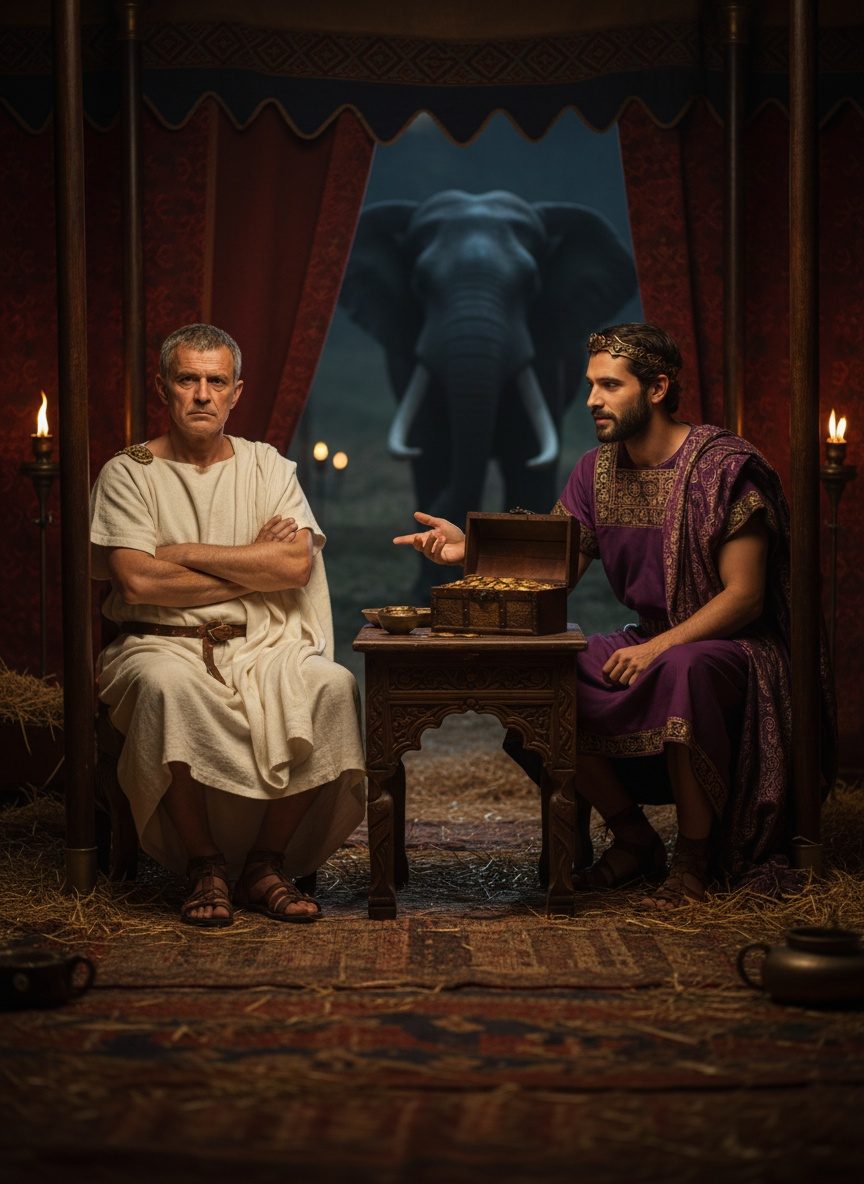
Khalid ibn al-Walid had never lost a battle. This time, he didn't need to fight at all.
The Unyielding Sword of Allah
In the early 7th century CE, Khalid ibn al-Walid was a name that sent chills down the spines of those who heard it. Known as the “Sword of Allah,” Khalid was an unstoppable force on the battlefield, a master tactician who had earned his reputation through a series of decisive victories during the early Islamic conquests. In 635 CE, his strategic prowess was once again on display at the gates of Damascus, one of the most crucial cities in the Byzantine Empire.
As the commander of the Muslim armies, Khalid’s directness and tactical genius were unparalleled. He was a general who valued swift, decisive action. Yet, what unfolded at Damascus was a display of his strategic flexibility, where he wielded not the sword but the pen to secure a victory that would echo through history. Most would have expected the scene at the city’s surrender to follow a predictable pattern of retribution and conquest. What Khalid demonstrated instead was a mastery of not just warfare, but diplomacy and statesmanship as well.
The Fortress at Damascus
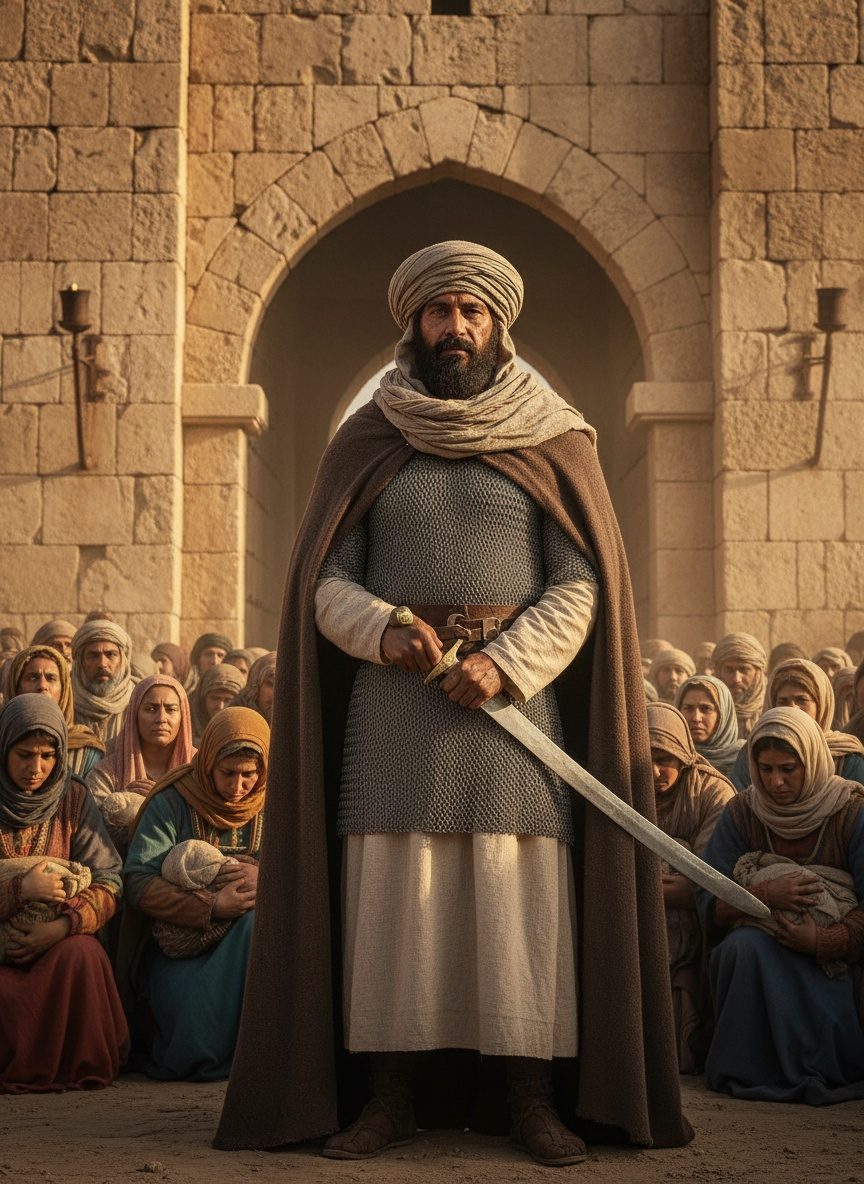
Damascus, a jewel of the ancient world, was a hub of culture and commerce. Its inhabitants, now refugees within their own walls, looked with anxiety upon the horizon where the conquering armies had pitched camp. The city was as much a fortress as it was a residence, girded by formidable defenses and accustomed to the Byzantines’ military rigor. Yet, the defenders knew that Khalid’s approach heralded an opportunity for them to avoid the grim fate so many besieged cities met.
From the dust of distant campaigns, Khalid came not just as a conqueror but as an administrator of mercy—or so history would soon recall. The terms offered to the city’s besiegers were shocking in their magnanimity. Instead of sacking the city—or leaving it a pyre of conquest, as was common practice—Khalid offered an assurance of safety for all its inhabitants. This was not simply a tactical ploy, but a calculated decision aimed at solidifying Muslim rule through respect and strategic benevolence.
The Choice that Defied Convention
The gates of Damascus opened not to the thunder of hooves but to an air of near disbelief. As the news spread through the beleaguered population, a collective sigh of relief mingled with incredulity: could it be true? The conqueror promised safety for all citizens, guaranteeing their lives, freedom, and property. Khalid’s adoption of clemency over carnage was an audacious counterstroke to the conventions of war. Those kneeling before him expected chains or swords; instead, they heard the terms read aloud that promised their freedom.
This decision was as much a message to the Byzantine Empire as it was a local remedy. Khalid understood that to maintain control over such a diverse and far-reaching territory required more than just military might. Victory through compassion could ensure loyalty longer than the fear of the sword. It served to integrate, rather than alienate, the newly subdued populations into the expanding Islamic realm.
Why Khalid’s Choice Matters
In a world where brutality often defined war, Khalid’s decision in Damascus stands as a beacon of unexpected mercy. It’s a story easy to overlook—a moment of choice that unfolded under the dusty Syrian sun—but it offers a glimpse into a strategy far richer and deeper than mere conquest. Khalid ibn al-Walid understood the strength of an act of mercy in stabilizing newly conquered territories, one of history’s more nuanced examples of leadership.
His actions left a legacy that would inform future generals and leaders on the benefits of diplomacy and empathy in governance. This turning point in the early Islamic conquests highlights a pivotal moment where the future was shaped not by battle, but by the humanitarian choice of a general who could see beyond his sword's immediate reach.
Today, Khalid’s remarkable decision in Damascus remains a profound reminder: sometimes, the most powerful victories are those where no blood is spilled, and the prisoners walk free. In a world of contemporary conflicts and conquests, the wisdom of ancient choices continues to underline the timeless value of human dignity and respect.