636 CE. Dust and echoes filled the air.
The Calm Before the Storm
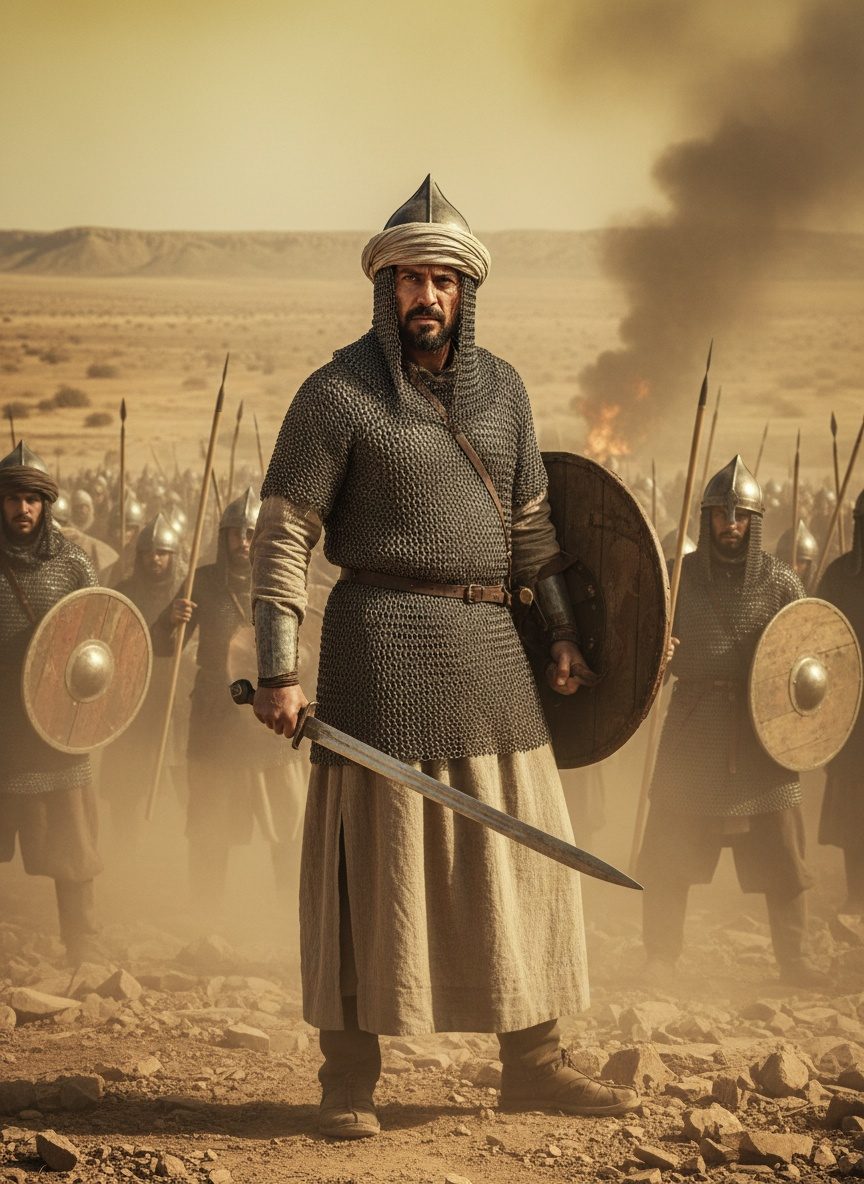
The land around the River Yarmouk lay dry and unforgiving, a rocky canvas stretching between jagged hills. Here, the fate of empires hung in the balance. On one side stood the formidable Byzantine forces, their banners fluttering defiantly in the wind. On the other, the nascent armies of the Rashidun Caliphate, led by a man whose name sent shivers down the spines of his enemies—Khalid ibn al-Walid.
Khalid, born into the influential Meccan tribe of Quraysh, had once been an enemy of Muhammad, even playing a pivotal role in the Quraysh's triumph at the Battle of Uhud. However, his conversion to Islam brought his indomitable prowess to the service of the Islamic cause. Known as "The Sword of Allah," his strategic genius was unparalleled, and his mere presence on the battlefield was often enough to sow fear among even the most disciplined foes.
At Yarmouk, the tension was palpable, as two well-matched forces prepared for confrontation. The Byzantines, led by commanders with reputations carved from countless encounters, sought to halt the Islamic conquests spinning across the Arabian Peninsula like wildfire. The warriors of the Caliphate understood that defeat meant not just the loss of territory but a retreat from the providential momentum Muhammad's religion had kindled.
Yet, amid the dust clouds and clattering armor, something far more personal and unexpected was brewing. Khalid ibn al-Walid, manifest with countless victories and unbroken campaigns, received an imperial scroll—a dismissal from command.
A Commander's Quiet Resolve
The inked parchment, likely crisp from its journey, bore shocking news. Caliph Umar, far from the fields of Yarmouk, made a bold, and many thought, foolhardy decision to replace his most skilled general with Abu Ubayda ibn al-Jarrah. To some, it seemed an incomprehensible risk on the cusp of one of history's greatest battles.
For any other commander, such a decree during the throes of a vital conflict might have shattered the day. Panic could have gripped the ranks, weakening resolve just when solidarity was most needed. Khalid, however, wasn't just any commander. In a move characteristic of his calm and composed nature, he digested the news, nodded in understanding, then carefully tucked the order away without a word of protest.
As battle trumpets blared and the roars of war crescendoed, Khalid maintained command. Under his leadership, the Rashidun forces executed a series of maneuvers so deft and fluid they remained subjects of military study to this day. Wheel formations gave way to violent surges—a mastery of both terrain and enemy mindset. The Byzantine coalition, vast and varied in its composition, was expertly unraveled like a tapestry pulled at its seams.
But why would Khalid remain quiet about his dismissal? Some suggested a relentless focus on the commitment to a just and divinely guided cause, others pointed to his personal ethos—victory belonged to the army and the commander's identity was secondary. Whatever the reason, Khalid's choice stands out as an epitome of self-effacing dedication.
The Unwavering Sword of Allah
The dust settled, the sun slipped towards the west, and on the fields of Yarmouk lay Byzantine hopes dashed and scattered. With the victory that would propel Islamic control in the region an accomplished fact, Khalid ibn al-Walid readied himself to honor the divine order of command. Approaching Abu Ubayda, he graciously handed over his sword, declaring the battle won but acknowledging the new mantle of leadership.
To the gathered soldiers, the transition was as seamless as the maneuvers deployed. Khalid, now a rank-and-file warrior, exemplified humility. He took his place among those he'd led, his actions reminding the world of an ancient truth—that power measured solely by title or position was fleeting. Strength came from unity in duty and trust in one's cause.
Why does this moment matter, whispered across the sands of time? It teaches not just about strategy or valor, but about profound character and conviction. It is a story that resonates through the ages, reminding leaders and followers alike that the greatest acts often occur quietly, echoing not with clamor but deep respect. Such historical narratives inspire—fueling drive and dignity in those striving to act selflessly under the world's crystalline eye.