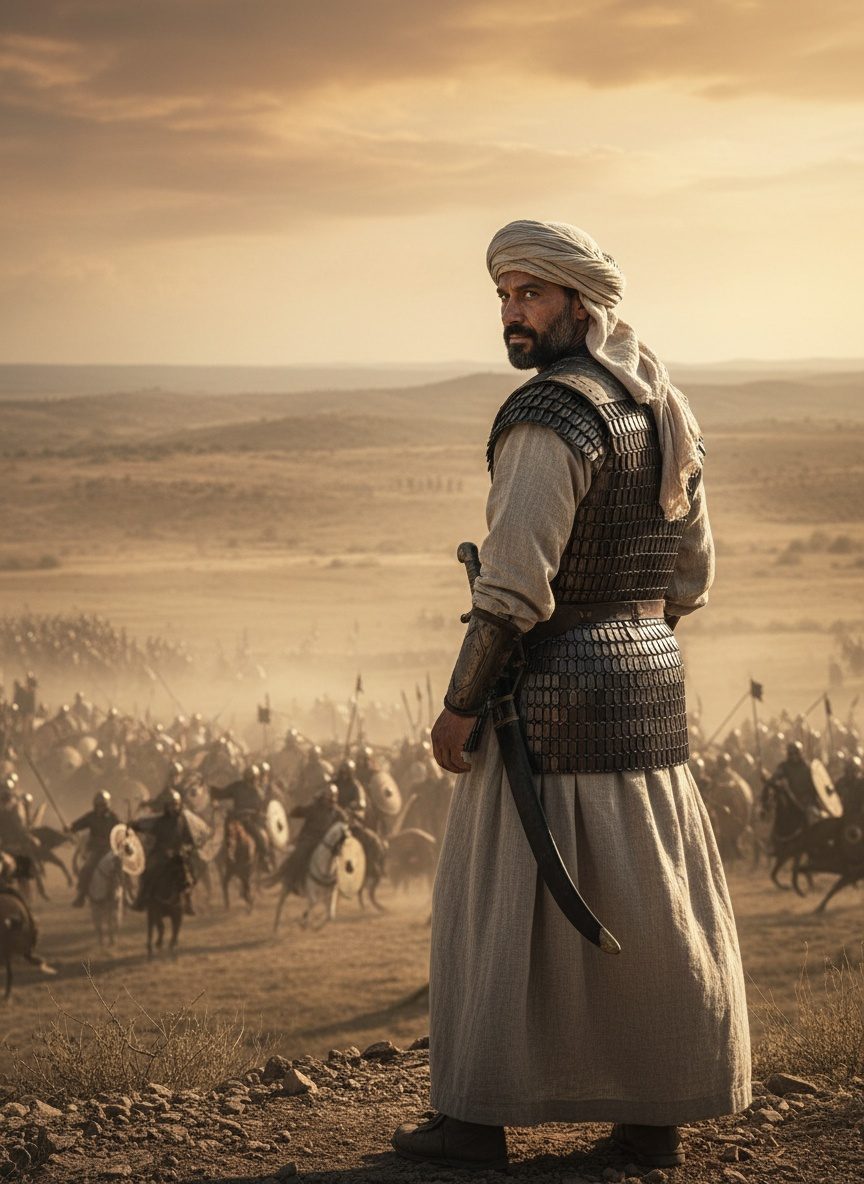
The sun gleamed mercilessly over the Yarmouk Valley, painting the landscape in harsh contrast as rocks and scrubland shimmered under the relentless heat. Dust rose lazily in the sluggish breeze, disturbed only by the unending shuffle of men and horses preparing for the inevitable clash. A low hum of anticipation buzzed through the ranks, broken by the sharp commands of officers and the jangling of armor and weapons. In 636 CE, this arid terrain was not merely a backdrop; it was the crucible in which the fate of an empire would be forged.
On this parched battlefield, Khalid ibn al-Walid, the Sword of Allah, prepared to unfurl his formidable strategic genius against the Byzantine Empire. Despite facing a foe four times larger, Khalid stood unperturbed. His eyes, like hawks, surveyed the Byzantine lines, calculating weaknesses, opportunities. His reputation was already the stuff of legend, a commander who had never tasted the bitterness of defeat across more than a hundred battles. The sands bore witness to his uncanny ability to turn the tide of war with maneuvers as fluid and unpredictable as desert winds.
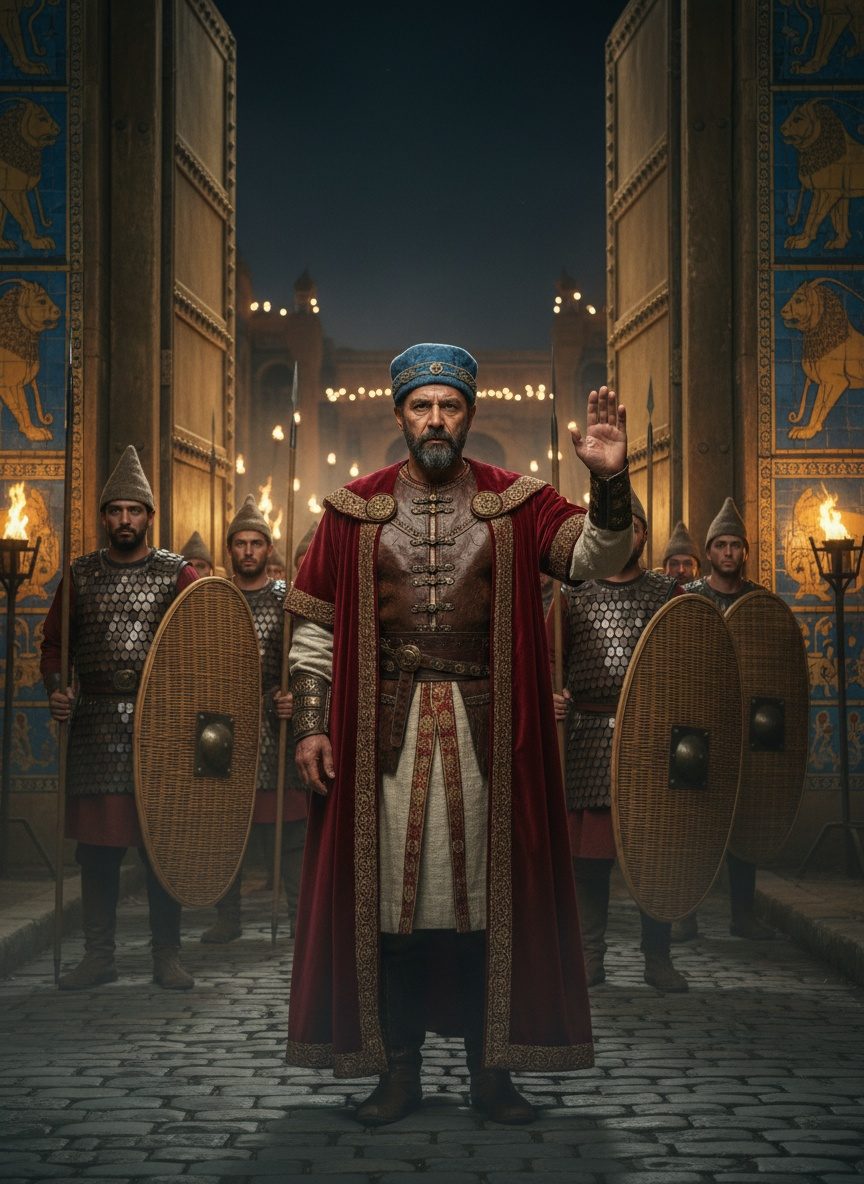
The Byzantines, a seasoned and iron-clad force, held numerical superiority, their disciplined ranks bristling with pikes and armor gleaming in the morning sun. Here, the sheer scale of their army seemed to preclude any thought of defeat. Yet, Khalid's mind was mapping the battlefield, a chessboard upon which he would maneuver his vastly outnumbered men. In a bold move, Khalid meticulously divided his forces into forty units, each one poised like an arrow to strike in sequence, keeping the enemy perpetually off-balance. Such was the confidence in his plan, and the necessity forged by his limited numbers.
As the battle unfolded, dust churned up from the ground and mingled with the cries of men, the clashing of swords, and the war cries that cut through the valley like a rolling thunder. Every charge and counter-charge orchestrated by Khalid chipped away at the enemy's formidable front. His brilliance lay in deception and adaptability, weaving a tapestry of chaos that led the Byzantines to see shadows where none existed. They searched frantically for the flank to their south, where Khalid was said to attack. Yet, it was nothing more than a mirage, a strategic ghost conjured by Khalid's deft hands.
This wasn’t just war; it was a master class in psychological warfare. Khalid used the terrain itself as an ally. The combination of his split-forces tactic and the flexibility with which he conducted operations left the Byzantine forces bewildered, their numerical advantage evaporating under the relentless and bewildering assault. In the span of days, this careful orchestration led to a resounding rout, the Byzantine forces breaking ranks and their retreat echoed through the valley—a fate unforeseen for the mighty empire.
Khalid ibn al-Walid’s ingenuity at Yarmouk secured not just a victory but a seismic shift in the balance of power. The victory spelled the beginning of the collapse of Byzantine control over the Levant, opening the door for the rapid spread of Islam throughout the region. Despite the myriad battles he fought, history remembers this particular one for the masterful application of his strategies, transcending sheer force of arms.
In the aftermath of Yarmouk, Khalid did not bask in triumph. Instead, his attention turned to consolidation and administration, understanding that the empire he helped carve from conflict needed governance and cohesion. What remains less remembered is his role in stabilizing these newly acquired territories—a crucial yet understated piece of his legacy. Through diplomacy and his renowned strategic acumen, he ensured the long-term stability and integration of the regions under Islamic rule.
Khalid ibn al-Walid’s story often serves as a fascinating footnote to the broader narrative of the early Islamic conquests. However, it prompts us to reflect on the nature of military genius—a blend of audacity, psychological acuity, and meticulous planning that defies mere numbers. His success lay not just in his ability to command but in the vision to see beyond the battlefield, understanding that the greatest victories are those that lay the foundations for enduring peace. In remembering Khalid, we are reminded that history is not just about the battles unlost; it is about the empires and legacies they create, and the stories that captivate us long after the dust has settled.