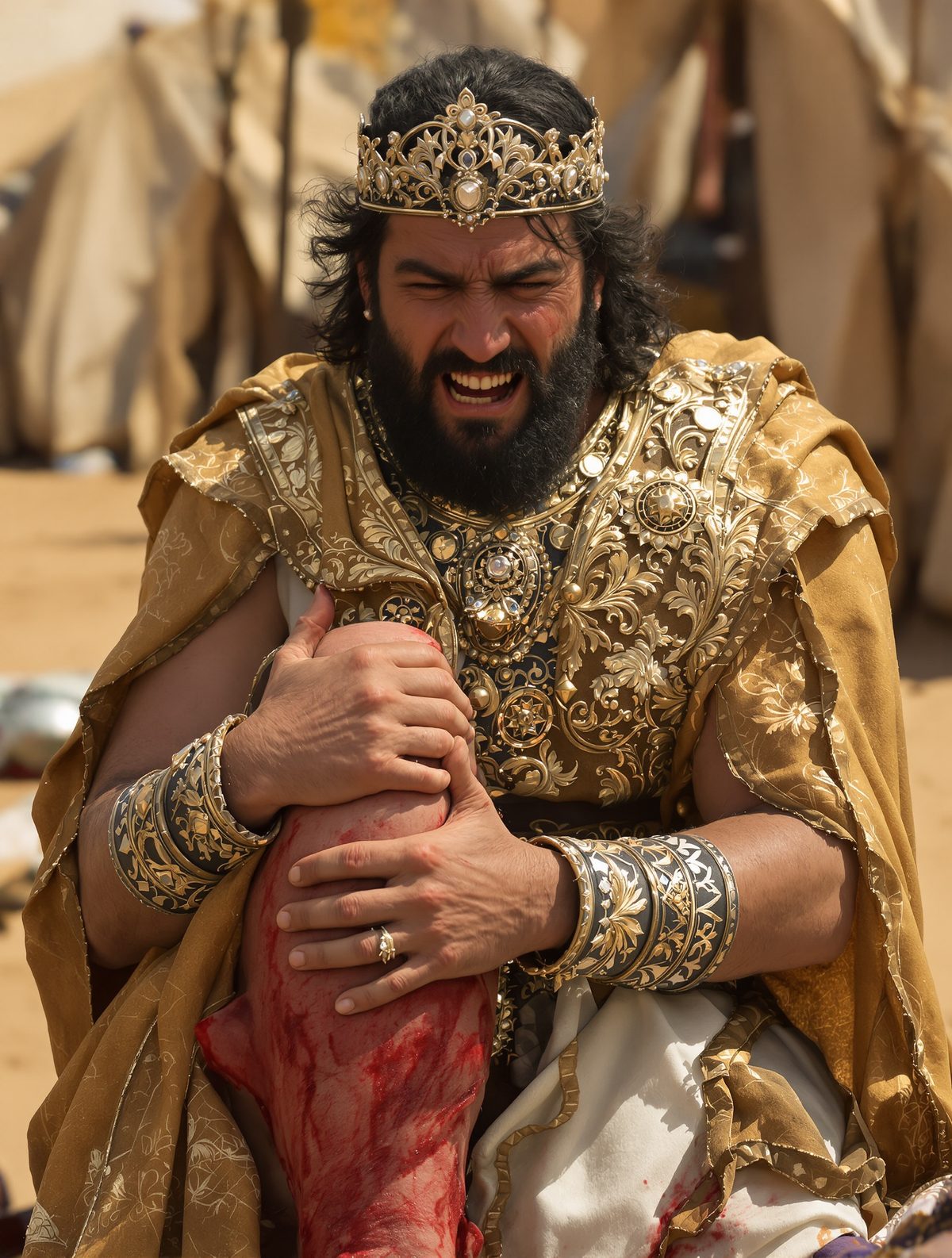
The Columbia River was running low that July afternoon in 1996 when Will Thomas and Dave Deacy decided to sneak into the hydroplane races in Kennewick, Washington. Wading through the shallow water to avoid paying admission, the college students were more focused on cheap thrills than ancient history. Then Thomas felt something round and smooth under his foot.
He reached down and pulled up what looked like a rock. But rocks don't have eye sockets. Within hours, the Benton County coroner was examining a nearly complete human skull that would soon turn the archaeological world upside down and launch the most contentious legal battle in American prehistory.
What started as two students trying to crash a boat race would evolve into a 20-year court fight involving five Native American tribes, dozens of scientists, FBI agents, and even the U.S. Army Corps of Engineers. At the center of it all was a 9,000-year-old man whose face would challenge everything we thought we knew about who first called America home.
The Face That Didn't Fit
When Benton County Coroner Floyd Johnson first examined the skull, he suspected it belonged to a murder victim. The bones appeared Caucasian, and similar remains had turned up in the area before—usually the result of foul play. But when Johnson called in forensic anthropologist James Chatters, the investigation took an unexpected turn.
Chatters immediately noticed something odd. The skull's features were indeed European-like—a narrow face, prominent nose, and receding forehead—but the bone itself looked ancient. More puzzling still was a stone spear point lodged in the skeleton's hip, clearly visible on X-rays. This wasn't a recent murder victim; this was someone who had lived and died thousands of years ago.
Racing against time as local authorities grew impatient, Chatters collected more bones from the riverbank. What emerged was a nearly complete skeleton of a man about 45 years old, standing 5'9" and powerfully built. Radiocarbon dating of a bone fragment delivered the shocking verdict: 8,340 years old, plus or minus 60 years.
The implications hit Chatters like a thunderbolt. If accurate, this skeleton predated the arrival of most Native American groups in the Pacific Northwest by thousands of years. Even more unsettling, facial reconstruction specialist Thomas McClelland created a clay model of what the man might have looked like in life. The result resembled actor Patrick Stewart more than any Native American.
The Tribes Stake Their Claim
News of the discovery spread quickly, and by September 1996, five Columbia River tribes—the Umatilla, Yakama, Nez Perce, Wanapum, and Colville—had joined forces to claim the skeleton under the Native American Graves Protection and Repatriation Act (NAGPRA). This 1990 federal law required museums and federal agencies to return Native American remains and artifacts to affiliated tribes.
For the tribes, the matter was straightforward. Armand Minthorn, a Umatilla religious leader, spoke for many when he declared: "Our elders have taught us that once a body goes into the ground, it is meant to stay there until the end of time." The tribal coalition wanted immediate reburial without further scientific study, regardless of the skeleton's apparent European features.
The tribes' oral traditions spoke of their people living along the Columbia River "since the beginning of time." To them, Kennewick Man—whom they called "the Ancient One"—was simply a very old ancestor whose rest had been disturbed. They viewed scientific study as desecration and argued that their religious beliefs trumped scientific curiosity.
But the U.S. Army Corps of Engineers, which controlled the land where the skeleton was found, faced a dilemma. NAGPRA required "cultural affiliation" between remains and modern tribes. How could bones with apparently European features belong to Native American ancestors?
Scientists Fight Back
Eight prominent anthropologists and archaeologists weren't about to let one of North America's oldest and most complete skeletons disappear without a fight. Led by Robson Bonnichsen of Oregon State University and Dennis Stanford of the Smithsonian Institution, they filed a federal lawsuit in October 1996 to block reburial and allow scientific study.
The scientists argued that Kennewick Man was too important to human history to bury without proper analysis. At nearly 9,000 years old, the skeleton could provide crucial insights into the peopling of the Americas—one of archaeology's greatest mysteries. They contended that the remains predated modern tribal cultures and therefore fell outside NAGPRA's jurisdiction.
The legal battle quickly became a media sensation. Headlines screamed about "European" features and ancient mysteries, while talk shows debated whether political correctness was trumping scientific discovery. Some fringe theorists seized on Kennewick Man as "proof" that Europeans had reached America before Native Americans—a claim that infuriated tribal leaders and mainstream archaeologists alike.
Meanwhile, the skeleton itself remained locked away in a storage facility, its secrets protected by court orders and growing controversy. Neither side could touch the bones while lawyers argued over their fate.
Twists, Turns, and Government Intervention
The case took increasingly bizarre turns as years passed. In 1998, the Army Corps of Engineers dumped 500 tons of rock and fill over the discovery site, claiming it was for "erosion control." Scientists and tribal members alike suspected a cover-up, but the Corps insisted the action wasn't related to the legal dispute.
That same year, a group of modern pagans called the Asatru Folk Assembly entered the fray, claiming Kennewick Man as their own religious ancestor based on his apparent European features. They filed their own lawsuit demanding custody of the remains, adding another layer of absurdity to an already complex case.
Government agencies flip-flopped on the skeleton's status as different administrations took power. The Clinton administration generally supported tribal claims, while the Bush administration proved more sympathetic to scientists. Each shift brought new legal motions and appeals.
The most dramatic moment came in 2005 when scientists finally won the right to study the bones. After nine years of legal limbo, researchers could at last examine one of America's oldest inhabitants. What they found would surprise everyone.
DNA Delivers the Verdict
Advanced scientific analysis revealed that Kennewick Man's story was far more complex than anyone had imagined. While his skull features appeared European-like, they actually resembled populations from Southeast Asia and Polynesia more than modern Europeans. Scientists theorized that these groups may have been among the first to cross the Bering land bridge into North America.
The skeleton showed signs of a hard life: healed fractures, arthritis, and that stone spear point embedded in his hip bone. Isotope analysis revealed he had eaten a diet rich in marine fish, suggesting a lifestyle adapted to the Columbia River's salmon runs. Far from being a European interloper, Kennewick Man appeared to be a skilled hunter-gatherer perfectly adapted to the Pacific Northwest environment.
But the case's most dramatic twist came in 2015, nearly 20 years after the discovery. DNA analysis using advanced techniques finally provided definitive answers. Despite his unusual skull features, Kennewick Man's genetic markers clearly linked him to modern Native Americans, particularly tribes from the Columbia River region.
The scientific verdict was clear: the tribes had been right all along. Kennewick Man was indeed their ancestor, separated by nearly 9,000 years but connected by an unbroken genetic thread. The "European" features that had sparked decades of controversy were simply the result of genetic drift and population changes over thousands of years.
The Ancient One Returns Home
In 2016, Congress passed legislation specifically addressing Kennewick Man's fate, mandating his return to tribal custody. The following year, in a private ceremony attended by more than 200 tribal members, the Ancient One was finally laid to rest in an undisclosed location along the Columbia River.
The legal battle had lasted longer than most marriages and cost millions in court fees, scientific studies, and storage costs. But it also established important precedents for future discoveries and highlighted the tensions between scientific inquiry and religious beliefs in modern America.
Today, Kennewick Man's legacy extends far beyond the courthouse. His case helped refine archaeological techniques, improved DNA analysis methods, and forced both scientists and tribal leaders to better understand each other's perspectives. The discovery also reinforced what geneticists have long known: human migration and population history are far more complex than simple racial categories suggest.
Perhaps most importantly, Kennewick Man's story reminds us that America's human history stretches back far longer than we often remember. Long before European explorers, colonial settlements, or even the great Native American civilizations we learn about in textbooks, people were living, hunting, and dying along rivers like the Columbia. Their stories, written in bone and DNA rather than words, are still being discovered today—one accidental find at a time.
The next time you see students skipping stones by a riverbank, remember Will Thomas and Dave Deacy. Sometimes the most profound discoveries happen when we're not looking for them at all.