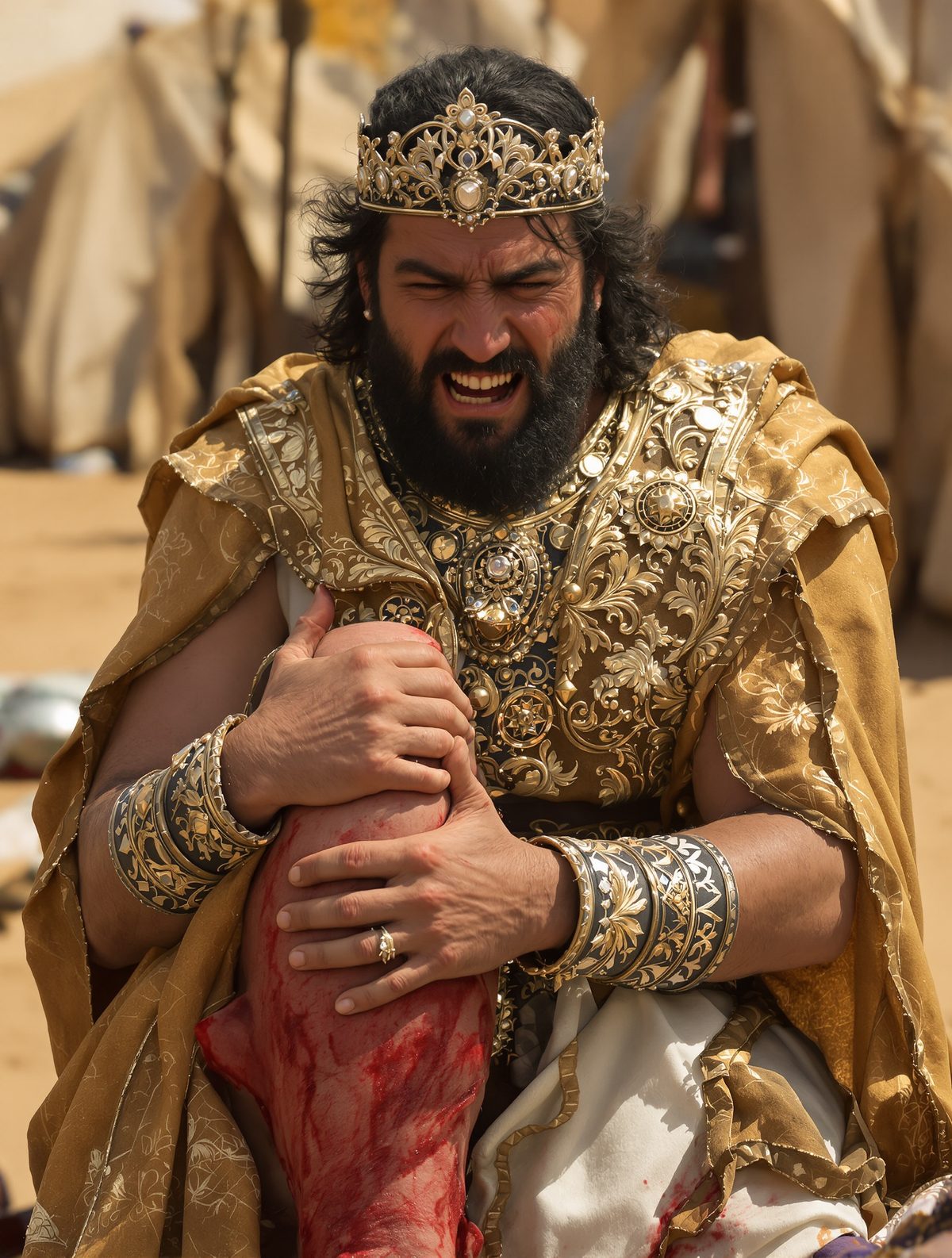
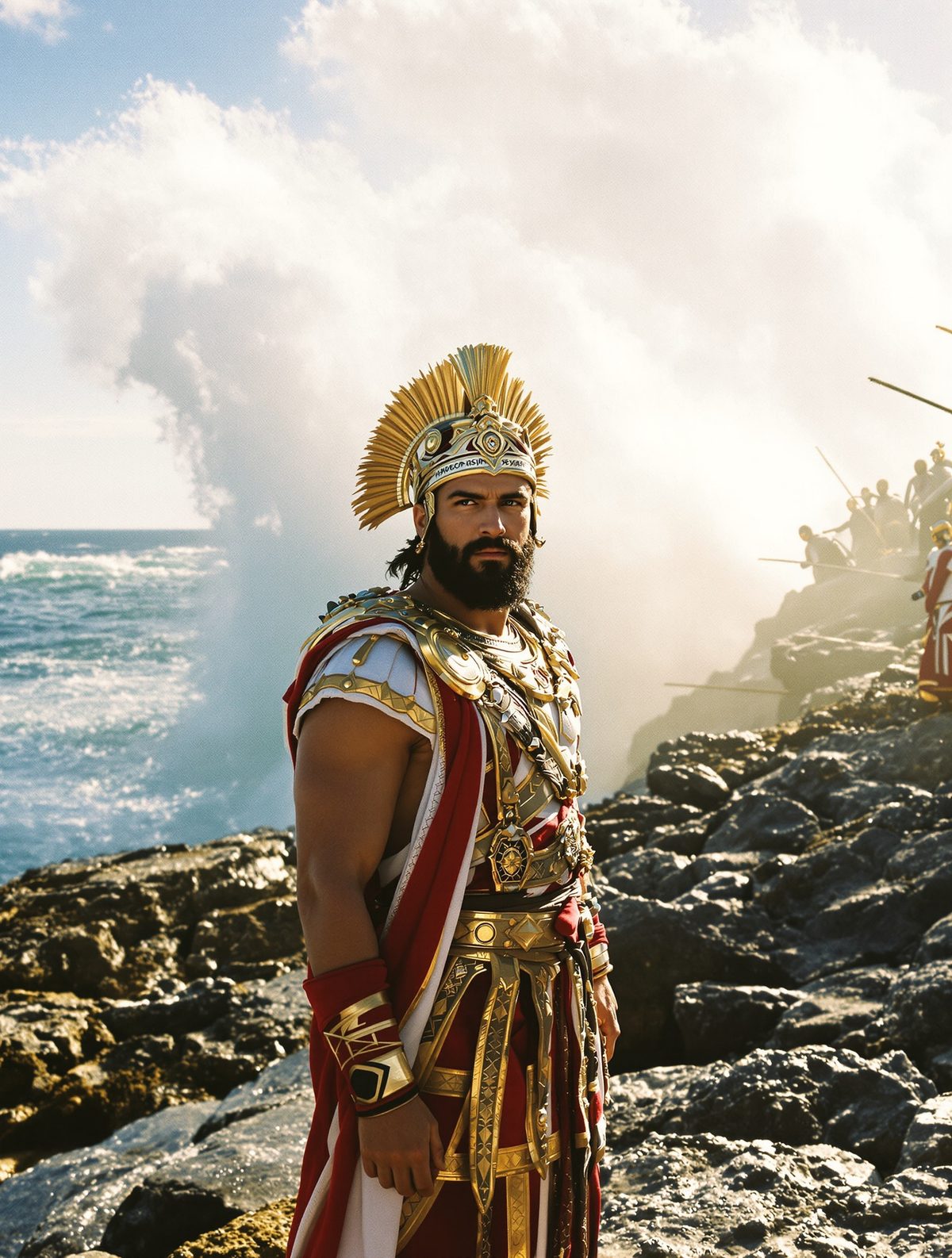
Picture this: the holiest courtroom in Christendom, the papal palace in Rome, 897 AD. Cardinals and clergy fill the chamber, their faces twisted with horror and fascination. In the defendant's chair sits a figure draped in magnificent papal vestments, triple crown upon his head, jeweled rings adorning skeletal fingers. There's just one problem—the defendant has been dead for nine months.
Welcome to the Cadaver Synod, arguably the most grotesque spectacle in the history of the Catholic Church, where Pope Stephen VI put his predecessor's rotting corpse on trial for crimes against God and Rome. What you're about to read sounds like the fevered nightmare of a medieval horror writer, but every ghoulish detail is recorded historical fact.
The Pope Who Wouldn't Stay Buried
The corpse in question belonged to Pope Formosus, a man whose very name meant "beautiful" in Latin—though beauty was the last thing anyone could attribute to his decomposing remains. Formosus had died in April 896 AD after a five-year papacy marked by the chaos that defined 9th-century Rome, when the Holy See had become a political football kicked between warring Italian noble families.
But death, as Formosus would learn, was no escape from papal politics.
Pope Stephen VI had assumed the papal throne in May 896, inheriting not just the keys to St. Peter but also a burning obsession with his predecessor's alleged crimes. For months, Stephen stewed in his rage, convinced that Formosus had illegally assumed the papacy and committed acts that threatened the very foundations of the Church. The solution, Stephen decided, was simple: put the dead man on trial.
In January 897, Stephen issued an order that would echo through history as one of the most macabre papal decrees ever recorded. Formosus was to be exhumed, dressed in full papal regalia, and brought before an ecclesiastical court to answer for his crimes. The fact that he'd been decomposing in his tomb for nine months was apparently irrelevant.
Grave Robbing in God's Name
The exhumation itself reads like a scene from a Gothic horror novel. Under cover of darkness, Church officials descended into the papal crypt beneath St. Peter's Basilica. What they found was a corpse in an advanced state of decay—flesh hanging from bones, the stench overwhelming even for men accustomed to medieval Rome's less-than-pleasant aromas.
Yet Stephen's orders were explicit: Formosus must be dressed as befitted a pope standing trial. The decomposing body was wrapped in the sacred papal vestments, the triple tiara placed upon his skull, and the Ring of the Fisherman forced onto his skeletal finger. Imagine the grotesque theater of dressing a rotting corpse in the most holy garments of Christianity, all in the name of divine justice.
The body was then propped up in a chair—accounts suggest it had to be physically supported to prevent it from collapsing—and wheeled into the papal court like some macabre marionette. Cardinals and bishops filed in to witness what they surely knew was either history in the making or the complete breakdown of their Church's leadership. Perhaps both.
The Dead Man's "Defense"
What happened next defies belief, even by the standards of medieval ecclesiastical drama. Stephen VI, wearing his papal robes and speaking with the full authority of his office, began formally questioning the corpse. The charges were serious: illegally assuming the papacy, violating canon law, and committing perjury before God and man.
"Formosus!" Stephen reportedly shouted at the decomposing remains, "Why did you usurp the apostolic see with such ambition?" The corpse, unsurprisingly, offered no response.
But Stephen had thought of everything. Standing beside the grotesque defendant was a trembling deacon, appointed to serve as Formosus's legal counsel. This unfortunate clergyman was tasked with answering Stephen's accusations on behalf of the dead pope—essentially playing ventriloquist to a corpse in the most consequential trial of his career.
The "trial" continued for hours, with Stephen raging against the silent defendant while the appointed lawyer offered weak defenses that everyone knew were doomed to failure. Witnesses testified, evidence was presented, and canonical law was cited—all while a nine-month-old corpse sat decomposing in the defendant's chair.
Verdict: Guilty of Being Dead and Damned
The outcome was never in doubt. Stephen VI pronounced Formosus guilty on all charges, declaring his papacy null and void. Every ordination Formosus had performed was invalidated, every papal decree annulled, every ecclesiastical decision reversed. In the eyes of Stephen and his supporters, Formosus had never been pope at all—he was merely a criminal who had stolen the papal throne.
But Stephen wasn't finished with his predecessor's humiliation. The papal vestments were stripped from the corpse with theatrical disgust. The three fingers of Formosus's right hand—the ones used to give papal blessings—were hacked off with a blade. The Ring of the Fisherman was torn from his skeletal finger and destroyed.
Then came the ultimate insult: the body was dragged through the streets of Rome by a jeering mob before being thrown into the Tiber River. Citizens lined the route, some cheering the macabre spectacle, others crossing themselves in horror at what their Church had become. The corpse that had once been the Vicar of Christ on Earth was now literally garbage floating down the river.
According to contemporary accounts, fishermen later pulled Formosus's remains from the Tiber, recognizing the body by its papal garments. These simple men, apparently possessing more decency than the papal court, gave the corpse a proper burial—though even this wouldn't be Formosus's final resting place.
The Cadaver Synod's Bloody Aftermath
If Stephen VI thought his grotesque theater would cement his authority, he was catastrophically wrong. The Cadaver Synod horrified even the violence-hardened nobles and clergy of 9th-century Rome. Public opinion turned sharply against Stephen, with many viewing the trial as an act of such sacrilege that it brought God's wrath upon the entire Church.
The backlash was swift and brutal. In August 897, just months after the trial, a popular uprising swept through Rome. Stephen VI was seized by an angry mob, stripped of his papal robes, and thrown into prison. Within days, he was found dead in his cell, strangled by persons unknown—though few mourned his passing.
Stephen's successor, Pope Theodore II, lasted just twenty days in office, but managed to overturn the Cadaver Synod's verdicts and order Formosus's body reinterred in St. Peter's Basilica. The next pope, John IX, went further, declaring the entire trial invalid and forbidding any future trials of the dead. It was, apparently, a rule that needed to be explicitly stated.
The political chaos continued for decades. Between 896 and 904 AD, nine different men claimed the papal throne, several meeting violent ends. The period became known as one of the darkest in papal history, with the Cadaver Synod serving as its most infamous symbol.
When Power Goes Mad: Lessons from the Grave
The Cadaver Synod stands as perhaps history's most literal example of "speaking ill of the dead," but its implications reach far beyond medieval papal politics. Stephen VI's grotesque theater reveals what happens when unchecked power meets obsessive vengeance—a combination that has echoed through history from Stalin's show trials to modern political witch hunts.
The trial also exposes the fundamental absurdity of posthumous justice. What purpose did it serve to prosecute a man who could neither defend himself nor suffer punishment? Stephen's actions suggest that the trial was never about justice at all, but about legitimacy, power, and the desperate need to rewrite history to serve present political needs.
Perhaps most chillingly, the Cadaver Synod demonstrates how quickly respected institutions can descend into grotesque parody. The same papal court that claimed to represent God on Earth became a chamber of horrors where corpses were put on trial and justice became indistinguishable from necromancy.
Today, when we witness political leaders obsessed with relitigating the past or institutions abandoning their core principles for partisan advantage, the image of Pope Stephen VI screaming at a rotting corpse serves as a powerful reminder: when power loses its moral compass, even the dead aren't safe from its reach.