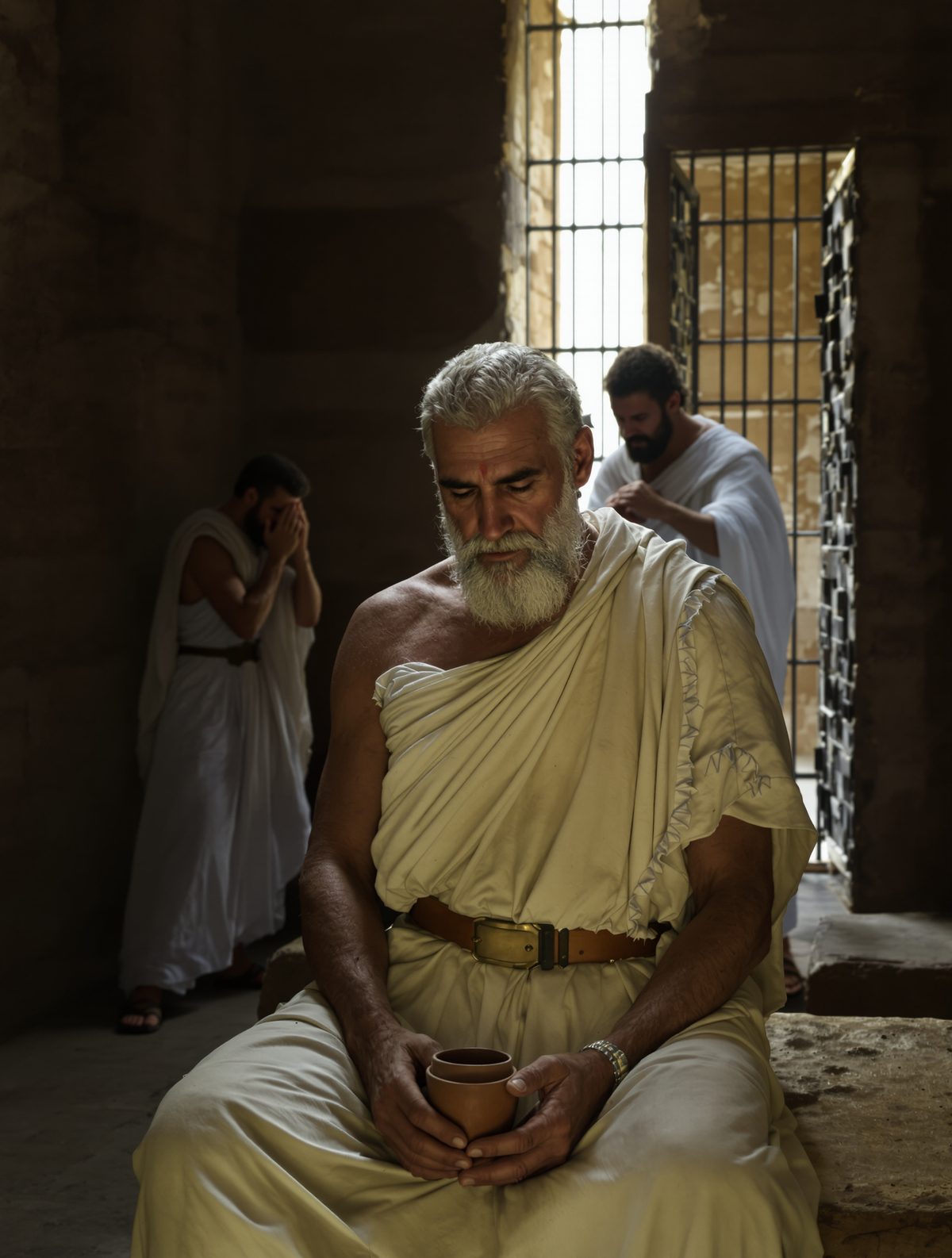
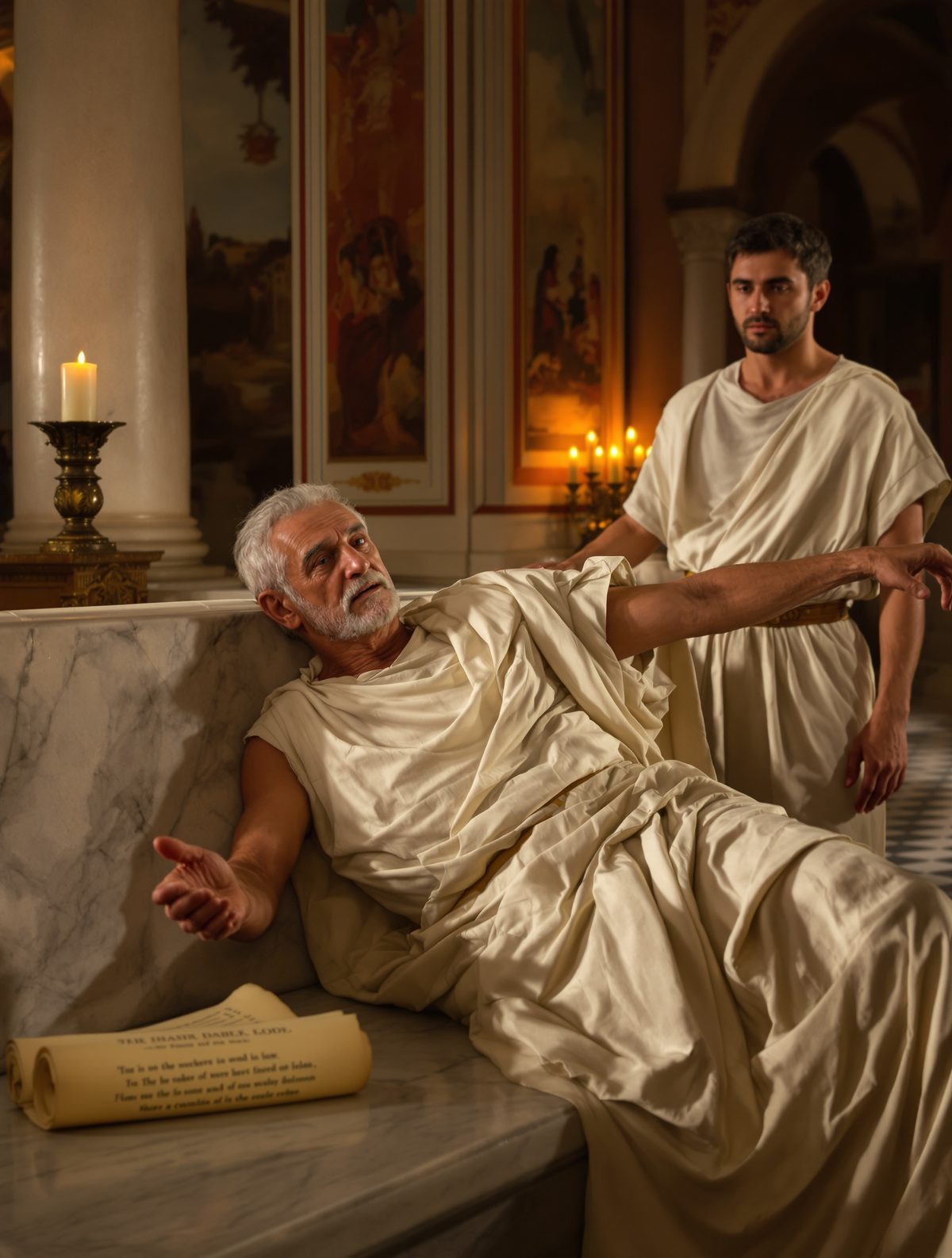
As the sun dipped beneath the Aegean horizon, casting its last golden rays over the island of Cos, a young man named Hippocrates stood at the cusp of a revolutionary idea. The year was around 400 BC, and the world was still cloaked in the mysteries of gods and divine retribution. Yet, here was Hippocrates, daring to suggest that disease didn't stem from mounting anger of the divine but rather from the intricate workings of nature itself.
From Prayers to Practice: Breaking Away from Tradition
In the ancient world, illness was an enigma, often attributed to angry deities or spirits. Temples thronged with the sick who lay prostrate, pleading for divine intervention. The gods held omnipotent power, or so it seemed, and their whimsy determined who lived and who died. Yet, amidst these rituals on the island of Cos, Hippocrates had a revelation boiling beneath the surface: perhaps the gods weren't the puppeteers of health and disease after all. The idea was daring, even blasphemous in a world entrenched in theological reasoning.
Hippocrates began to stray from the path so well-trodden by his contemporaries. Instead of leading patients to the foot of the altar, he observed. He watched the way conversations typically afforded only to the gods unfolded in the human body. Through vigilant study and detailed records, he ventured into uncharted territories, perhaps the first to suggest that the body was not just a vessel for spiritual whims but a sophisticated mechanism responding to external and internal stimuli.
Observations and Oaths: Crafting a New Medical Ethos
On Cos, Hippocrates embarked on what many might have seen as a fool’s errand. Dismissive of the superstitions that saw sickness as an act of divine wrath, he meticulously recorded cases, symptoms, and potential outcomes. His notebooks were akin to treasure troves, filled not with prayers or spells, but observations; the chronicled coughs, fevers, and lesions of patients that others saw only as victims of fate.
Perhaps most famously, Hippocrates’ insights culminated in the Hippocratic Oath, still revered and adapted by today’s medical professionals. While many aspects of the original oath speak to practices alien to the modern world—such as not cutting for the stone, leaving that to practitioners of the particular craft—the core of it was rooted in the dedication to ethical standards beyond divine decree. It was a push toward a practice of medicine that required understanding and treating illness through a lens of human capability and responsibility.
The Humors and the Seeds of Science
Hippocrates is often credited with forming the theory of the four humors—blood, phlegm, yellow bile, and black bile—as the basis for understanding human health and disease. This framework, while scientifically outdated now, was revolutionary in its attempt to classify disease based on naturalistic terms rather than mystical explanations. It posited that imbalance among the humors caused ailments, and restoring balance through diet, lifestyle, or interventions could restore health. This approach gave birth to foundational concepts in medicine that inspired centuries of inquiry and advancement.
Though we now have a more intricate understanding of disease, the boldness of this assertion was unprecedented in a world where even earthquakes and storms could be attributed to divine dissatisfaction. Hippocrates’ humoral theory, despite its inaccuracies, remained influential throughout Antiquity and the Middle Ages, making him a pivotal figure in the transition from mysticism to empirical science.
A Physician's School: Legacy Beyond His Time
Hippocrates’ teachings reached far beyond his death in 370 BC. The medical school he established on Cos became a beacon of intellectual pursuit, attracting students from across the Greek world. This institution emphasized hands-on learning, observation, and logical reasoning—an embracement of medical empiricism that would ripple through history.
One of Hippocrates’ key legacies was his focus on prognosis rather than diagnosis alone. He believed that understanding a disease's course was as important as identifying its nature. His approach advocated for patient-centric care, considering the individual context, local environment, diet, and lifestyle as pivotal components in diagnosing and treating diseases effectively.
Why It Matters: The Echoes of Hippocrates' Insight
Today, as we sit on the shoulders of giants like Hippocrates, his shift away from divine determinism to medical empiricism underscores the importance of curiosity and skepticism. In an era that threatened intellectual stagnation, he challenged traditional dogmas with a simple act of watching and reasoning.
Hippocrates’ paradigm shift laid the groundwork for modern medicine, which continues to evolve through curiosity, observation, and scientific exploration. His courage to step away from godly explanations serves as a timeless reminder of the human potential for growth and understanding. In honoring his legacy, we embrace a methodology that strives not just to heal but to comprehend, pondering on complexities that echo past the ancient world into our modern existence.
The legacy of Hippocrates demonstrates that the quests for knowledge, understanding, and healing know no bounds. We are reminded that dogma and decree are no match for critical observation and empirical reasoning. As we navigate the ever-expanding boundaries of science, Hippocratic ideals remain a touching stone, encouraging us to see beyond the easily accepted and into the realm of endless possibility.