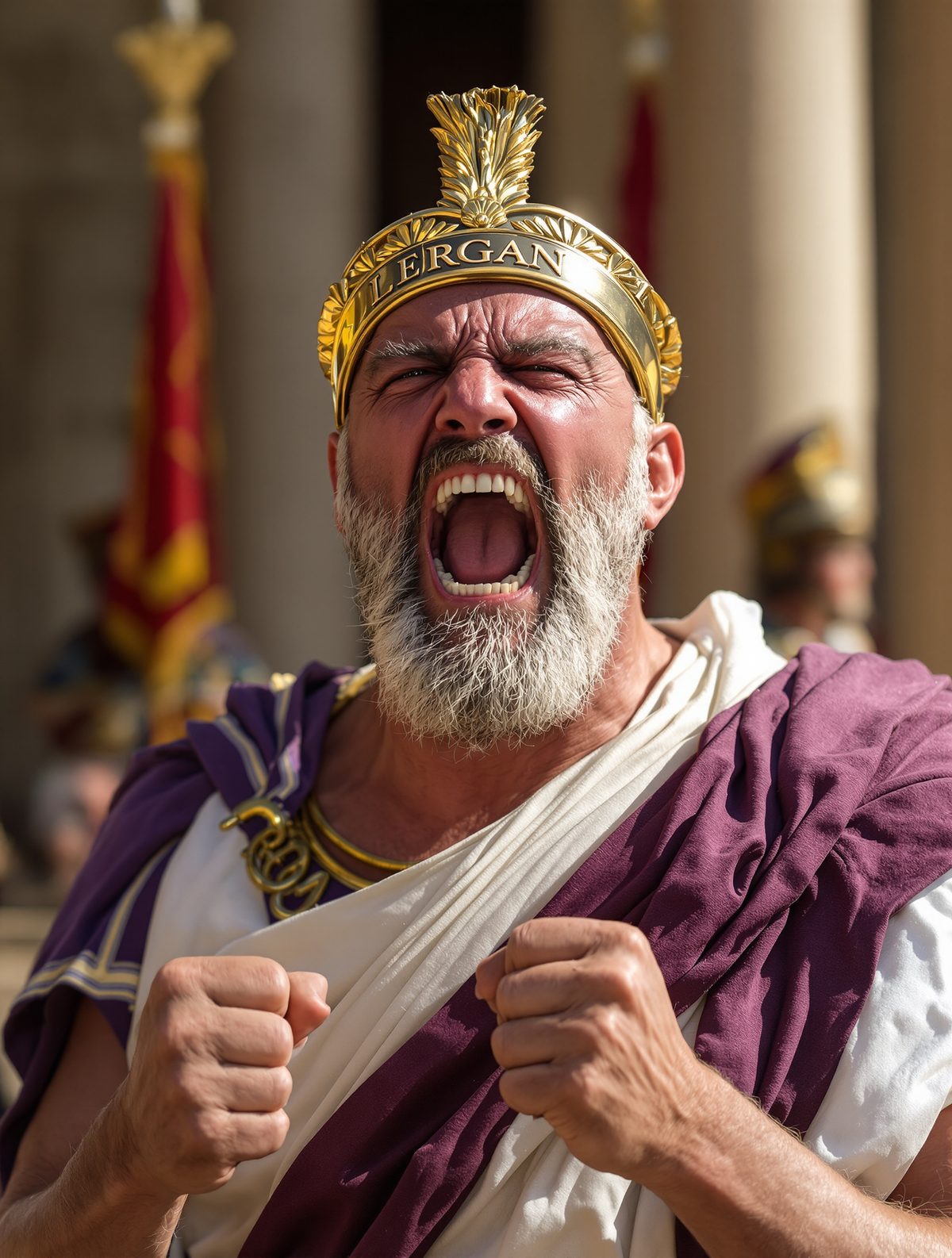
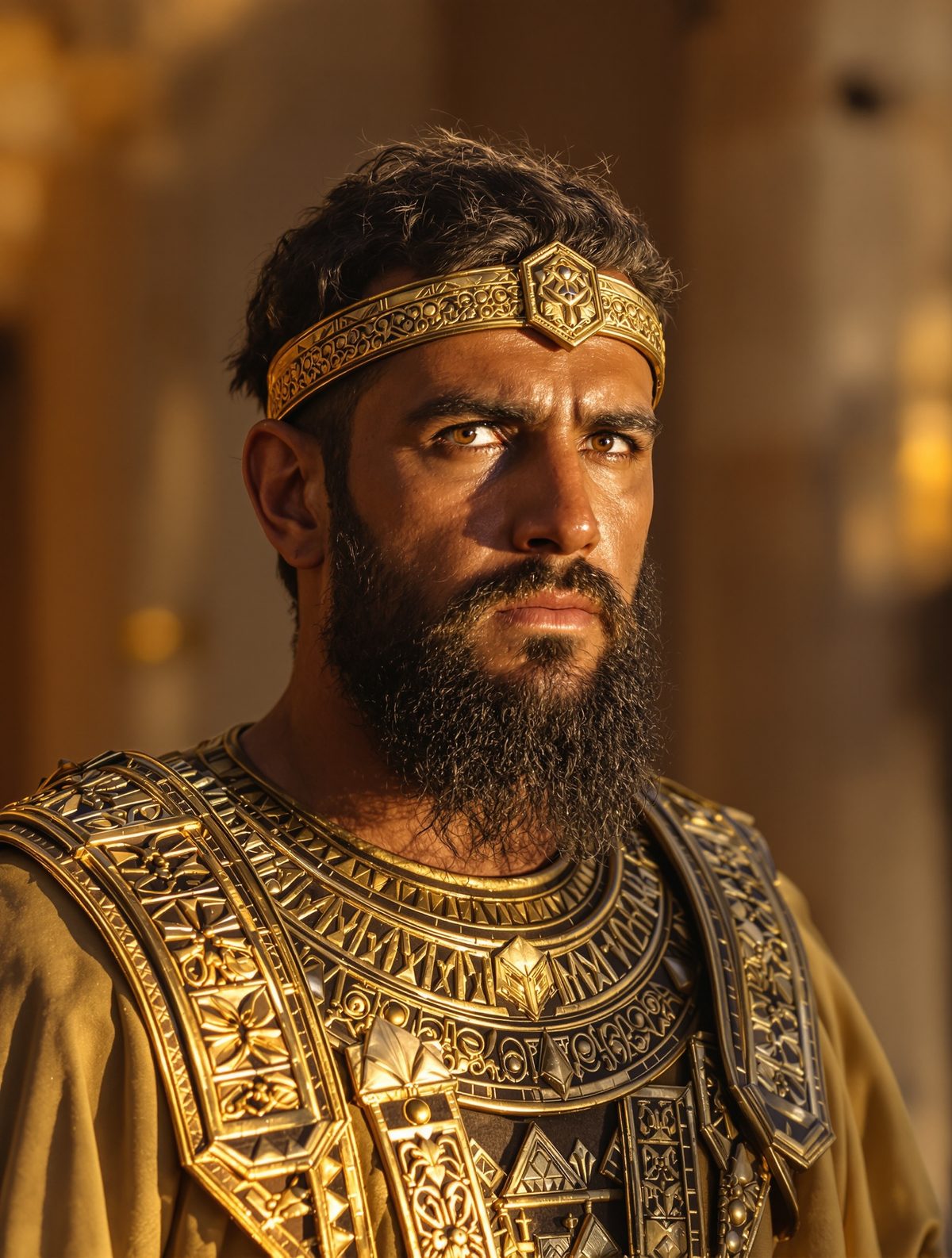
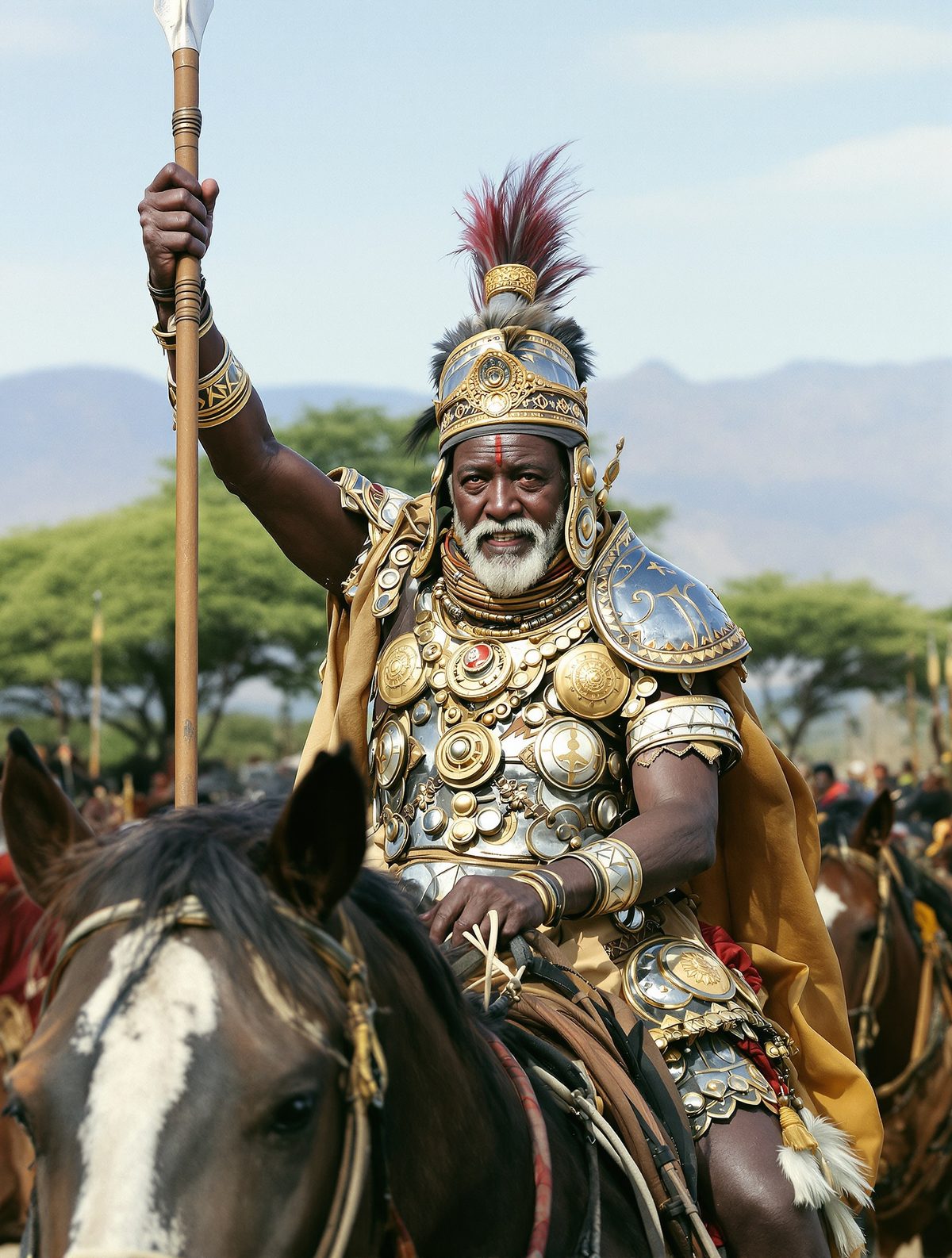
Picture this: It's 440 BC, and a middle-aged Greek man sits cross-legged in a Persian general's tent, furiously scribbling notes as his subject recounts how the mighty Persian army was humiliated at Marathon. The general speaks candidly about tactical mistakes, supply problems, and the shocking ferocity of the Greek warriors. Nearby Persian soldiers eye the visitor suspiciously—who is this Greek, and why is he so interested in their version of events?
The man's name was Herodotus of Halicarnassus, and he was about to change how humans understand their past forever. While his contemporaries wrote poetry praising Greek heroes or philosophical treatises about abstract ideas, Herodotus was doing something radical: he was collecting stories, cross-referencing accounts, and attempting to figure out what actually happened during the greatest conflict of his time—the Persian Wars.
What made this revolutionary wasn't just that he wrote about recent events. It was that he refused to accept a single version of the truth.
The Crazy Greek Who Talked to Everyone
Born around 484 BC in Halicarnassus (modern-day Bodrum, Turkey), Herodotus grew up in a Greek city that was actually part of the Persian Empire. This unique position—Greek by culture, Persian by politics—gave him an outsider's perspective that would prove invaluable. When political troubles forced him to leave his hometown, he didn't retreat to Athens like most educated Greeks. Instead, he embarked on what might be history's first research expedition.
For over a decade, Herodotus traveled an estimated 1,700 miles across the ancient world, from the Black Sea to the cataracts of the Nile. He wasn't just sightseeing—he was conducting interviews. In Egypt, he questioned priests about their ancient records and marveled at pyramid construction techniques. In Babylon, he documented religious ceremonies and city planning. In Scythia (modern Ukraine), he sat with nomadic warriors around campfires, learning about their battles with Persian invaders.
His Greek peers thought he'd lost his mind. Why waste time recording the stories of "barbarians"—their dismissive term for non-Greeks? But Herodotus understood something profound: to truly understand any conflict, you needed to hear from both sides.
The Detective Work Begins
When Herodotus began investigating the Persian Wars—the series of conflicts between 499 and 449 BC that had dominated his lifetime—he faced a problem that would be familiar to any modern journalist: conflicting sources. Greek veterans claimed they'd won through superior courage and divine favor. Persian accounts suggested the losses were due to bad weather and overextended supply lines. Egyptian sources offered yet another perspective.
Rather than simply picking the version that made his own people look best, Herodotus developed what we'd now recognize as historical methodology. He compared multiple accounts, noted when sources might be biased, and wasn't afraid to express skepticism. "I am bound to tell what I am told," he wrote, "but not in every case to believe it."
Take his investigation of the Battle of Thermopylae in 480 BC. While Greek sources focused on the heroic sacrifice of the 300 Spartans, Herodotus dug deeper. He discovered that the "300" were actually part of a larger Greek force of about 7,000 men. He interviewed survivors who described the psychological warfare tactics used by both sides. Persian sources told him about Xerxes' genuine shock at Greek resistance—the Persian king had expected quick surrender, not a fight to the death.
More Than Just War Stories
What makes Herodotus's Histories extraordinary isn't just his even-handed approach to military conflicts—it's the sheer scope of human experience he captured. His work reads like a combination of military history, anthropological study, and travel memoir, all wrapped up in the world's first attempt at investigative journalism.
He documented bizarre customs that fascinated him: Scythian tribes who made cups from enemy skulls, Babylonian marriage auctions where women were literally sold to the highest bidder, and Egyptian mummification processes that preserved bodies for millennia. He recorded the first known description of the Sahara Desert, complete with accounts of strange animals and the logistics of trans-Saharan trade routes.
Some of his observations seem fantastical—like his descriptions of giant ants in India that mined gold, or headless men with faces in their chests. Modern scholars debate whether these were misunderstood accounts of real phenomena, pure mythology, or Herodotus simply reporting wild tales he'd heard. But even his errors reveal something important: he was trying to document the full breadth of human experience, not just the narrow political history that interested other writers.
The World's First Fact-Checker
Perhaps most remarkably, Herodotus invented the concept of source criticism. When describing the customs of distant lands, he carefully distinguished between what he'd seen personally, what reliable witnesses had told him, and what he'd heard secondhand. He expressed doubt about claims that seemed implausible and openly acknowledged when information came from potentially biased sources.
Consider his account of the Persian king Cambyses' invasion of Egypt in 525 BC. Egyptian priests told him one version emphasizing Persian brutality. Persian officials offered another focusing on Egyptian resistance to beneficial reforms. Rather than choosing sides, Herodotus presented both accounts and let readers draw their own conclusions—a journalistic principle that wouldn't become common practice for another 2,000 years.
He also understood the importance of context. When describing why the Persian Wars started, he didn't begin with the immediate causes. Instead, he traced the conflict back through generations of cultural misunderstanding, economic competition, and political miscalculation. His work explains not just what happened, but why it was probably inevitable.
The Man Who Taught Humanity to Remember
Herodotus called his work historia—literally meaning "inquiry" in Greek. He wasn't just recording events; he was conducting an investigation into the causes and consequences of human action. His opening lines make this clear: "This is the showing forth of the inquiry of Herodotus of Halicarnassus, to the end that neither the deeds of men may be forgotten by lapse of time, nor the works, great and wondrous, which have been produced, some by Hellenes and some by Barbarians, may lose their renown."
That phrase—"to the end that neither the deeds of men may be forgotten"—represents a revolutionary idea. Before Herodotus, most societies preserved their past through oral tradition, religious texts, or royal propaganda. The idea that ordinary people's actions might be worth remembering, or that enemy perspectives might contain valuable truth, was almost unthinkable.
By the time he completed his nine-volume work around 430 BC, Herodotus had essentially invented historical consciousness—the understanding that the present grows out of the past, and that studying what happened before can help us make sense of what's happening now.
Why the World's First Historian Still Matters
In our age of competing narratives and "alternative facts," Herodotus feels remarkably contemporary. He understood that truth is often complex, that reliable information requires multiple sources, and that understanding conflicts requires listening to people you might not like or agree with. His willingness to present unflattering facts about his own culture—Greek arrogance, strategic mistakes, internal divisions—seems almost radical in our polarized times.
More importantly, Herodotus grasped something that many modern observers miss: the stories we tell about the past shape how we see the present. By insisting that Persian generals, Egyptian priests, and Scythian warriors deserved to have their voices heard, he was arguing for a more complete understanding of human experience.
The next time you read a news article that includes quotes from multiple perspectives, or watch a documentary that explores different sides of a historical controversy, you're witnessing the legacy of a curious Greek who refused to accept that history belonged only to the winners. In a world still struggling with questions of whose stories matter and whose voices deserve to be heard, the man they called "the Father of History" remains surprisingly relevant.