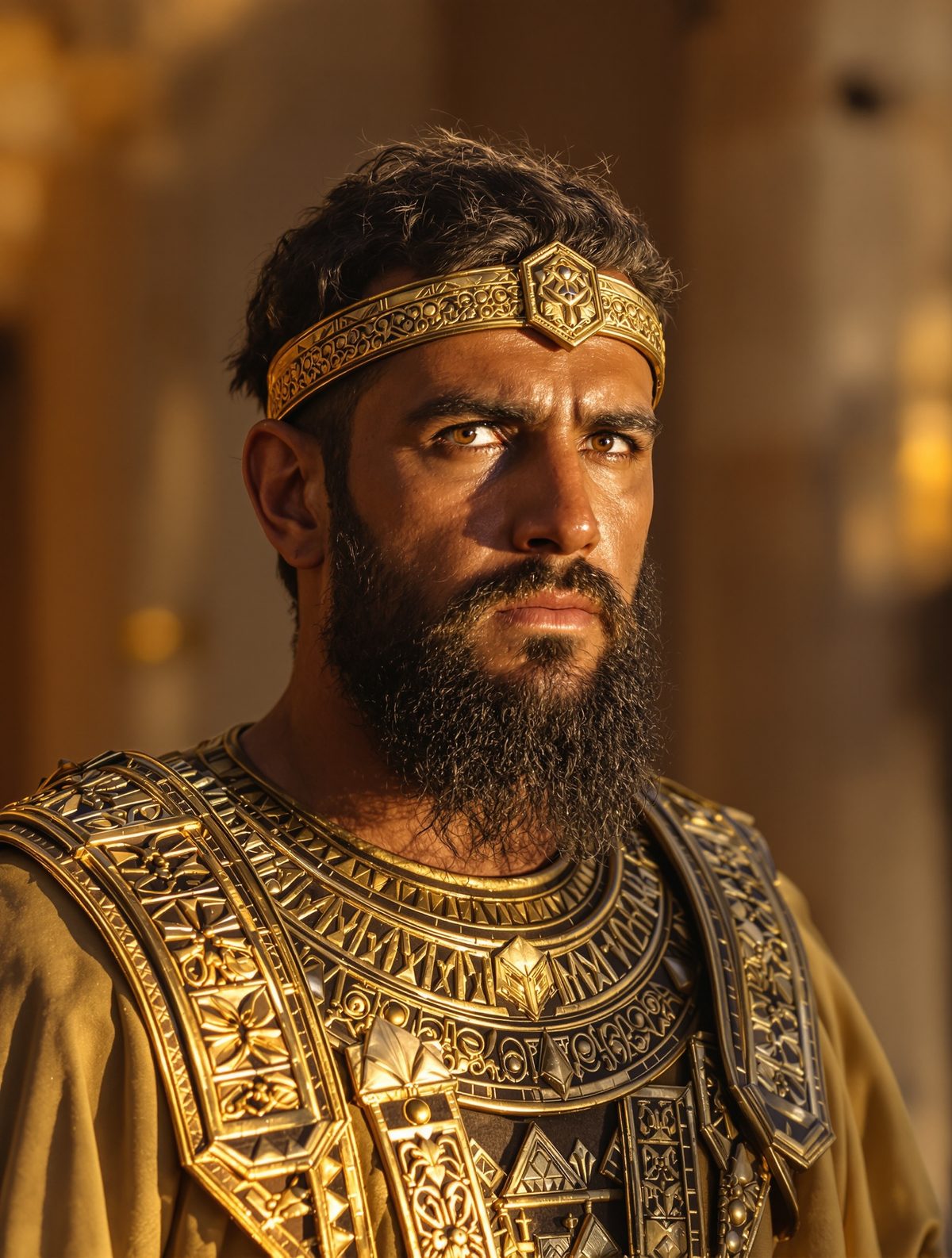
Picture this: It's November 17, 375 AD, and the most powerful man in the Western Roman Empire is about to die—not from an assassin's blade, not from poison, not even from the countless barbarian warriors he's spent years crushing on distant frontiers. No, Emperor Valentinian I is about to be killed by something far more intimate and unstoppable: his own volcanic rage.
As Quadi ambassadors stand before him in his military camp near modern-day Hungary, making what he considers to be utterly outrageous demands, something snaps inside the battle-hardened emperor. His face begins to turn an alarming shade of purple. His voice rises to a thunderous roar that echoes through the tent. And then, in an instant that would change the course of Roman history, a blood vessel in his brain simply... bursts.
The man who had spent a decade terrorizing barbarian tribes across the Rhine and Danube frontiers would be felled not by any external enemy, but by the very fury that had made him so formidable in the first place.
The Making of a Legend: Valentinian's Rise to Power
Valentinian I wasn't born to rule an empire. Born around 321 AD in what is now Croatia, he was the son of a rope-maker named Gratianus who had clawed his way up through the Roman military ranks. But young Valentinian possessed something that would define his entire life: an absolute, uncompromising intensity that could be both his greatest asset and his most dangerous weakness.
Standing nearly six feet tall in an age when most men barely reached five-and-a-half feet, Valentinian cut an imposing figure even before he opened his mouth. Contemporary historians described him as having piercing blue eyes and a voice that could silence a room—or, as his enemies would learn, make grown warriors tremble with fear.
His path to the purple was anything but smooth. In 361 AD, under Emperor Julian the Apostate, Valentinian was actually demoted from his military position for refusing to participate in pagan sacrifices. Most men would have bent the knee and compromised their beliefs. Not Valentinian. He chose exile over submission, a decision that perfectly encapsulates the iron will that would both elevate him to supreme power and ultimately destroy him.
When Emperor Jovian died unexpectedly in 364 AD, the army chose Valentinian—not because he was the safest choice, but because he was the strongest. Within a month of his accession, he made the shrewd decision to divide the empire with his younger brother Valens, taking control of the western half while Valens ruled the east. It was a partnership that would prove remarkably effective, even as Valentinian's legendary temper became the stuff of imperial legend.
The Emperor's Explosive Temperament
To understand how a man could literally die from anger, you need to grasp just how spectacularly, terrifyingly furious Valentinian could become. This wasn't just having a bad day—this was rage elevated to an art form, weaponized and deployed with devastating effect.
The historical accounts are filled with stories that seem almost too extreme to believe. When corrupt officials were brought before him, Valentinian wouldn't just dismiss them—he would roar at them with such ferocity that witnesses reported seeing spittle fly across the room. One account describes him becoming so enraged at a group of tax collectors that he literally foamed at the mouth while screaming about their incompetence.
Perhaps most infamously, Valentinian kept two pet bears named Innocence and Mica Aurea (Golden Crumb) in cages near his private quarters. While some emperors collected art or exotic birds, Valentinian collected predators. When officials particularly enraged him, he would threaten to feed them to his bears—and on at least one recorded occasion, he actually followed through on this threat.
But here's the fascinating paradox: this same explosive rage made him an incredibly effective ruler. Corrupt governors knew that crossing Valentinian meant facing consequences that went far beyond a simple fine or demotion. His fury was so legendary that the mere threat of imperial displeasure could straighten out entire provinces. Fear of Valentinian's wrath became a governing tool unto itself.
The Barbarian Scourge: A Decade of Relentless Warfare
While Valentinian's temper made him feared in the halls of power, it was on the battlefield where his rage truly found its purpose. From 365 to 375 AD, he conducted what can only be described as a systematic reign of terror against the Germanic tribes threatening Rome's northern borders.
The Alamanni, who had grown bold during previous reigns, quickly learned that this new emperor was unlike any they had faced before. In 368 AD, Valentinian crossed the Rhine with such devastating force that entire tribal confederations simply melted away before his advance. He didn't just defeat enemies—he obliterated them, leaving behind a trail of burned villages and scattered tribes that would remember Roman fury for generations.
His military engineers constructed a network of fortifications along the Rhine that was so comprehensive and intimidating that modern archaeologists are still uncovering evidence of his building projects. These weren't just defensive structures—they were statements of power, designed to remind every barbarian who looked upon them exactly what happened to those who challenged Rome.
But perhaps most telling was Valentinian's approach to diplomacy. Where other emperors might negotiate or seek peaceful solutions, Valentinian's diplomatic meetings were legendary for their intensity. Tribal chieftains would leave his presence visibly shaken, and word spread throughout the barbarian world: this emperor was different. This emperor was dangerous.
For nearly a decade, this strategy worked brilliantly. The frontiers, which had been porous and constantly threatened under previous rulers, became solid walls of Roman authority. Valentinian's rage, properly channeled, had achieved what diplomacy and conventional military tactics could not.
The Fatal Meeting: When Rage Finally Won
By November 375 AD, Valentinian was camped near Brigetio (modern-day Szőny, Hungary), dealing with yet another barbarian situation. The Quadi, a Germanic tribe that had been relatively quiet during his reign, had sent ambassadors to negotiate some kind of arrangement. On the surface, it seemed like routine imperial business—the kind of meeting Valentinian had conducted dozens of times before.
But something was different this time. Perhaps it was the accumulation of a decade's worth of stress and constant warfare. Perhaps it was the arrogance of the Quadi representatives, who seemed to have forgotten exactly who they were dealing with. Or perhaps Valentinian's legendary temper had simply reached a breaking point that his 54-year-old body could no longer withstand.
The exact details of what the Quadi ambassadors said have been lost to history, but contemporary accounts agree that their demands were perceived as outrageously presumptuous. Some sources suggest they were demanding tribute payments—essentially asking the Roman Emperor to pay them for the privilege of peace. Others indicate they were making territorial demands that Valentinian found insulting.
What happened next was witnessed by numerous Roman officials and recorded by multiple historians. Valentinian didn't just become angry—he achieved what can only be described as a transcendent state of fury. His voice rose to what witnesses described as an inhuman roar. His face turned from red to purple as blood vessels stood out like cords on his neck and forehead.
And then, as he reached the crescendo of his tirade against the barbarian representatives, something inside his head simply gave way. A blood vessel, strained beyond its limits by years of explosive rage and the immediate pressure of this final outburst, ruptured catastrophically. The emperor who had terrorized barbarian tribes across two continents collapsed and died almost instantly, struck down by the very fury that had made him legendary.
The Aftermath: An Empire Without Its Thunderbolt
The immediate reaction to Valentinian's death was something approaching panic. Here was an emperor who had single-handedly held the western frontiers together through sheer force of personality and terrifying reputation, and suddenly he was gone—not defeated in battle, not overthrown by rivals, but felled by his own rage in front of barbarian ambassadors.
The Quadi representatives, who moments before had been facing the wrath of the most powerful man in the western world, now found themselves staring at his corpse. One can only imagine their confusion and terror as they realized they had just witnessed the death of a Roman emperor during what was supposed to be a routine diplomatic meeting.
Valentinian's death created an immediate succession crisis. His son Gratian was already co-emperor, but was campaigning in Gaul and couldn't immediately take control of the Danubian situation. In a desperate move to maintain stability, the army proclaimed Valentinian's four-year-old son Valentinian II as emperor, creating a regency that would prove far less effective than his father's direct rule.
The barbarian tribes, who had spent a decade living in terror of Valentinian's wrath, quickly sensed the change in imperial authority. Within months, the carefully maintained frontiers began to show cracks. The Quadi and their allies, emboldened by the emperor's death, began testing Roman resolve in ways they would never have dared while Valentinian lived.
The Rage That Shaped an Empire
Emperor Valentinian I's death by fury might seem like a cautionary tale about anger management, but it reveals something profound about the nature of power, personality, and the strange alchemy that sometimes creates effective leadership. Here was a man whose greatest strength and fatal weakness were literally the same thing—a rage so intense it could cow barbarian nations and burst blood vessels with equal efficiency.
In our modern world, where leaders are expected to maintain careful composure and measured responses, Valentinian seems almost alien. Yet his decade-long success in securing Rome's frontiers suggests that sometimes, raw intensity and uncompromising fury can achieve what diplomacy and conventional wisdom cannot. The barbarian tribes didn't respect Rome because of its laws or culture—they respected it because they were terrified of what would happen if they didn't.
Perhaps most remarkably, Valentinian's death reminds us that even the most powerful people in history were still, ultimately, human. All the legions, all the authority, all the fear he could inspire in others couldn't protect him from his own cardiovascular system when pushed beyond its limits. In the end, the emperor who had seemed almost superhuman in his fury was brought down by the most human thing imaginable—the simple inability of flesh and blood to contain the full force of his own emotions.
The next time you feel your blood pressure rising during a particularly frustrating meeting, remember Emperor Valentinian I. Sometimes, the most dangerous enemy we face isn't standing across a battlefield—it's pounding away inside our own chest.