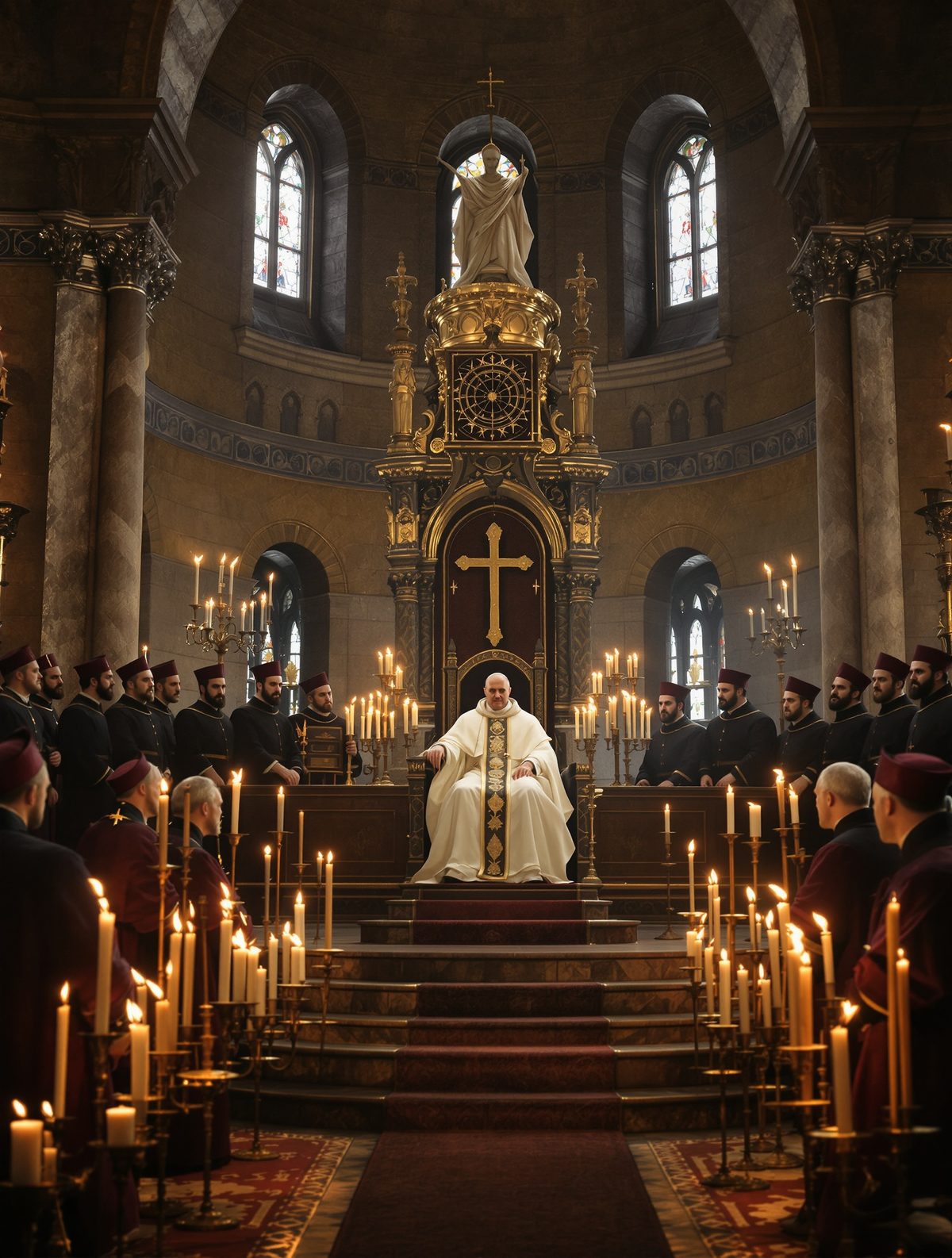
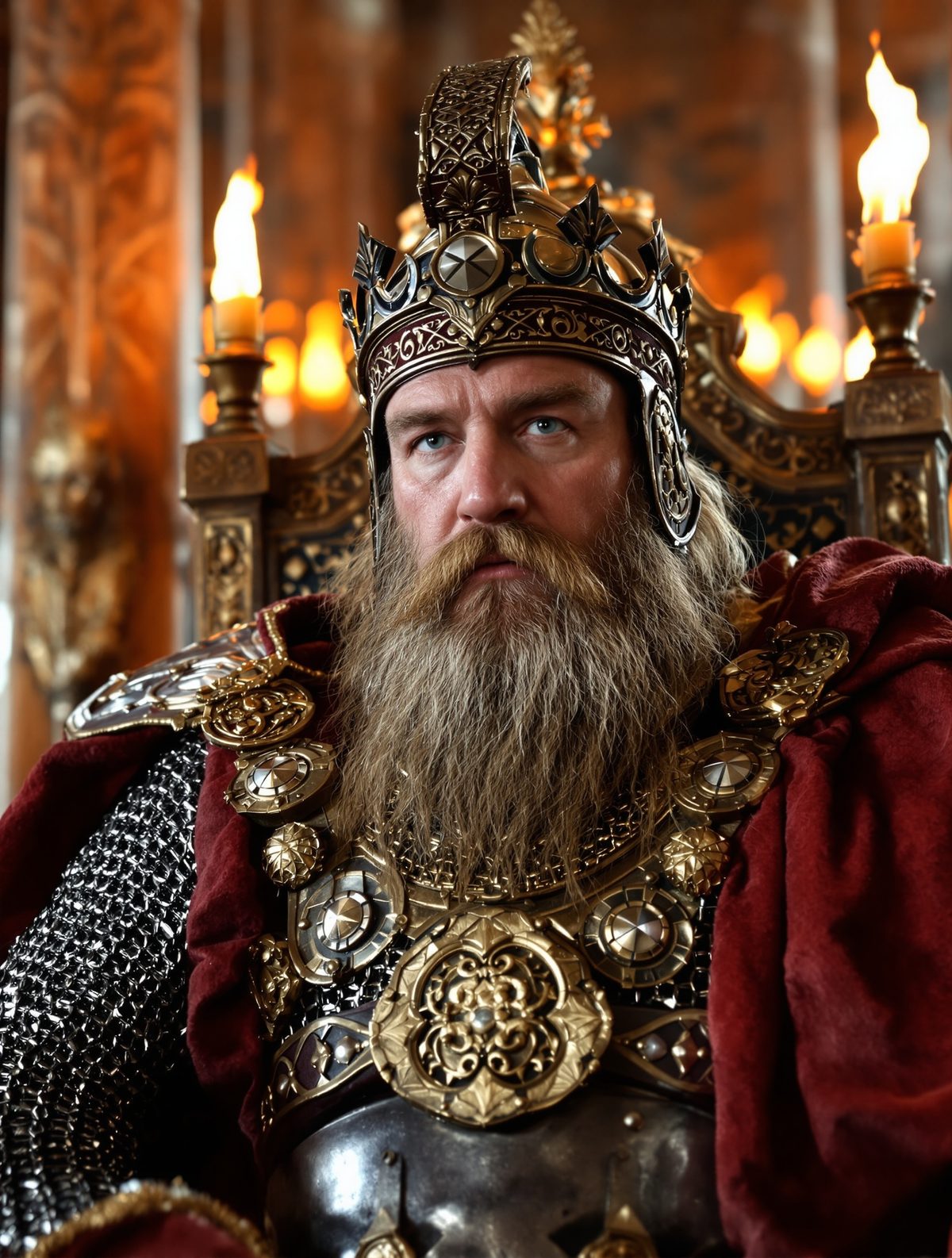
The wine goblet shattered against the stone wall of the royal hall. King Henry II of England was in one of his legendary rages, his face purple with fury, spittle flying from his lips as he screamed at the assembled nobles. The year was 1170, and the most powerful monarch in Europe had just uttered four words that would echo through history and transform him from a king into a killer. "Will no one rid me of this turbulent priest?"
Four knights exchanged glances across the flickering candlelight. They had heard their king's anguish, his frustration, his seeming plea for action. Within hours, they would be galloping through the winter darkness toward Canterbury Cathedral, their hearts filled with deadly purpose. By the time their mission was complete, the altar stones would be slick with blood, and Henry II would discover that some words, once spoken, can never be taken back.
The Rise and Fall of an Unlikely Friendship
To understand the magnitude of what happened that December evening, you must first understand what Henry II had lost. Thomas Becket wasn't just any priest—he had been Henry's closest friend, his drinking companion, his most trusted advisor. When Henry became king at just 21 years old in 1154, inheriting an empire that stretched from Scotland to the Pyrenees, he needed someone he could rely on completely. That person was Thomas.
Becket was everything Henry needed: brilliant, ambitious, and utterly loyal. As Chancellor of England, he lived like a prince, maintaining a household of 700 people and owning more land than most earls. He wore silk robes lined with ermine, rode the finest horses, and threw lavish feasts that became legendary throughout Europe. The man who would die in poverty and sackcloth once owned 52 personal chaplains.
Henry and Thomas were inseparable. They hunted together, planned military campaigns together, and shared the same vision of royal supremacy. When Henry wanted to strengthen royal control over the Church, he had a brilliant idea: make his best friend the Archbishop of Canterbury. Thomas warned him against it, allegedly saying, "Should God permit me to be archbishop, I would soon lose your Majesty's favor." Henry laughed off the warning. He had no idea how prophetic those words would prove to be.
The Transformation That Shocked a Kingdom
On June 2, 1162, Thomas Becket was ordained as Archbishop of Canterbury. What happened next was so dramatic it seemed impossible to those who knew him. The man who had lived in luxury immediately gave away his wealth, began wearing a hair shirt that crawled with lice, and ate only bread and vegetables. He washed the feet of beggars and spent hours in prayer. The transformation was so complete that his own servants didn't recognize him.
But the most shocking change was political. Thomas, who had once been Henry's most enthusiastic supporter, suddenly became the Church's most fierce defender. When Henry tried to prosecute criminous clerks (priests who committed crimes) in royal courts rather than Church courts, Thomas refused. When Henry attempted to limit appeals to Rome, Thomas blocked him. The king's best friend had become his greatest enemy.
Henry was bewildered, then furious. In his mind, Thomas had betrayed not just their friendship, but the very crown that had elevated him. Their confrontations became legendary for their bitterness. At one heated meeting, Henry reportedly called Thomas "a low clerk" who had "risen from nothing." Thomas shot back that he came from "higher ancestors than the king."
By 1164, the situation had become impossible. Facing charges of treason, Thomas fled England in disguise, beginning six years of bitter exile in France. For both men, those six years were a kind of living death—Henry ruled without his closest friend, while Thomas lived as a refugee, sustained only by his conviction that he was defending God's will against royal tyranny.
The Fatal Homecoming
In 1170, political necessity forced a reconciliation. Henry needed Thomas's support for the coronation of his eldest son, while Thomas longed to return home. They met in France that July, and witnesses described an emotional reunion. Henry even held Thomas's stirrup as he mounted his horse—a gesture of respect that moved observers to tears.
But the peace was fragile. Thomas returned to England on December 1, 1170, and immediately resumed his confrontational stance. He excommunicated the bishops who had participated in the young king's coronation without his permission—a direct slap at Henry's authority. When news of Thomas's actions reached Henry at his court in Normandy, the king exploded.
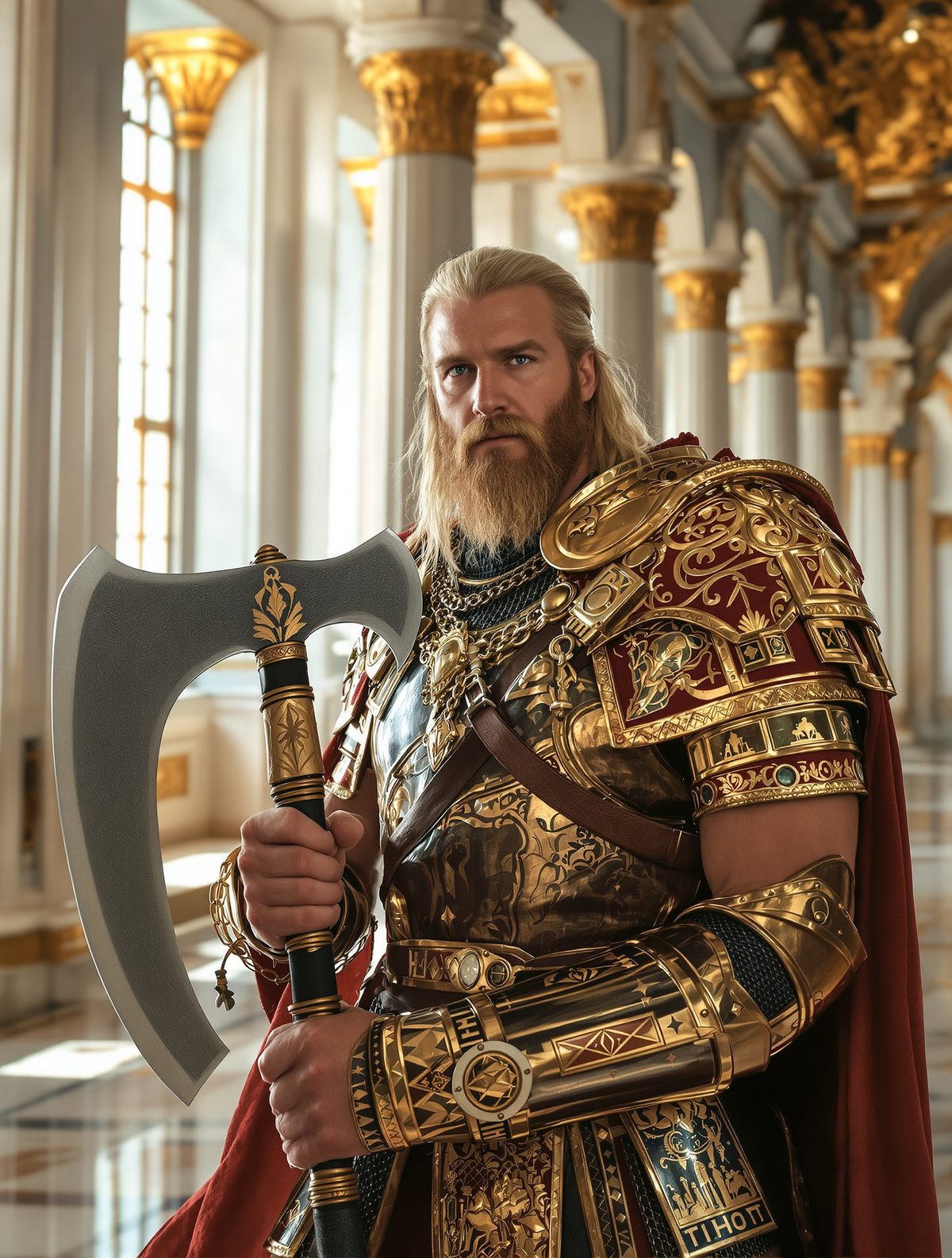
What made Henry's rage so dangerous was his audience. Four knights were present that evening: Reginald FitzUrse, William de Tracy, Hugh de Morville, and Richard le Breton. These weren't courtly nobles playing political games—they were professional warriors, men who solved problems with swords. They heard their king's anguished cry and interpreted it as a royal command.
Three Hundred Miles to Murder
The four knights didn't waste time with debate or second thoughts. They left separately to avoid suspicion, arranging to meet at Saltwood Castle in Kent. From there, they would ride to Canterbury—a journey of nearly 300 miles that they completed in just three days through winter weather that would challenge modern travelers.
On December 29, 1170, they arrived at Canterbury Cathedral just as evening prayers were beginning. Thomas was in his private chambers when they burst in, still wearing their chain mail, their swords clanking against their legs. The confrontation that followed was witnessed by several monks, whose accounts provide chilling details.
"You shall come with us to the king," FitzUrse demanded. Thomas refused. "I will not flee," he declared. "You cannot be more ready to kill than I am to die." The knights tried to physically drag him from the cathedral, but Thomas was a large, powerful man who fought back fiercely. Frustrated and perhaps realizing the magnitude of what they were contemplating, they briefly withdrew.
Thomas could have escaped. His servants begged him to hide, to flee, to lock the cathedral doors. Instead, he walked calmly into the cathedral proper, where monks were chanting Vespers. He had made his choice: if he was to die, it would be in God's house, as God's servant.
Murder at the Altar
The knights returned as the cathedral bells were ringing for evening prayers. They found Thomas near a stone pillar, refusing to move despite the pleas of his followers. What happened next was so brutal that medieval chroniclers struggled to find words to describe it.
Tracy struck the first blow, but Thomas remained standing. FitzUrse's sword blow was so powerful it broke against Thomas's skull and severed the arm of a monk trying to protect the archbishop. The third blow brought Thomas to his knees. But it was Richard le Breton who delivered the killing stroke—a blow so savage that it scattered Thomas's brains across the cathedral floor. A fifth man, Hugh of Horsea, put his foot on the dying archbishop's neck and scattered the brains further, declaring, "Let us go, knights; this fellow will rise no more."
The murder sent shockwaves across medieval Europe. An archbishop—the highest Church official in England—had been butchered at the altar during evening prayers. The symbolism was unmistakable: royal power had invaded the sacred space and committed the ultimate sacrilege.
The Price of Four Words
When Henry learned what his knights had done, he was reportedly overcome with grief and horror. He locked himself in his chambers for three days, refusing food and declaring himself a murderer. But his private anguish couldn't undo the public catastrophe his words had unleashed.
Thomas Becket was declared a saint just three years after his death—one of the fastest canonizations in Church history. Canterbury Cathedral became one of Europe's most important pilgrimage sites, immortalized centuries later in Chaucer's Canterbury Tales. Henry was forced to do public penance, walking barefoot to Thomas's tomb and allowing monks to flog him. The most powerful king in Europe had to submit to a humiliation that would have been unthinkable just years before.
The four knights found no reward for their deed. Excommunicated by the Church and shunned by society, they were forced to flee to Ireland and eventually to the Holy Land, where they died as outcasts. Their names became synonymous with treachery and murder.
But perhaps the greatest tragedy was personal. Henry had destroyed not just his former friend, but a part of himself. The man who had once laughed and hunted with Thomas now ruled over his tomb, forever haunted by the knowledge that four carelessly spoken words had transformed him from a king into a killer. In gaining temporary political victory, Henry II had lost something far more precious—and discovered that there are some prices too high to pay, even for a crown.
Today, when politicians and leaders speak carelessly on social media, when words spread instantly across the globe and cannot be recalled, the story of Henry II and Thomas Becket feels remarkably modern. It reminds us that words have power—the power to build and destroy, to heal and to kill. And it warns us that those who hold power must remember that someone, somewhere, is always listening, always ready to turn angry words into deadly action.