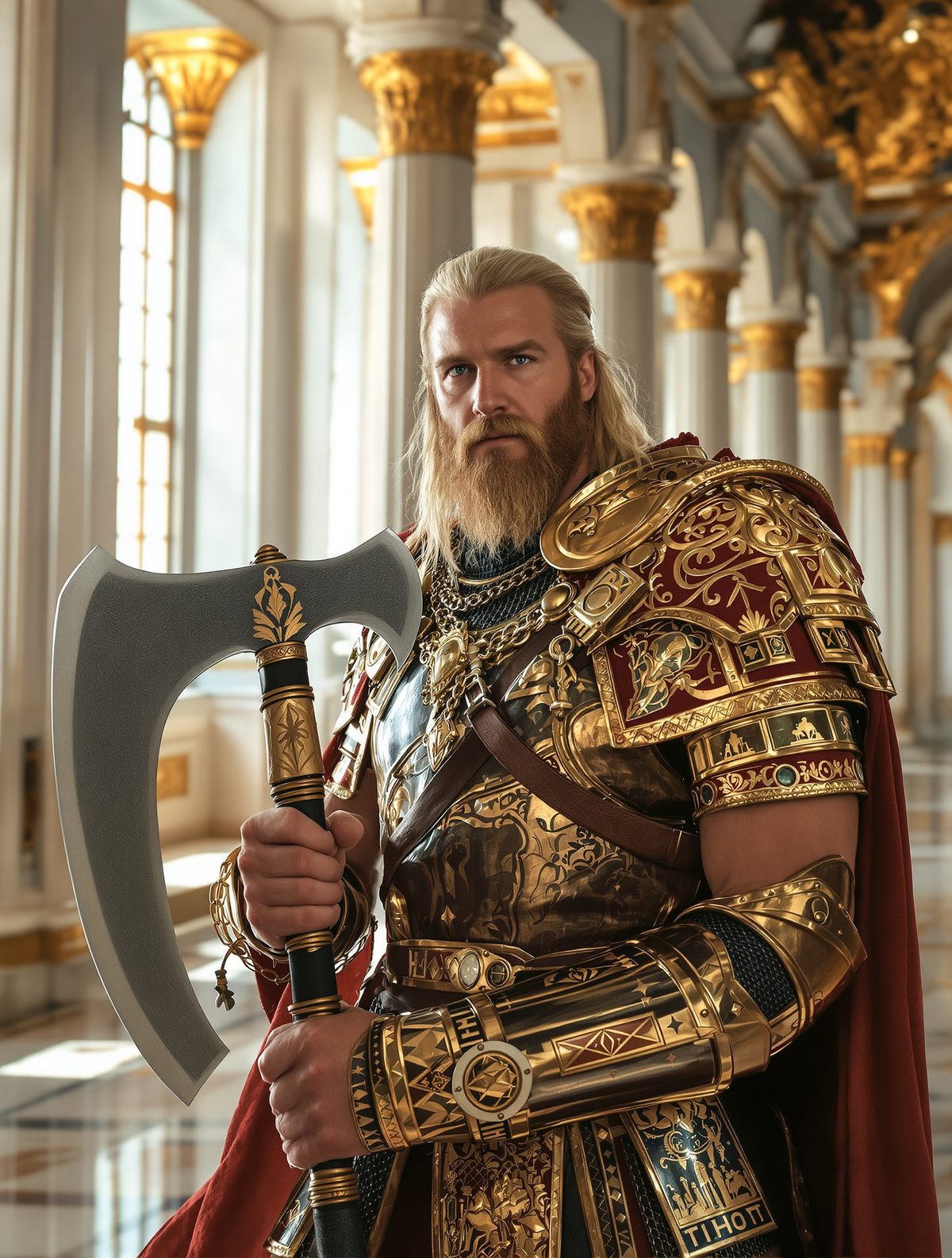
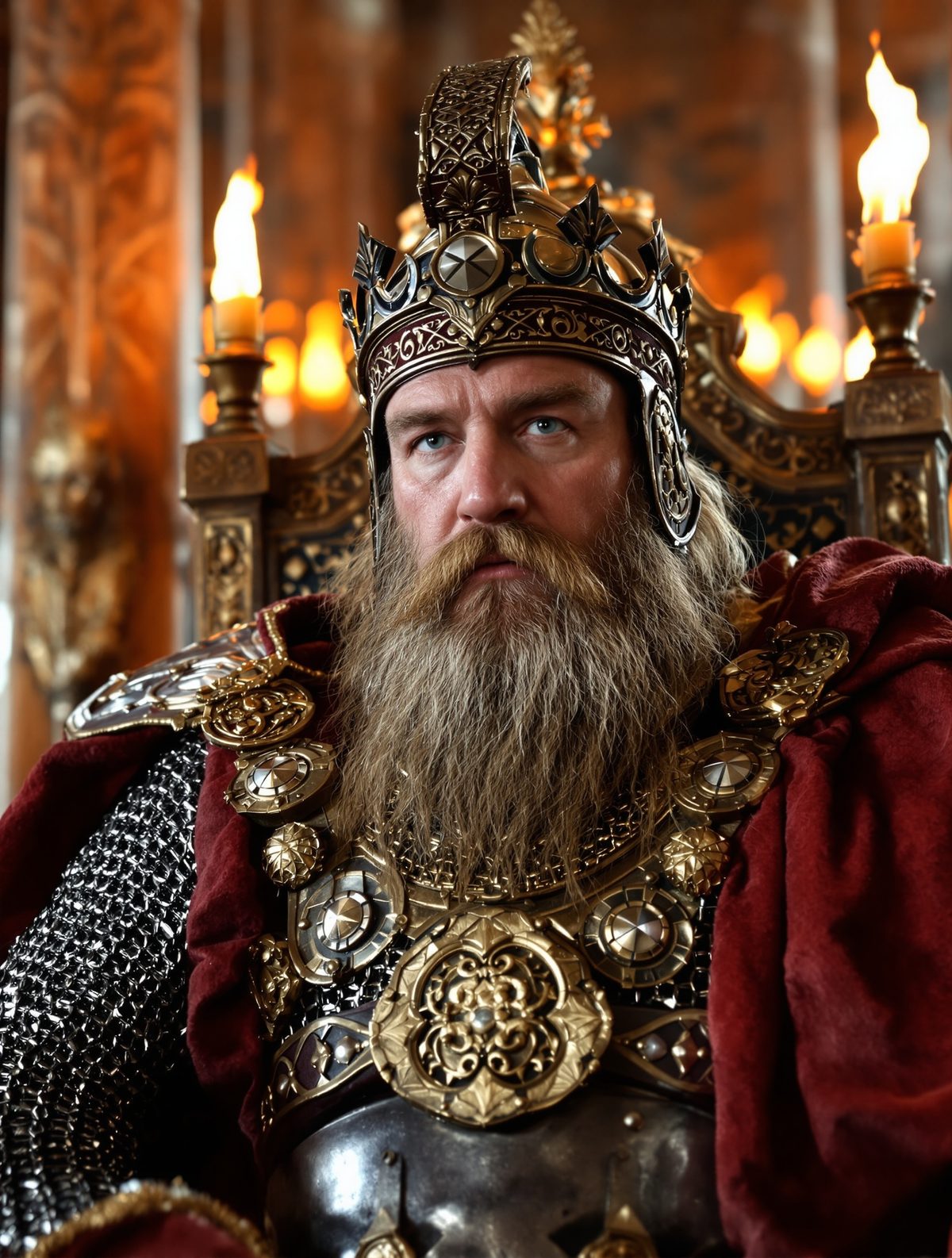
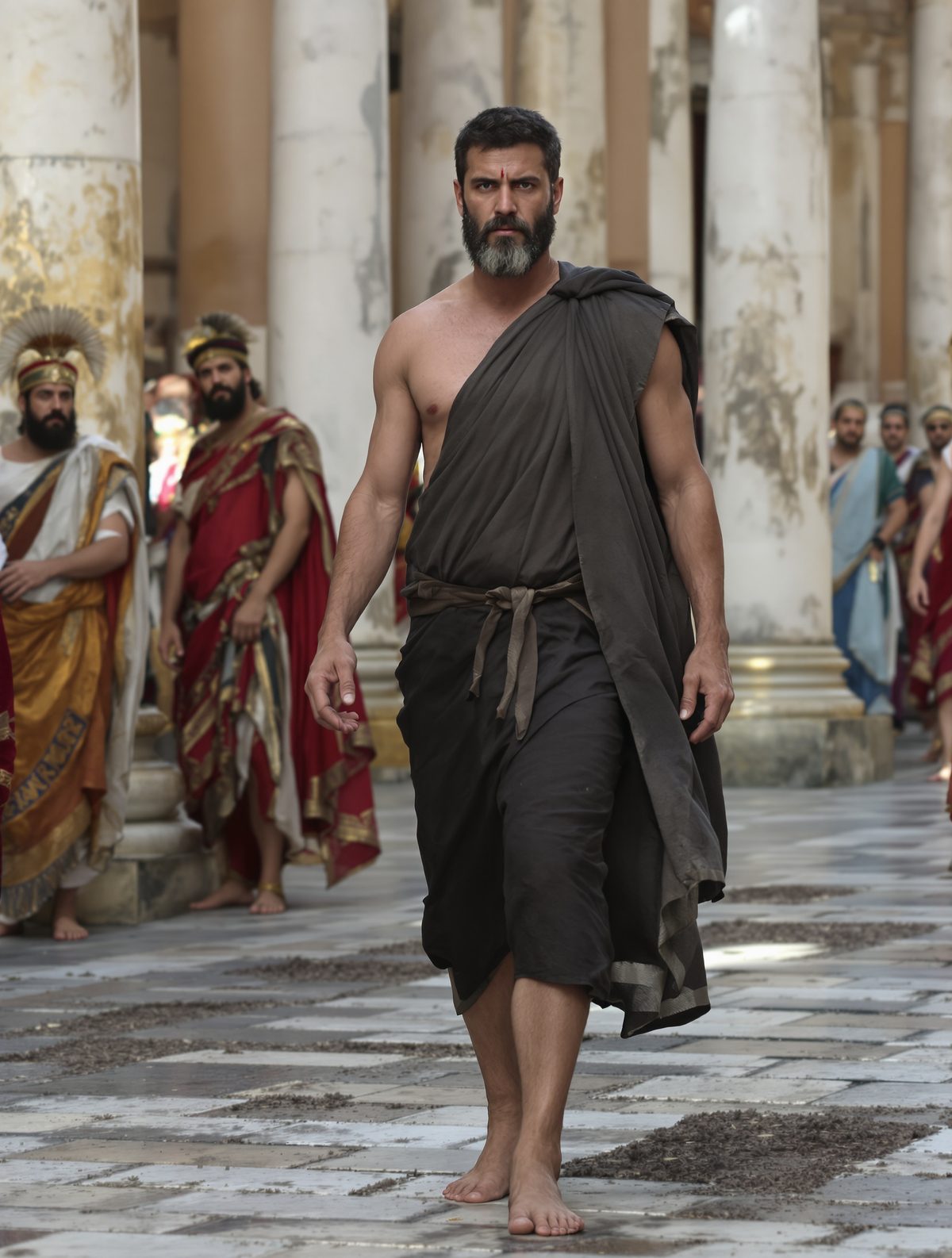
Picture this: It's January 897 AD in Rome, and the grandest courtroom in Christendom is packed with horrified spectators. On the papal throne sits a figure in magnificent robes, silent and unmoving. The air is thick with incense, desperately masking a putrid stench that makes even hardened clergy cover their noses. The defendant cannot speak in his own defense. He cannot move. He cannot even blink. Pope Formosus has been dead for nine months, but that hasn't stopped his successor from putting him on trial for his life.
Welcome to the Cadaver Synod — the most macabre courtroom drama in the history of the Catholic Church, where a rotting corpse was accused of crimes against God himself.
The Pope Who Dared to Crown an Emperor
To understand how we arrived at this grotesque spectacle, we must first meet Formosus — a man whose very name meant "beautiful" in Latin, though his fate would be anything but. Born around 816 AD, Formosus was no ordinary cleric. He was brilliant, ambitious, and politically savvy, rising through the Church hierarchy with remarkable speed. By 864, he had become Bishop of Porto, one of the most prestigious positions in the papal administration.
But Formosus made a fatal miscalculation. In the brutal chess game of 9th-century Italian politics, he backed the wrong horse — repeatedly. When he became pope in 891 AD at the age of 75, Europe was fragmenting. The Carolingian Empire was crumbling, Viking raids terrorized the coastlines, and Italian nobles were locked in vicious power struggles. Into this chaos stepped Formosus, who made a decision that would literally come back to haunt his corpse.
In 896, Pope Formosus took the extraordinary step of crowning Arnulf of Carinthia as Holy Roman Emperor, directly challenging the authority of the powerful Spoleto family who controlled much of central Italy. This wasn't just a religious ceremony — it was a declaration of war. The Spoletans had their own candidate for emperor, and Formosus had just humiliated them in front of all of Christendom.
Conveniently for his enemies, Pope Formosus died on April 4, 896 — just months after this controversial coronation. Whether his death was natural or assisted by poison remains one of history's unsolved mysteries, but his timing couldn't have been worse for his legacy.
A Successor with a Grudge
After Formosus's death, the papal throne changed hands with dizzying speed. Pope Boniface VI lasted just 15 days before dying under mysterious circumstances. Then came Stephen VI, and this is where our story takes its darkest turn.
Stephen VI wasn't just Formosus's successor — he was his sworn enemy. A creature of the Spoleto family, Stephen had watched in fury as Formosus crowned their rival. But Stephen was also reportedly unstable, described by contemporary chroniclers as prone to violent rages and bizarre behavior. Some historians suggest he suffered from what we might now recognize as severe mental illness, exacerbated by the impossible pressures of medieval papal politics.
For nine months, Stephen VI plotted his revenge. But simply condemning his predecessor's memory wasn't enough. In the twisted logic of medieval canon law, Stephen discovered a loophole that would allow him to literally put the dead pope on trial. If he could prove that Formosus had been illegitimately elected, then every action of his papacy — including that troublesome coronation — could be declared null and void.
There was just one problem: Church law required the accused to be present for trial.
The Most Grotesque Day in Church History
What happened next defies belief, even by the standards of the medieval era. In January 897, Pope Stephen VI ordered his men to the cemetery of St. Peter's Basilica. They dug up Pope Formosus's nine-month-old corpse, already in an advanced state of decomposition. The body was dragged through the streets of Rome to the papal court, where it was propped up on the papal throne like a gruesome marionette.
Palace servants, fighting back nausea, dressed the putrefying corpse in full papal regalia — the magnificent robes, the jeweled miter, the golden ring of the fisherman. A deacon was assigned to speak for the dead pope, though what words he could offer in defense of the silent, rotting figure remain unrecorded.
The charges against Pope Formosus were sweeping and damning. Stephen VI accused his predecessor of perjury, of illegally ascending to the papal throne while still serving as Bishop of Porto (a violation of Church law forbidding bishops from changing dioceses), and of performing invalid ordinations. But everyone in that packed courtroom knew this wasn't really about canon law — it was about that crown placed on Arnulf's head.
For hours, Stephen VI ranted and raged at the silent corpse. Witnesses described him as "speaking as if possessed by demons," screaming accusations at the decomposing figure who could offer no defense. The dead pope was found guilty on all charges — a verdict that surprised absolutely no one present.
The Punishment of the Dead
The sentence was swift and comprehensive. All of Pope Formosus's acts were declared invalid. Every priest he had ordained was stripped of their holy orders. Every decision he had made was overturned. But Stephen VI wasn't finished with his predecessor's humiliation.
The papal robes were torn from the corpse. The three fingers of the right hand used for papal blessings were hacked off with a sword. Then, in the ultimate act of contempt, the mutilated body was dragged through the streets of Rome behind horses, while crowds gathered to witness this unprecedented spectacle of papal revenge.
Finally, the corpse was hurled into the Tiber River like common refuse. But even the river, it seemed, wanted nothing to do with this cursed affair. A fisherman later claimed to have pulled up the body in his nets, and miraculous signs were reported wherever the corpse appeared. Rome was buzzing with rumors that God himself was displeased with Stephen VI's actions.
These weren't just superstitions in an age of faith — they were political dynamite. The common people of Rome, already suffering from famines and political instability, began to see the desecration of Pope Formosus as an omen of divine wrath. Stephen VI had overplayed his hand spectacularly.
Divine Justice and Earthly Consequences
The backlash was swift and brutal. By August 897 — just months after the Cadaver Synod — an earthquake struck Rome, toppling buildings and terrifying the population. The people saw this as divine punishment for the desecration of Pope Formosus, and their anger turned toward Stephen VI. A popular uprising overthrew the pope who had put a corpse on trial, and Stephen VI was imprisoned and strangled in his cell — meeting the same mysterious end as so many of his era.
But the story doesn't end there. Pope Theodore II, Stephen's successor, immediately overturned the Cadaver Synod's verdict. He ordered the remains of Pope Formosus to be retrieved from the Tiber (they were allegedly found perfectly preserved, another "miracle" that fed the political narrative) and reburied with full papal honors. The three severed fingers were ceremoniously reattached, and Formosus was posthumously declared innocent of all charges.
Yet even this wasn't the end. Pope Sergius III, who took power in 904, once again condemned Formosus and praised Stephen VI's actions. For decades afterward, popes would flip-flop on the legitimacy of Pope Formosus, each decision reflecting the shifting political winds of medieval Italy rather than any consistent theological principle.
A Legacy Written in Bones
The Cadaver Synod represents more than just a bizarre historical footnote — it reveals the terrifying intersection of absolute power and human madness. In an era when the Pope was not just a spiritual leader but a temporal ruler controlling vast territories and commanding armies, the stakes of papal politics were literally matters of life and death.
But perhaps most disturbing is how the trial reflects the medieval obsession with controlling not just the living, but the dead. In a world where the dead could be held legally accountable for their earthly actions, where corpses could be dressed up and put on trial, we see a society wrestling with concepts of justice, legitimacy, and divine will in ways that seem almost alien to modern sensibilities.
The Cadaver Synod also demonstrates how quickly institutions can descend into barbarism when unchecked power meets personal vengeance. The same Church that would later produce towering intellectuals like Thomas Aquinas and magnificent cathedrals across Europe could also produce a spectacle so grotesque that it shocked even medieval chroniclers accustomed to brutality.
Today, as we grapple with our own questions about institutional authority, accountability, and the limits of power, the image of Pope Formosus sitting silent on his throne serves as a chilling reminder: when human institutions lose their moral compass, even the dead are not safe from the living's thirst for revenge.