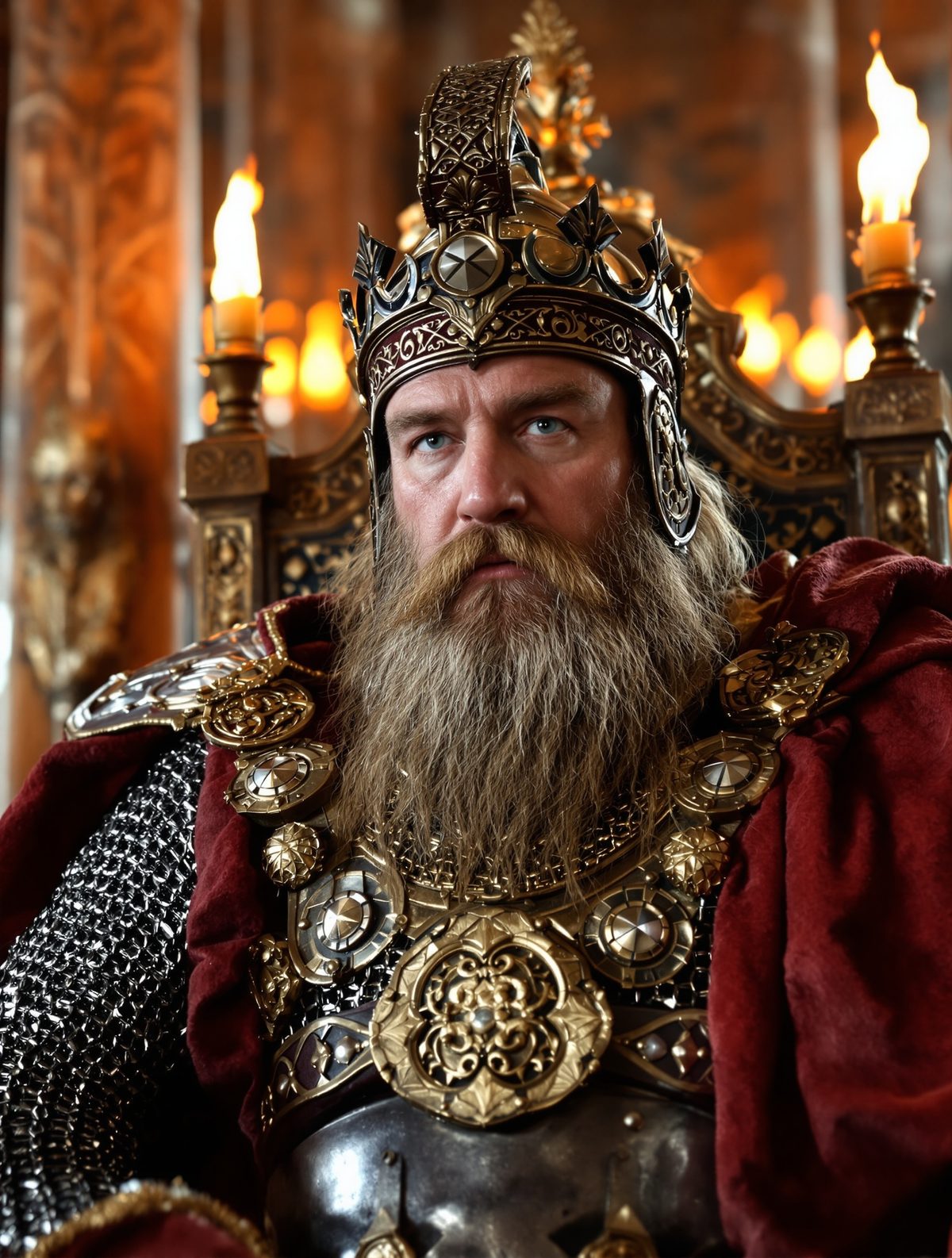
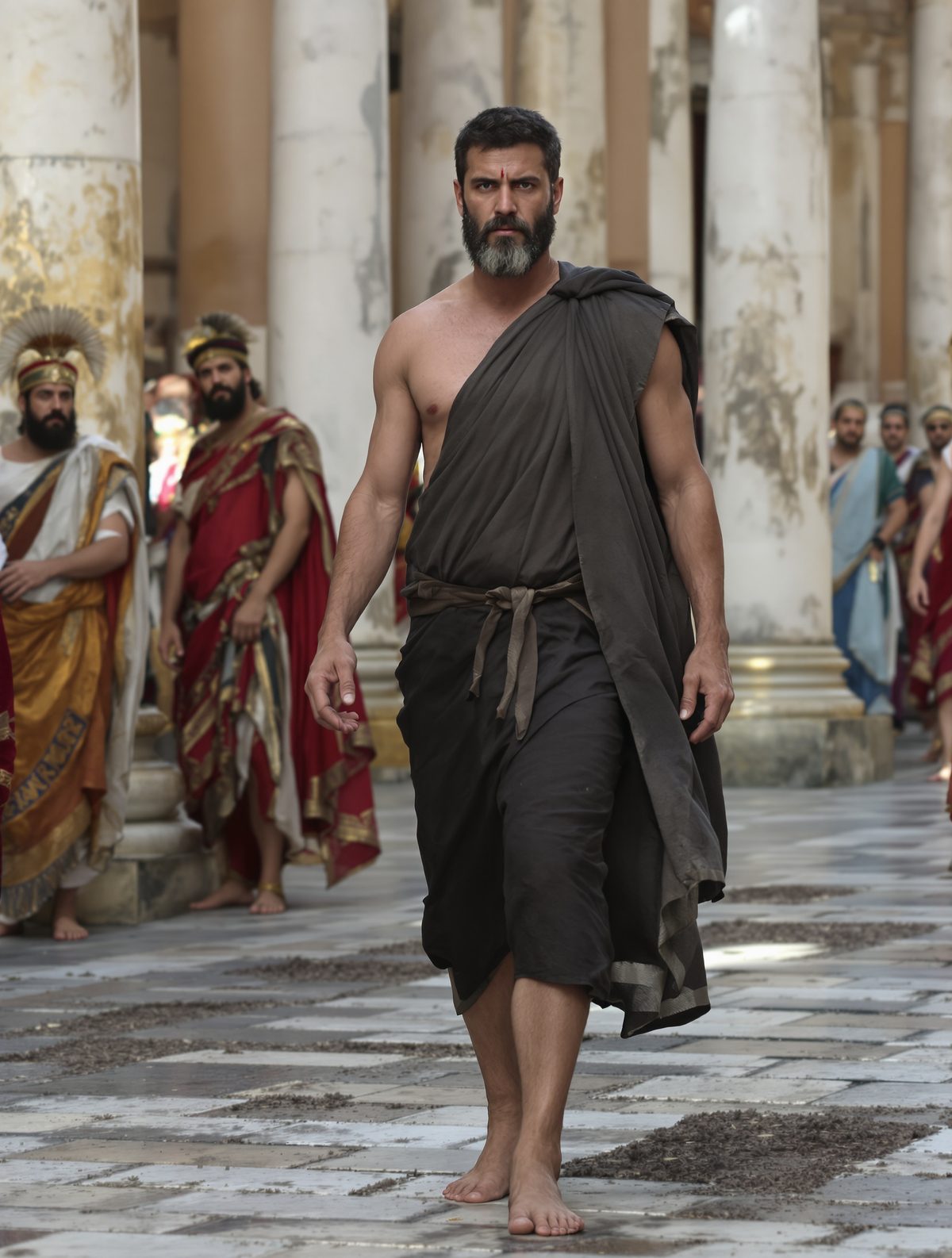
Picture this: A nineteen-year-old prince crouches behind a boulder, his royal robes torn and bloodied, watching his half-brother's lifeless body sprawl across a Norwegian battlefield. The dream of reclaiming their father's throne has died with King Olaf II at Stiklestad in 1030. Now Harald Sigurdsson faces a choice that will echo through history—flee into exile with nothing, or die alongside the scattered remnants of their army. He chooses exile, but this isn't the end of his story. It's the beginning of one of the most extraordinary journeys in medieval history.
Within a decade, this broken teenage refugee would command the most elite military unit in the civilized world, amass a fortune that legends are made of, and earn a nickname that would strike fear into enemies across three continents: Hardrada—"Hard Ruler." But first, he had to survive a 2,000-mile journey to the greatest city on Earth.
The Prince Who Lost Everything
Harald Sigurdsson was born into Viking royalty around 1015, but royal blood meant little when your kingdom lay in ruins. His half-brother Olaf had been trying to reclaim the Norwegian throne from the Danish king Cnut the Great, who ruled a vast North Sea empire stretching from Denmark to England. The Battle of Stiklestad on July 29, 1030, was supposed to be their moment of triumph. Instead, it became a massacre.
As Olaf fell—later to be declared Saint Olaf—young Harald sustained severe wounds but managed to escape into the wilderness. For months, he lived as a fugitive in his own land, sheltered by loyal farmers who risked their lives to hide the last heir to the Norwegian throne. But Norway under Danish rule was no place for a would-be king. Harald made a decision that would have seemed impossible to most medieval princes: he would seek his fortune in foreign lands.
In 1031, Harald and a small band of loyal followers slipped across the border into Sweden, then made their way east through the vast wilderness of Kievan Rus. This wasn't just any journey—it was a 2,000-mile odyssey through some of the most dangerous territory in Europe, following the ancient trade route that Vikings called "the Road to the Greeks."
Down the River Road to Byzantium
The journey to Constantinople was a legendary Viking adventure in itself. Harald's band traveled down the Dnieper River system, navigating treacherous rapids that had names like "Don't Sleep" and "Fierce." These weren't just geographical obstacles—they were killing grounds where Pecheneg raiders waited to slaughter unwary travelers.
At the massive Dnieper Rapids, Viking merchants and warriors had to physically carry their ships overland while fighting off constant attacks. The Byzantine Emperor Constantine VII described this route as so dangerous that "the Russians [Vikings] cannot pass through unless they make peace with the Pechenegs." Yet somehow, Harald's small warband not only survived but arrived in Constantinople around 1034 with their weapons, their honor, and their ambition intact.
When Harald first laid eyes on Constantinople, he was seeing the largest, richest, and most sophisticated city in the world. With nearly half a million inhabitants, it dwarfed any settlement in Western Europe. The massive walls, the soaring dome of Hagia Sophia, the Great Palace with its mechanical lions that roared and golden birds that sang—it must have seemed like stepping into another world entirely.
Joining the Emperor's Vikings
Harald had come to the right place at the right time. The Byzantine Empire had been recruiting Scandinavian warriors for their elite Varangian Guard since the 980s, when Emperor Basil II first discovered that these northern barbarians made the most loyal and effective bodyguards in the world. Unlike native Byzantine soldiers, the Varangians had no local political ambitions—they fought purely for gold and glory.
The Varangian Guard was no ordinary military unit. These were the Navy SEALs of the medieval world, an elite force of roughly 6,000 hand-picked warriors who served as the emperor's personal bodyguard, palace security, and special forces all rolled into one. They carried massive two-handed axes that could cleave through armor, and their battle cry could supposedly be heard over the clash of entire armies.
But here's what most people don't know: joining the Varangian Guard wasn't just about military prowess. These warriors also served as the emperor's personal enforcers during palace coups, which happened with shocking regularity in 11th-century Byzantium. Between 1028 and 1042, five different emperors would occupy the throne, and the Varangians played crucial roles in determining who lived, who died, and who got to wear the purple.
Rise to the Top of the World
Harald's rise through the ranks of the Varangian Guard was meteoric. Within just a few years, this Norwegian exile had become one of the unit's senior commanders, leading expeditions that read like fantasy novels. He fought pirates in the Aegean Sea, battled Arab raiders in Anatolia, and most famously, led Varangian forces in the Byzantine reconquest of Sicily from Arab rule.
The Sicilian campaigns of the late 1030s were where Harald truly made his reputation. Byzantine sources describe him leading amphibious assaults on fortified coastal cities, using innovative siege tactics that combined Viking berserker fury with Byzantine engineering expertise. In one famous incident, Harald supposedly captured a Sicilian city by having his men catch sparrows, attach burning materials to their legs, and release them back to their nests in the city's thatched roofs.
But Harald's most audacious moment came during the palace revolution of 1042. When Emperor Michael V attempted to exile the popular Empress Zoe, Constantinople erupted in riots. The Varangian Guard found themselves in an impossible position—torn between their oath to protect the emperor and the reality that the entire city wanted him dead. Harald, showing the political cunning that would later make him a king, chose the winning side.
The Varangians helped depose Michael V in one of the most brutal palace coups in Byzantine history. The emperor was captured, blinded, and castrated—standard procedure for deposed Byzantine rulers. Harald and his warriors then installed Constantine IX as the new emperor, cementing their position as the true power behind the throne.
The Making of a Legend
By 1042, Harald had achieved something unprecedented: a landless teenage refugee had become one of the most powerful men in the Byzantine Empire. As commander of the Varangian Guard, he controlled access to the emperor, commanded a personal fortune in gold and jewels, and had earned a fearsome reputation across the Mediterranean world.
Byzantine sources describe Harald as unusually tall even by Viking standards, with piercing blue eyes and an intellect that matched his physical prowess. He spoke fluent Greek, understood Byzantine court politics, and had mastered both diplomacy and warfare at the highest levels. This wasn't just a successful mercenary—this was a medieval Renaissance man being forged in the crucible of the world's greatest empire.
But Harald never forgot his ultimate goal: reclaiming the throne of Norway. Around 1042, he made the decision to return north, carrying with him a treasure hoard that contemporary sources described as almost unimaginably vast. Some chronicles claim he left Byzantium with enough gold to fill multiple longships—a fortune that would fund his future conquests.
Why Harald's Byzantine Adventure Still Matters
Harald Hardrada's transformation from exiled prince to imperial commander reveals something profound about the medieval world that most history books miss entirely. This wasn't the isolated, backward "Dark Ages" of popular imagination—this was a interconnected, cosmopolitan world where a Norwegian teenager could travel 2,000 miles and rise to command Greek armies in Sicily.
More importantly, Harald's story shows us how individual ambition and adaptability could transcend the supposed limitations of medieval society. In an age when most people never traveled more than a few miles from their birthplace, Harald mastered multiple languages, cultures, and military traditions. He proved that talent and determination could overcome even the most devastating setbacks.
The teenage prince who fled Stiklestad would eventually return to become King Harald III of Norway, and his Byzantine experience made him one of the most formidable rulers in European history. When he finally fell at the Battle of Stamford Bridge in 1066—marking the end of the Viking Age—he died not as a simple Norse warrior, but as a sophisticated military commander who had learned his craft in the greatest empire of his time.
In our own age of global mobility and reinvention, Harald Hardrada's journey from Norwegian refugee to Byzantine commander feels remarkably modern. It reminds us that the capacity for transformation, for crossing boundaries and becoming something entirely new, is one of the most enduring aspects of human ambition.