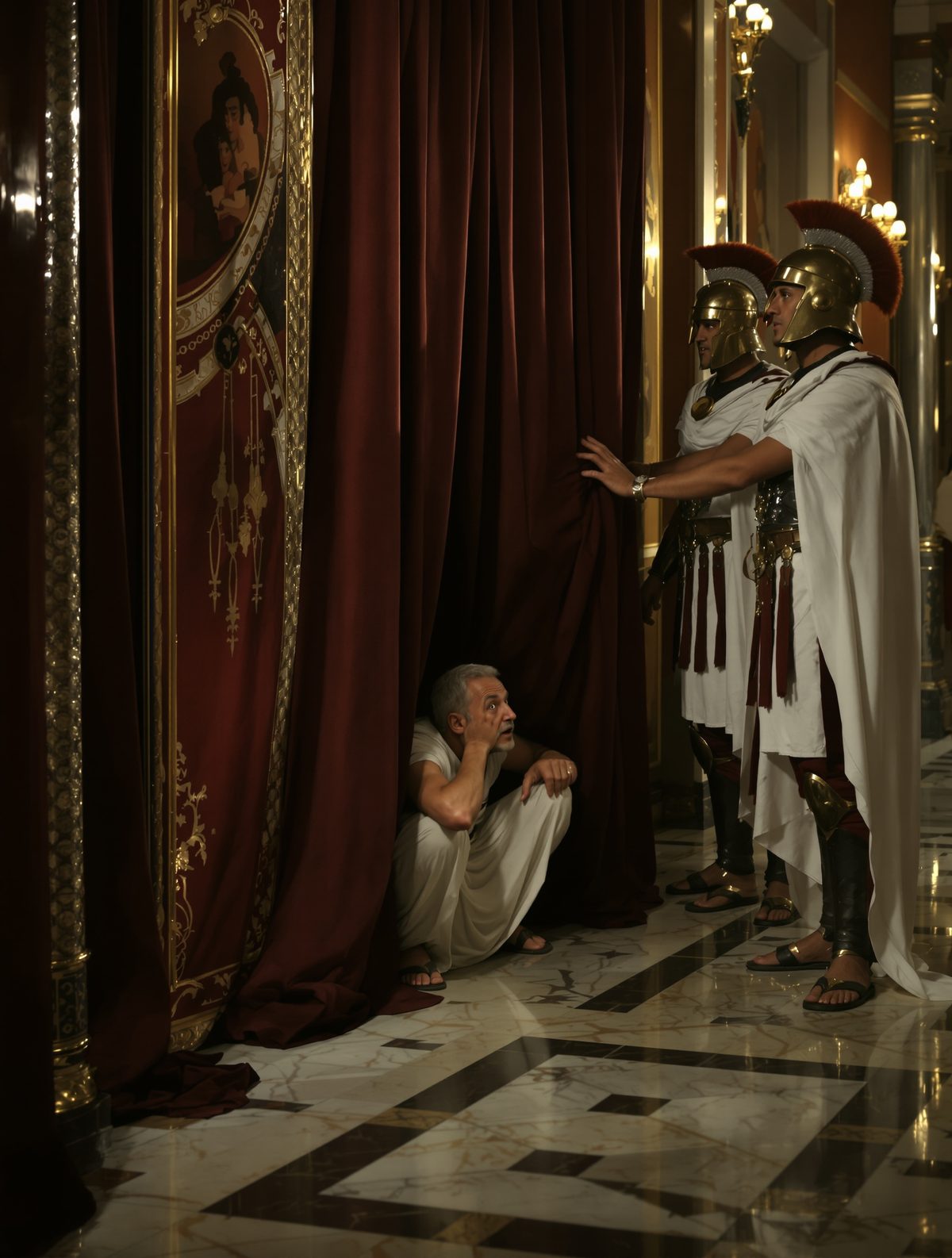
In the heart of the Roman Empire, whispers echoed through the marble halls of power. A man, shunned by his family and cloaked in ridicule, lurked in the shadows. He was Claudius, an ungainly figure with a limp, a stammer, and a penchant for unexpected brilliance. In 41 AD, as chaos erupted around him, a curtain became his sanctuary. Little did Claudius know that this very curtain would herald the birth of his imperial reign.
An Unlikely Heir
From his earliest days, Tiberius Claudius Caesar Augustus Germanicus was hardly a favored member of the Julio-Claudian dynasty. Born in 10 BC in Lugdunum, Gaul, Claudius was a scion of one of Rome’s most illustrious families. Yet, his physical disabilities—infamously pronounced in his limp, speech impediment, and drooling—cast him as an object of scorn. His family labeled him as mentally deficient, largely excluding him from public roles that were his birthright.
Augustus, Rome's first emperor and Claudius’s great uncle, referred to him as a 'monster,' lamenting that his offspring were fit only for laughter. Unlike his handsome and athletic relatives, Claudius was kept behind the curtains, both literally and metaphorically, during family functions. The family expected nothing of him and gave him nothing in return but mockery.
The Scholar Emerges
What Claudius lacked in physical prowess, he compensated for with an intellectual fervor that was as dazzling as it was unappreciated. As his family busied themselves with political machinations and imperial splendor, Claudius turned to the world of academia. He voraciously consumed texts on history and politics, leaving behind a trove of scholarly works that included extensive histories of Rome and the Etruscans.
Despite being denied high offices, Claudius's intellect attracted the attention of some scholars, though never his family. Seneca the Younger remarked on Claudius’s surprising aptitude for gnosis and his undisguised passion for the antiquities. While the court jesters sniggered, Claudius meticulously gathered wisdom, preparing—unknowingly—for an opportunity no one believed he would ever seize.
Caligula's Cruelty
The accession of Caligula in 37 AD signaled a reign of terror that brought Rome to the precipice of insanity. Caligula, known for his eccentricity, and perhaps madness, indulged in acts of unimaginable cruelty and indulgence. As the young mad emperor danced in the ruins of political norms, Claudius continued his life in the shadows of the court.
Caligula found amusement in his peculiar uncle, using the hobbling, stuttering figure as a prop for his cruel jests at banquets, with Claudius often the target of public mockery. Nonetheless, Claudius's survival instincts—honed through years of familial scorn—kept him from succumbing to Caligula's whims, teaching him how to be both visible and invisible when it mattered most.
A Curtain Call to Power
The Ides of January in 41 AD brought a chill to the heart of the empire as Caligula’s assassination rocked Rome. Among the chaos, Claudius, now in his fifties, stumbled upon destiny. Fearing for his safety amidst the ruthless power struggle, he hid back behind a curtain, a familiar refuge amid the unfamiliar terror of political upheaval.
His fate was sealed by a twist of fate when the Praetorian Guard, already looking for a pawn to place in power, stumbled upon him quivering behind the drapes. Recognizing his name and lineage, they declared him emperor. The neglected uncle became Claudius, the surprising successor, with an empire at his feet.
Rising Above Expectations
The laughter of his kin echoed in Claudius's memory as he took the reins of power. Yet, the mockery of a lifetime could not obscure his capabilities. As emperor, Claudius proved to be a capable, if unconventional, ruler. He governed with a surprising blend of pragmatism and innovation, enacting reforms that stabilized the empire’s economy and expanded its territory into Britain—an ambitious feat no Roman had achieved before.
His leadership baffled critics who had underestimated him for years. Claudius modernized Rome’s bureaucracy, ensuring the empire was efficiently administered. His reign, although punctuated by continued treachery, such as the infamous betrayal by his wife Messalina, left a legacy that showed a profound understanding of governance hidden beneath layers of dismissed potential.
Lessons from Laughter
Claudius’s tale is one that resonates even in contemporary times—a profound reminder of the resilience of the underestimated. Despite being derided by his own family and surrounded by doubters, Claudius emerged to lead an empire through diplomacy, cunning, and a wealth of scholarly knowledge.
Today, Claudius's journey from ridicule to imperial glory challenges our perceptions of leadership and capability. It whispers through history that the underestimated can not only survive but thrive, redefining the boundaries of potential with every quiet step they take. His story, as the man who became emperor by hiding behind a curtain, remains a testament to the power of perseverance against the odds—a Roman saga that continues to echo with relevance.