She wasn't of royal blood. Yet, she wielded more influence than many queens who were. In the grand annals of Ancient Egypt, Tiye's ascension to the throne was a move that not only defied tradition but forever changed the course of Egyptian history.
The Rise of a Commoner's Child
In an age dominated by divine right and hereditary succession, the choice of Tiye as queen sent ripples through the sacred halls of power. Born to the chariot commander Yuya and his wife Thuya, Tiye hailed from an unassuming lineage without noble titles or apparent claims to the throne. Yuya, respected in his own right, led Egypt's nimble chariots—a powerful force that was the backbone of the empire's military might. But his daughter was to achieve a status that would catapult her family into the immortal stone inscriptions of pharaonic lore.
Amenhotep III, the ninth king of Egypt's 18th Dynasty, perhaps saw in Tiye more than just the daughter of an esteemed military man. It was her intellect, strength, and presence that captivated the most powerful ruler of his time. Their union was no mere political alliance; it marked the dawning of an era where the title of "Great Royal Wife" would be imbued with new significance. Unlike other queens who might remain largely in the shadows of their commanding husbands, Tiye's influence was felt far and wide. She was not only Amenhotep's trusted confidante but also an astute advisor who played a vital role in the governance of the empire.
The marriage of Amenhotep III and Tiye broke from the longstanding tradition of marrying within the royal family to preserve divine right. This unprecedented decision placed Tiye amidst the illustrious lineage of Egypt's ruling class, bestowing upon her a power that she wielded with both grace and tenacity.
A Reign Marked by Diplomacy and Power
With Tiye by his side, Amenhotep III embarked on a reign characterized as one of the most prosperous in Egyptian history. Her political acumen and inherent understanding of diplomacy were instrumental in shaping a period of relative peace and monumental architectural achievements. Their partnership was a spectacle to behold: monuments sprouted along the Nile, from the towering Colossi of Memnon to the expansive precincts of the Karnak Temple, all of which attested to a civilization at its zenith.
Tiye's presence was not restricted to the royal court. She actively corresponded with foreign leaders, her influence crossing the borders of Egypt. Letters found in the Amarna archives reveal her pivotal role in international diplomacy, painting her not only as a queen but as an active political figure whose opinion was sought and respected by leaders far beyond the Nile.
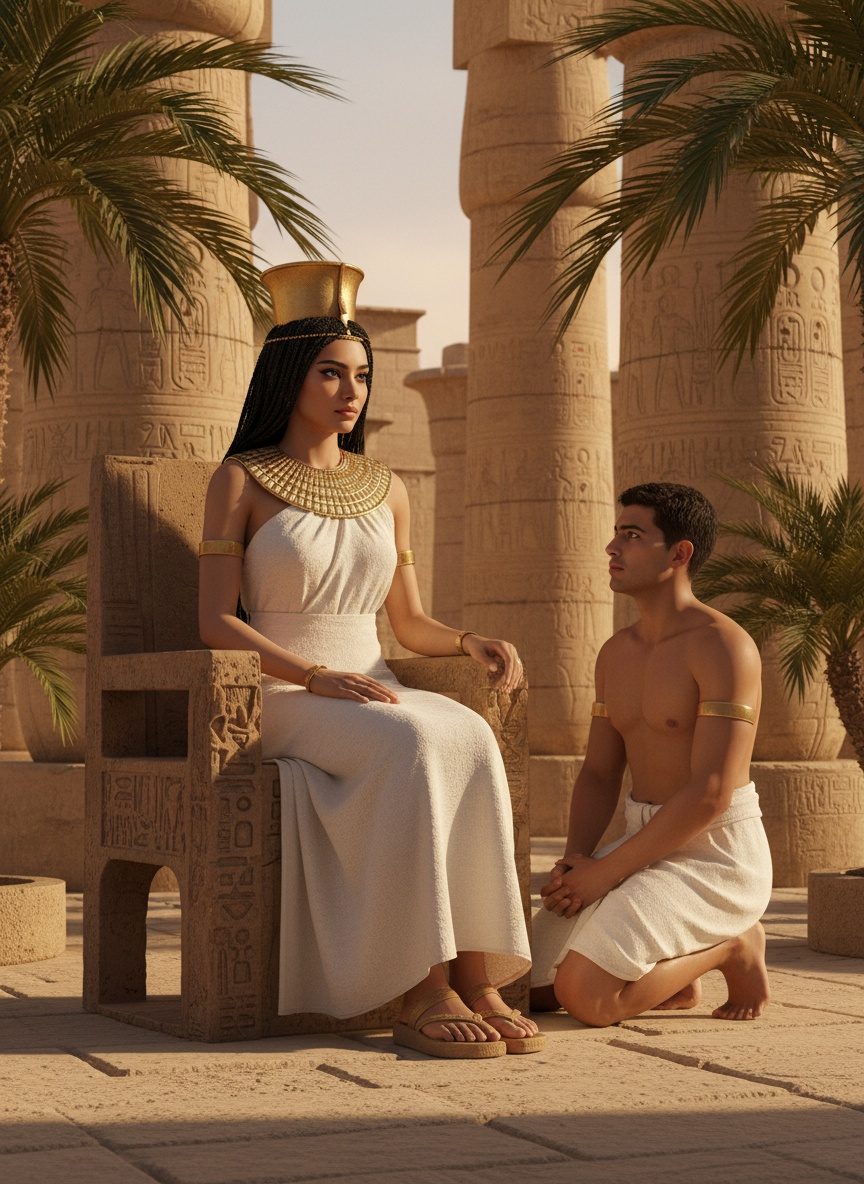
The queen's role was also depicted vividly through the art of the time. She was frequently portrayed equally alongside her husband in statues and paintings—a rarity that signaled her status and the high regard in which she was held. Tiye wasn't just a royal consort; she was a formidable force with her own legacy. Her children were to carry this powerful lineage forward, the most famous among them being Akhenaten, who would later establish a religious revolution by promoting the worship of a single deity, Aten.
A Legacy Written in Stone
Tiye's enduring legacy is inscribed in the stones and sands of Egypt—a testament to her unprecedented role and the transformative era she helped shape. The blend of strong royal imagery and apparent humility in her statues exemplifies a woman who balanced power with wisdom, commanding respect across her lifetime and beyond. Her influence continued to resonate long after her death, echoing in the policies of her descendants and the reverence of future generations.
Despite the lack of noble birth, Tiye's story is a remarkable chapter in the narrative of Ancient Egypt. It challenges preconceived notions of power and lineage, serving as a compelling reminder that resilience and intellect can forge paths to greatness, irrespective of one's origins. In a civilization obsessed with lineage and divine heritage, Tiye stands out as an improbable queen who wielded undeniable power. Her life, wrapped in intrigue and strength, is a narrative enshrined in both the grandeur of her achievements and the respect she garnered as a ruler—a queen whose legacy Egypt never forgot.
Today, Tiye's story serves as a fascinating example of the shifts within the ancient world, illustrating the complexities of power, gender, and heritage. Her influence in the Egyptian kingdom resonates powerfully, suggesting that the true measure of a ruler lies not in the blood that courses through their veins but in the legacy they leave behind. In an empire built on the sands of time, Tiye’s impact remains eternal, carved into the annals of history for curious minds and eager students who dare to look beyond the conventional tales of pharaohs and their divine rights.