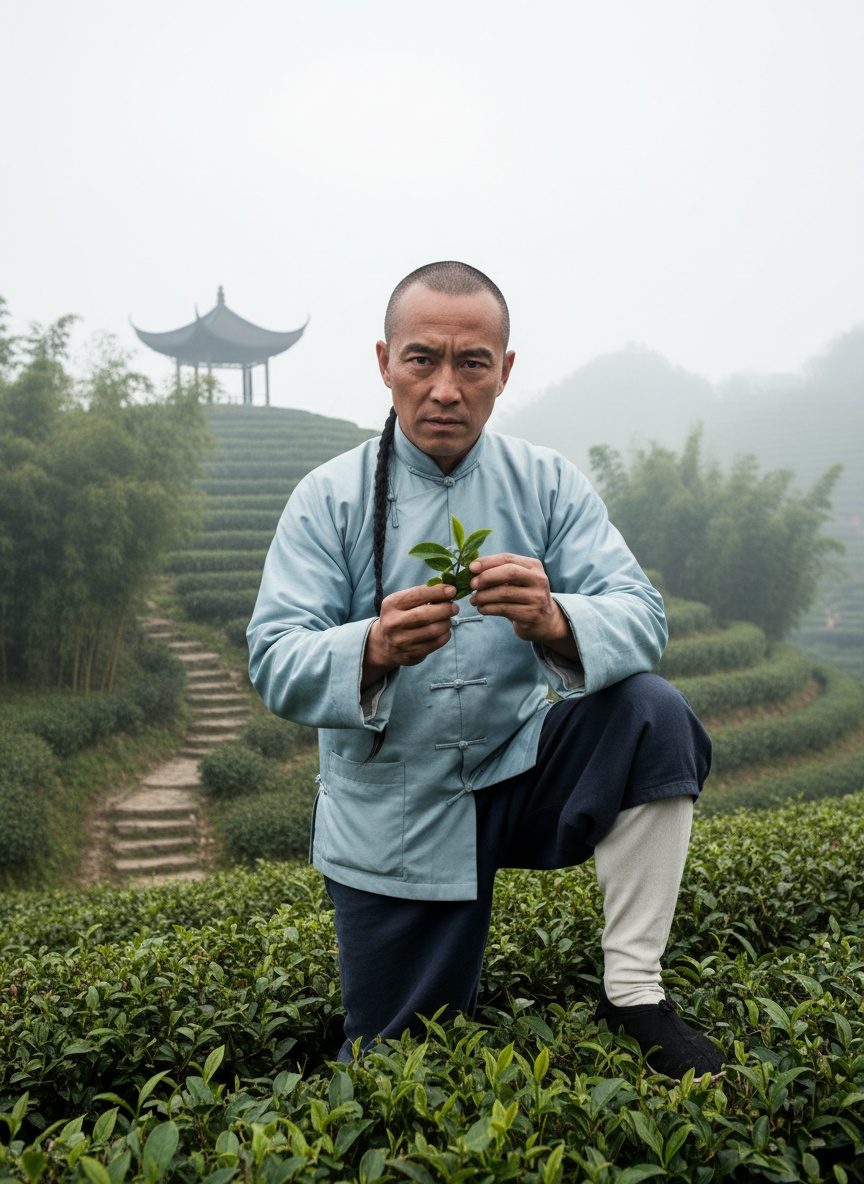
The air was suffocatingly warm beneath a hazy umbrella of mist, lingering over the verdant hills of China’s interior. The soft light of dawn threaded through the banyan trees, casting long shadows on the dew-drenched leaves of Camellia sinensis, the plant from which tea is wrought. In the distance, the chirping of cicadas added a rhythm to the early morning. If you listened closely, you might discern the careful footsteps of an intruder amongst the rows of tea bushes. It was 1848, a time when such a presence represented grave peril, and this foreign figure, dressed in borrowed silk robes, moved with a singular purpose. Robert Fortune had entered the forbidden mysteries of China’s tea gardens, daring to steal the secrets guarded for centuries.
A Forbidden Journey
The middle of the 19th century witnessed a great dance of commerce and culture between East and West. Yet, one commodity remained an enigma: tea. As precious to the British as gold, the origins and cultivation of the prized leaves were zealously guarded by the Qing Dynasty. Foreigners had been relegated strictly to the treaty ports with a stern warning against venturing inland. But Robert Fortune, a Scottish botanist with an insatiable curiosity and an uncommon resolve, embarked upon this perilous path. His pilgrimage into the heart of China, cloaked as a native, broke both cultural and political boundaries.
The transformation required to traverse this world undetected was not for the faint-hearted. With a shaved head and a meticulously crafted queue, his ambition demanded a full immersion into a role both alien and audacious. As he navigated through dense tea fields, barely distinguishable from indigenous merchants, Fortune’s calculated risks were none other than sacrilege in the eyes of his hosts. Yet, it was the audacity of his disguise that granted him passage where no other foreign footsteps dared tread.
The Heart of the Tea Gardens
Imagine the verdant expanses stretching as far as the eye could see, a quilt of emerald richness interwoven with the disciplined efforts of laborers who knew these lands like the lines of their palms. Here, in the cradles of Jiangxi and Fujian provinces, lay the heart of China's tea production. Each leaf, hand-plucked and skillfully processed, carried a legacy nurtured over centuries. In these secretive sanctuaries, vital techniques and varietals were carefully curated — the province of Chinese artisans who had inherited these customs from their ancestors.
Fortune’s journey took him beyond mere observation; he assimilated the practices that had until then remained veiled behind the bamboo curtain. It was not just the plants he sought, but also the very rhythm of life in these pastoral landscapes — the symbiotic relationship between the people and their craft. He watched, listened, and quietly documented all that he saw. The stakes were high, the penalties severe, but Fortune’s resolve was unyielding, driven by a profound appreciation and clandestine patronage from the British East India Company.
The Gathering of Secrets
An air of tension hung over the act as Fortune methodically collected seeds, cuttings, and arguably, an essence. Engaging in covert operations required a blend of diplomacy and stealth. Under the guise of an inquisitive nature, he conversed with local growers, learning the minutiae of tea cultivation, fermentation, and drying. These insights, clandestinely noted, would unlock untold wealth for Western interests determined to cultivate tea elsewhere.
The essence of espionage permeated every part of Fortune’s mission. From the precise art of mimicking the regional dialect to the detailed sketching of landscapes and operations, Fortune’s stealth was his lifeline. The gentle undulation of tea hills and the artful choreography of harvesters disguised the surreptitious web of dangers beneath. Here, knowledge was power, and the very environment whispered caution to those who dared disturb its tranquility.
The Return Journey
Safely concealed among his luggage, Fortune carried his botanical treasures — a mute testament to his journey’s success. As he retreated from the hallowed ground of Chinese tea lore, the world within his grasp could not have been of greater consequence. He emerged from the grand jigsaw of the Far East like a daring novelist, poised with a narrative that promised transformation.
What followed was a revolution in British tea culture, facilitated by Fortune’s quest. His collection of thousands of plants and seeds was a coup that rippled through the plantations of India, a harbinger of change. The Scottish botanist’s tale of triumph is interwoven with global ramifications, as his pathway into the enigmatic world beneath the banyan trees laid the groundwork for an industry that would augment the power structures of the Victorian Empire.
Shadows of Empire and Legacy
The sun sets over an era where the boundaries of exploration and exploitation were often intertwined. Robert Fortune’s journey stands as a reminder of the delicate dance between cultural admiration and imperial ambition. At its core, it challenges us to reflect on the costs of progress and the legacies forged in its wake. In a world where anonymity allowed one man to gaze deeper into a realm guarded jealously by tradition, the story of Fortune daringly underscores the potent blend of courage and controversy that continues to influence our interconnected histories.