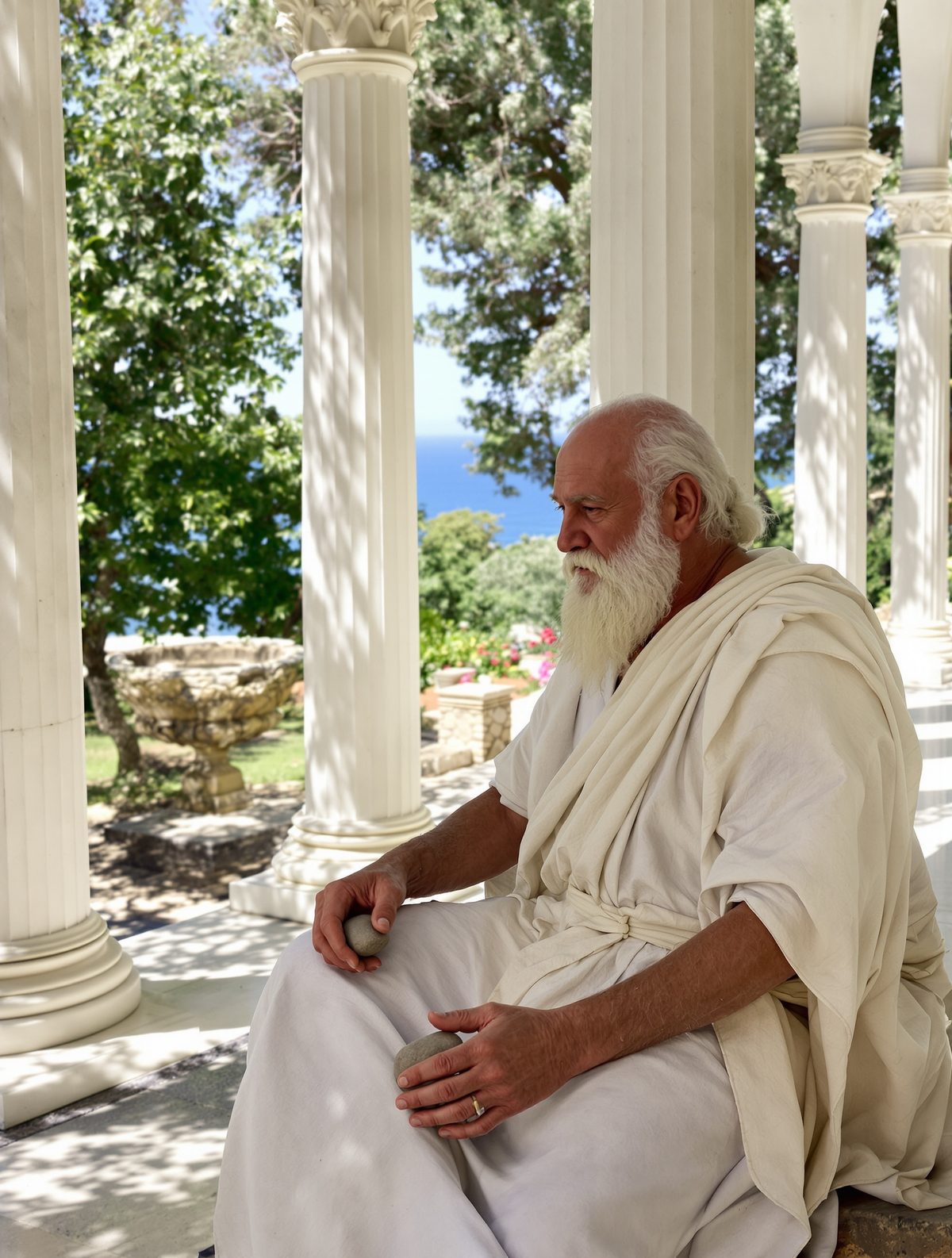
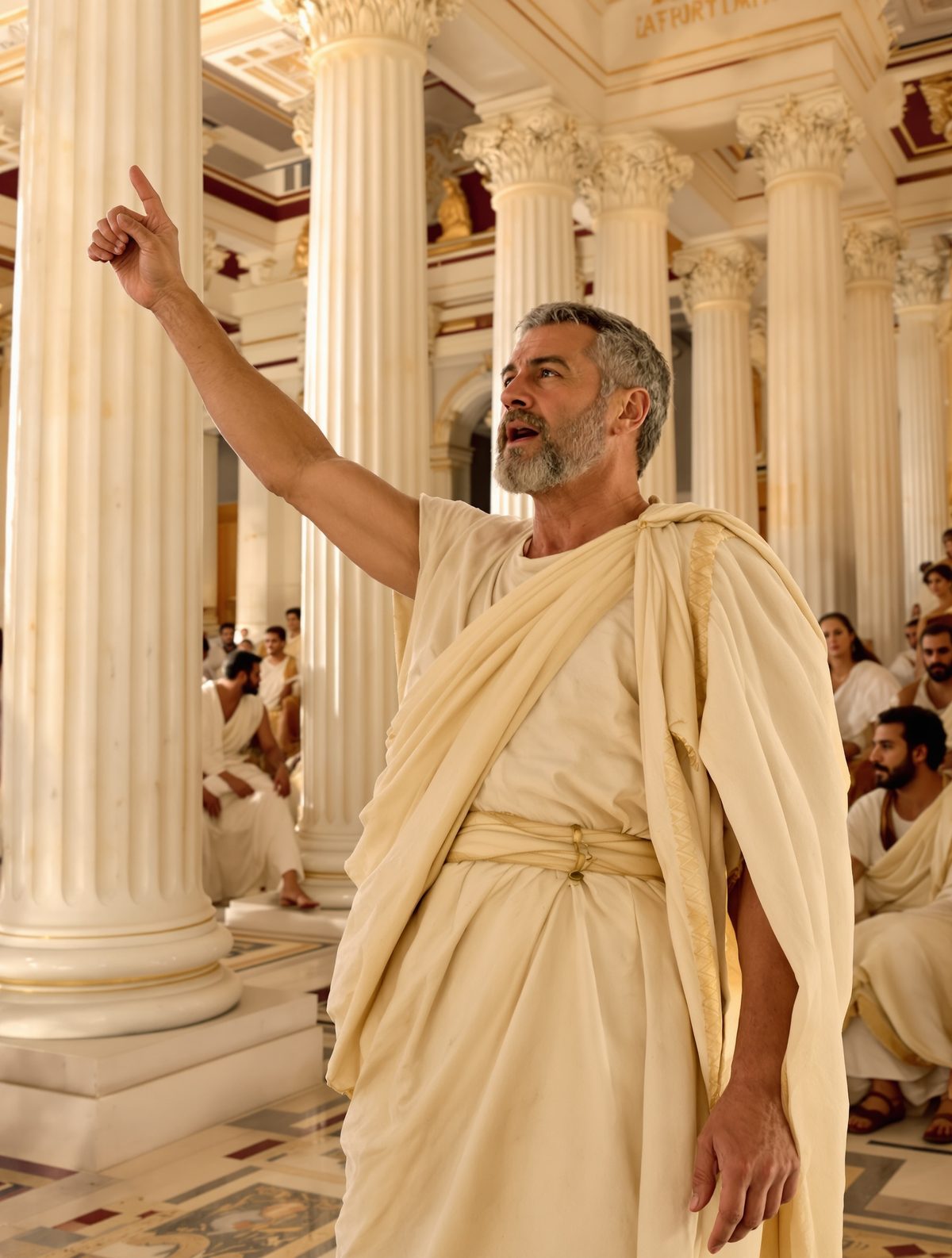
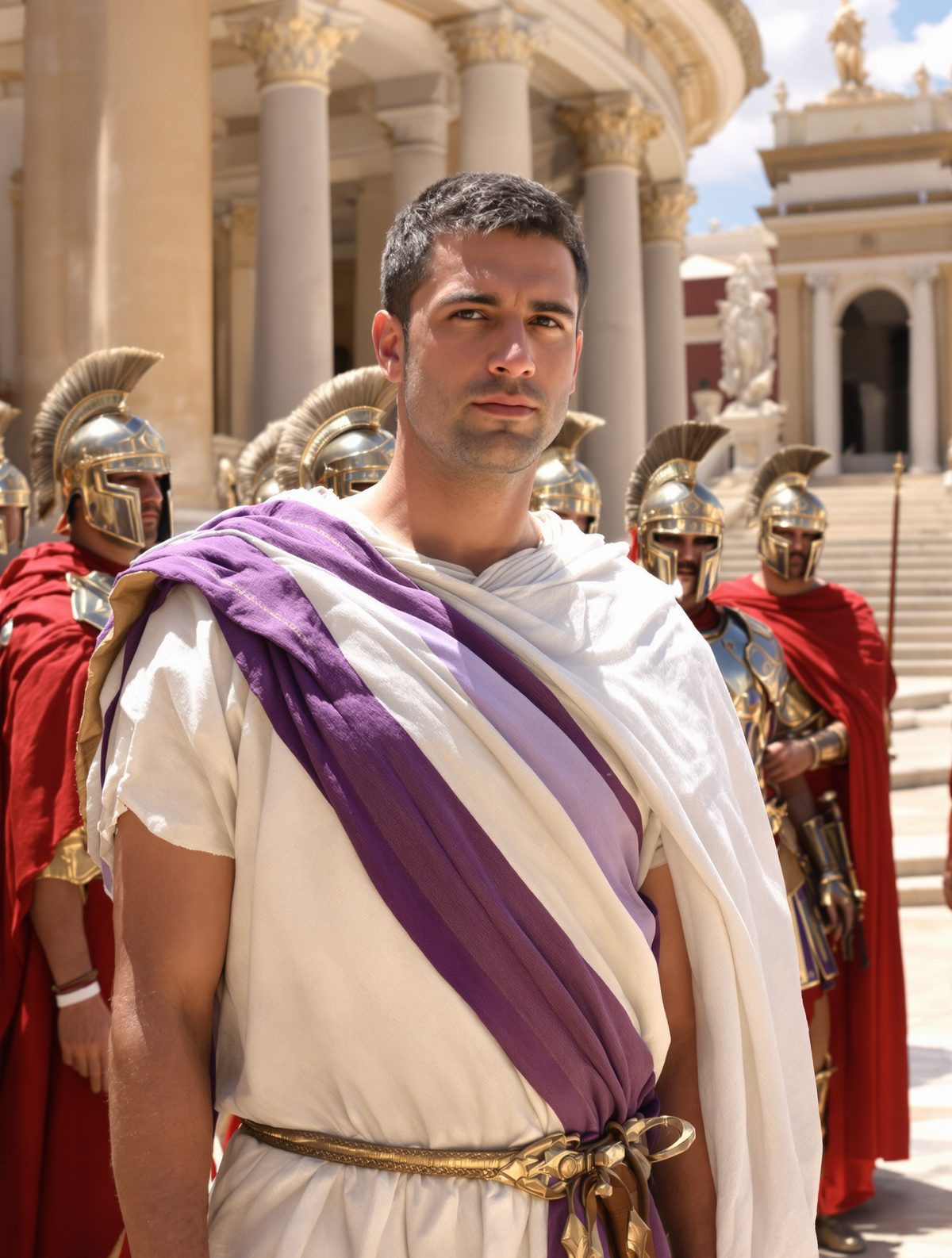
Picture this: the marble halls of the Roman Senate echo with the clip-clop of hooves as a chestnut stallion is led to a seat of power beside Rome's most distinguished men. The year is 39 AD, and the senators—men who once commanded legions and governed provinces—bow their heads respectfully to their newest colleague: a racehorse named Incitatus. Welcome to the reign of Gaius Julius Caesar Augustus Germanicus, better known as Caligula, where the impossible became routine and madness wore a purple toga.
What you're about to discover isn't just the story of an eccentric emperor and his beloved horse—it's a window into how absolute power can transform a promising young ruler into history's most notorious madman. The tale of Incitatus reveals the terrifying moment when the Roman Empire's greatest strength became its greatest weakness: the unchecked authority of a single man who believed himself to be a god.
The Making of a Monster: Caligula's Rise to Power
When eighteen-year-old Caligula inherited the throne in March 37 AD, Rome rejoiced. The great-nephew of Emperor Tiberius seemed like a breath of fresh air after his predecessor's paranoid and reclusive final years. Born Gaius Julius Caesar Germanicus in 12 AD, he'd earned the nickname "Caligula" (meaning "little boots") as a toddler when he charmed Roman soldiers by wearing miniature military sandals around army camps.
Initially, Caligula appeared to be everything Romans hoped for in an emperor. He recalled political exiles, distributed generous bonuses to the Praetorian Guard, and put on spectacular gladiatorial games that made the crowd roar with approval. But within months, something went horribly wrong. Some historians point to a severe illness in late 37 AD that left the young emperor changed—whether from brain fever, epilepsy, or simple mental breakdown, the promising ruler who emerged from his sickbed bore little resemblance to the beloved prince who had fallen ill.
By 38 AD, Caligula had begun displaying the erratic behavior that would define his reign. He started insisting that people treat him as a living god, forced senators to worship him, and began making decisions that ranged from merely eccentric to downright insane. But perhaps no decision would prove more shocking—or more telling—than his treatment of a certain racehorse.
Enter Incitatus: Rome's Most Pampered Stallion
Incitatus wasn't just any horse—he was a magnificent racing stallion whose very name meant "swift" or "spurred on" in Latin. Racing was Rome's most popular sport, and the best horses were celebrity athletes in their own right, with devoted fans who knew their bloodlines, racing records, and personal quirks. But Caligula's obsession with Incitatus went far beyond normal enthusiasm for the sport.
The emperor lavished attention on his favorite mount that would have been excessive for a beloved child, let alone a horse. Ancient historians Suetonius and Cassius Dio recorded the astounding details: Incitatus lived in a marble stable decorated with precious stones, ate from an ivory manger, and drank wine from golden goblets. His stall was furnished with purple blankets—the color reserved for royalty—and he wore a jeweled collar that cost more than most Romans earned in a lifetime.
But Caligula's generosity didn't stop at luxury accommodations. He assigned the horse a retinue of servants, built him his own house complete with furniture and slaves, and reportedly spent over 2.5 billion sesterces (roughly equivalent to hundreds of millions of dollars today) on improvements to the horse's living quarters. To put this in perspective, the entire annual revenue of the Roman Empire at the time was approximately 1 billion sesterces.
The Ultimate Insult: A Horse in the Senate
In 39 AD, Caligula took his equine obsession to its logical—and horrifying—conclusion. He announced that Incitatus would be appointed to the consulship, one of the highest offices in the Roman Empire. The consulship, traditionally held by Rome's most distinguished citizens, carried with it command authority over legions and the right to propose legislation to the Senate.
The appointment sent shockwaves through Roman society. Senators who could trace their lineages back centuries, men who had governed provinces and commanded armies, were now expected to treat a horse as their equal. At state dinners, Incitatus was given a place of honor at the table, complete with his own golden dishes and chalices of wine. Guests were required to toast the horse's health and speak to him with the same respect they would show any other high-ranking official.
Ancient sources describe the surreal scene of toga-clad senators making small talk with a stallion, praising his "wisdom" and seeking his "counsel" on matters of state. The horse, naturally, remained silent—which Caligula interpreted as thoughtful contemplation rather than the obvious fact that horses cannot speak. Some senators, desperate to curry favor with their increasingly unstable emperor, even claimed to understand Incitatus's "responses" through his movements and expressions.
Method to the Madness: Power, Humiliation, and Control
While modern observers might dismiss Caligula's behavior as simple insanity, many historians argue there was a twisted logic to his actions. The appointment of Incitatus wasn't just random madness—it was a calculated insult designed to demonstrate the emperor's absolute power and the Senate's complete irrelevance.
By forcing Rome's elite to bow and scrape before a horse, Caligula was making a brutal point: their positions, their dignity, and their very lives depended entirely on his whims. If he could elevate a horse to the consulship, what did that say about the worth of traditional Roman honors? The message was clear—in Caligula's Rome, birth, achievement, and merit meant nothing compared to imperial favor.
The emperor's treatment of Incitatus also reflected his growing belief in his own divinity. In Caligula's mind, if he was a god, then his favorites—even a horse—deserved divine honors as well. He reportedly held conversations with statues of Jupiter and other gods, claimed to control the weather, and once ordered his soldiers to attack the sea and collect seashells as "spoils of war" against Neptune.
The End of an Empire's Patience
Caligula's reign of terror couldn't last forever. By 41 AD, his increasingly erratic behavior—including his plans to move the capital to Alexandria and his threats to make Incitatus a full god—had exhausted even his supporters' patience. On January 24, 41 AD, members of the Praetorian Guard cornered the emperor in an underground passage of his palace and stabbed him to death. He was just 28 years old and had ruled for less than four years.
Incitatus, mercifully, was spared the political purges that followed Caligula's assassination. The horse quietly disappeared from historical records, presumably living out his days in considerably less luxurious circumstances under the new emperor, Claudius, who wisely chose to pretend the consulship of a horse had never happened.
Legacy of the Impossible: When Power Corrupts Absolutely
The story of Caligula and Incitatus might seem like ancient comedy, but it carries a warning that resonates across the centuries. It demonstrates how quickly absolute power can transform even promising leaders into tyrants who lose all connection to reality. When no one can say "no" to you, when your every whim becomes law, and when people around you compete to enable your worst impulses, the descent into madness becomes almost inevitable.
Today, as we watch leaders around the world test the boundaries of democratic norms and institutional constraints, the tale of a horse in the Roman Senate serves as a reminder of what happens when those boundaries disappear entirely. Caligula's reign lasted less than four years, but it took decades for the Roman Empire to fully recover from the damage he inflicted on its institutions and traditions.
Perhaps most chillingly, Incitatus may not have been the worst consul in Roman history—at least he never started any wars, raised taxes, or ordered executions. In a twisted way, Rome might have been better governed by a horse than by the madman who appointed him. That sobering thought should give us all pause the next time we're tempted to concentrate too much power in too few hands.