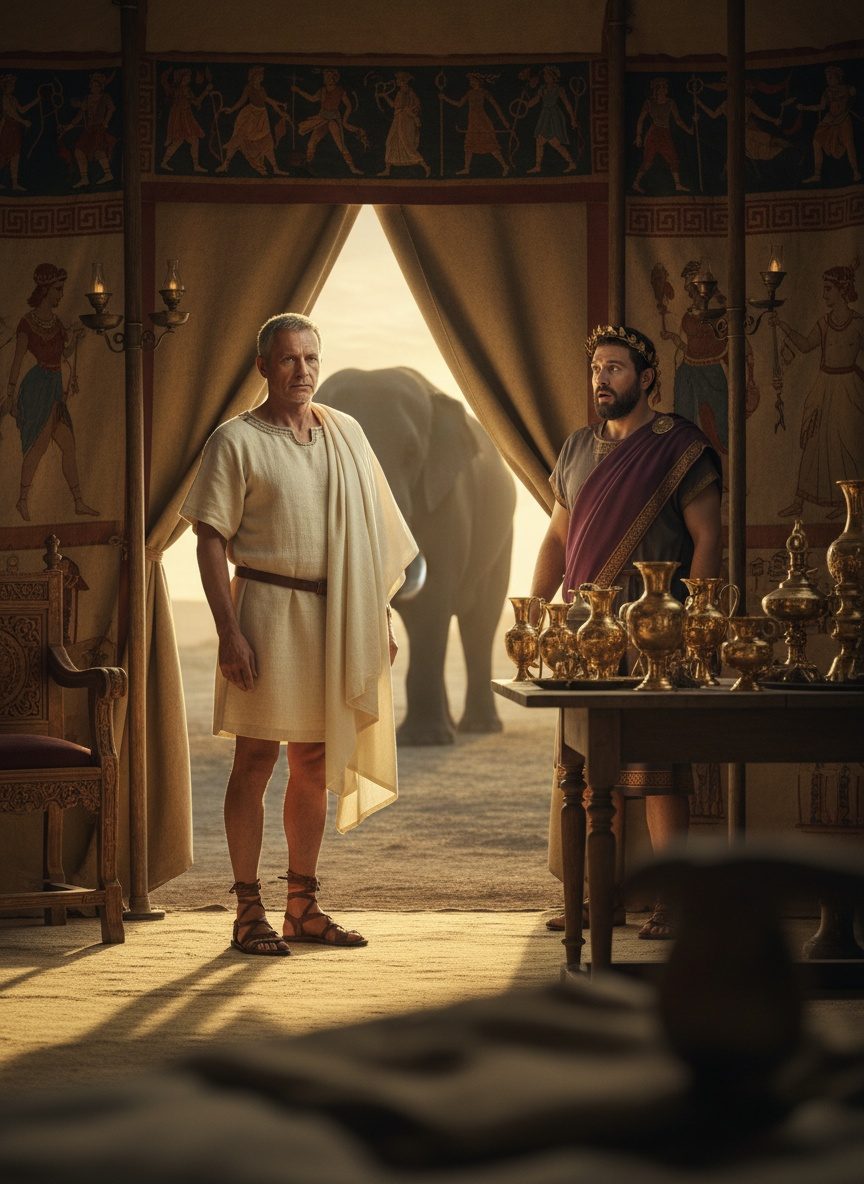
The scent of incense mingled with the sweet smell of wine, the low hum of conversation punctuated by the clatter of cups and dishes. A lavish feast for a diplomat had been prepared, yet the atmosphere was as tense as a battlefield. Gaius Fabricius Luscinus, the unassuming Roman envoy, sat across from the formidable King Pyrrhus of Epirus, a man who had recently brought Rome to its knees. Victory in battle had not brought him peace, so now Pyrrhus sought it through diplomacy—and gold. The gold clinked when placed before Fabricius, an unmistakable sound that even the thick curtains couldn't stifle. But the Roman envoy remained impassive, his eyes steady, betraying neither greed nor fear. For Fabricius, whose reputation for incorruptibility had reached foreign shores, gold was merely metallic shimmer, not a lure.
Pyrrhus gazed at Fabricius with both admiration and frustration. In this moment, he saw not just an adversary but a contradiction to his belief that every man had a price. Fabricius was poor, immensely so, by the standards of wealthy Rome, yet his integrity was a treasure beyond value. The king leaned in, his voice smooth and coaxing, explaining how easily this wealth could smooth the rocky path of diplomacy, how this gold could change destinies. But Fabricius, maintaining a calm demeanor, replied that the offer of gold was not only unnecessary but insulting, and dismissed the notion that the Roman Senate could be swayed by riches.
Pyrrhus, not one to admit defeat easily, decided to employ a tactic that could daunt even the bravest soul. With a hushed command, a part of the tent wall was drawn back, revealing the immense form of an Indian elephant. Its sheer presence was intimidating, its tusks gleaming like ivory lances in the dim light. The room froze, save for the beast's breathing and the slight swaying of its trunk. Fabricius, however, betrayed not a flicker of fear. He addressed Pyrrhus, making it clear that neither gold nor the threat of tusks could move him or his Republic from their chosen path.
The silence that followed was profound. Ashamed and yet impressed, Pyrrhus could not help but admire this man of virtues as rare in his court as they were in Rome. With a gesture of surrender to Fabricius's integrity, Pyrrhus ordered the Roman prisoners captured in his latest victory to be freed without ransom—a gesture that was greeted with shock across both camps. It was an extraordinary act, and the story would ripple through the annals of history, lauded as an instance of moral grandeur amidst the brutality of war.
This encounter highlighted more than just the characters of two men—it was emblematic of the cultural and political tensions of the era. Rome was an emerging power, playing a dangerous game of dice against the established Hellenistic kingdoms. Pyrrhus, cousin to Alexander the Great and a proven commander himself, represented the pinnacle of Greek martial prowess. Yet, despite his battlefield successes, he found himself at an impasse when faced with the unyielding ethics of Rome's representatives. The clash was not just on the fields of battle but in the realm of ideals and governance. Fabricius, like Cincinnatus before him, was a testament to Rome's Republic virtues that were more resonant than any gold or sword.
The discussions between Fabricius and Pyrrhus soon became legendary tales of reciprocal respect amidst political ordeal. Even the Romans, not given to humble praises of their defeats, cherished this story, emphasizing that a Roman's word and integrity were worth more than a mountain of gold. Later accounts emphasized how Fabricius's refusal to be corrupted became a guiding myth for subsequent Roman statesmen. It set precedents in dialogue and diplomacy far removed from the great expenditures of lives and treasure typically spent in the pursuit of victory.
As the years passed, the tale of Fabricius and the elephant was embellished in myriad ways—legends blended with fact as storytellers of succeeding generations recounted the parable of virtue triumphing over vice to Rome's youth. More than five centuries later, the historian Plutarch would include this account in his "Lives," ensuring its lessons were passed down through time. For the Romans, the tale became a cultural touchstone, revered for its illustration of steadfast virtue, a moral high ground they aspired to, even if not always reached.
In a world hungry for power and expansion, the tale of Fabricius and his unyielding resolve resonates as a narrative of moral fortitude and the impact of individual choices on history's grand tapestry. The story, steeped in the ancient past yet relevant even now, reminds us that integrity can defeat even the most formidable foes. In 280 BC, Fabricius stood before a bribe, an elephant—and perhaps even a kingdom—and turned them all down. Rome called it a miracle, but really, it was simply the steadfast character of one wholly incorruptible man. In this, resonates a truth that echo across ages: true power lies not in domination but in the unwavering faith of one's principles and duty.