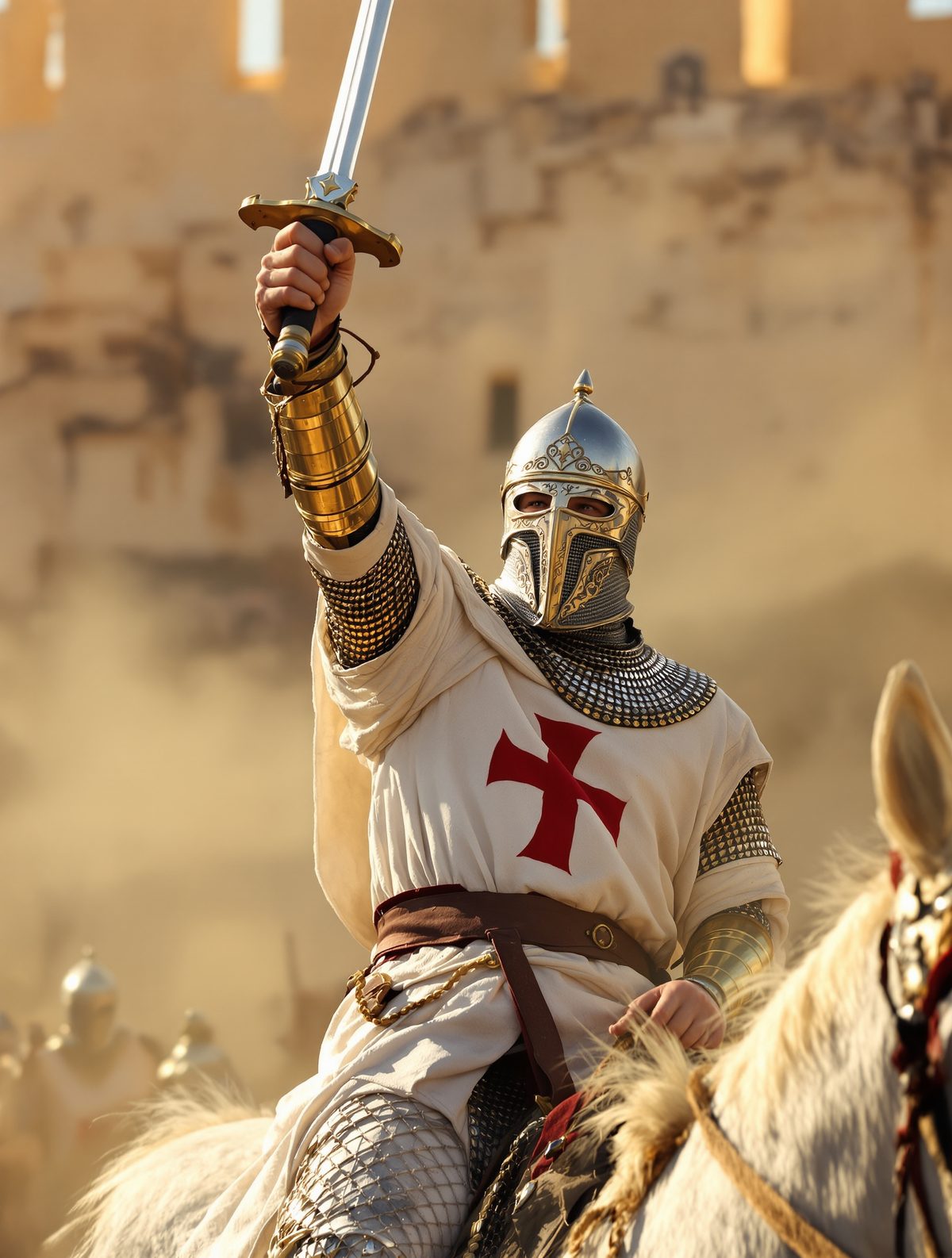
Imagine waking up from the worst hangover of your life to discover you've accidentally become Emperor of China. For most of us, a rough morning after drinking might involve embarrassing texts or a mysterious bruise. For General Zhao Kuangyin on January 3rd, 960 AD, it meant finding himself wrapped in imperial yellow silk, surrounded by kneeling soldiers, and suddenly responsible for ruling one of the world's most powerful civilizations.
This wasn't some elaborate prank or fever dream. While Zhao had been sleeping off a legendary drinking session with his military buddies, they had orchestrated one of history's most unusual coups—crowning their unconscious commander as the founding emperor of what would become the Song Dynasty, one of China's longest-lasting and most influential imperial houses.
The General Who Never Sought a Crown
Zhao Kuangyin was already a formidable figure in 10th-century China, but he had never shown imperial ambitions. Born into a military family around 927 AD, he had risen through the ranks during the chaotic period known as the Five Dynasties and Ten Kingdoms—a time when China was fractured into competing warlord states, each claiming legitimacy while the common people suffered through endless warfare.
At thirty-two years old, Zhao commanded the Palace Corps, the elite military unit of the Later Zhou Dynasty. He was respected for his tactical brilliance, his fair treatment of soldiers, and notably, his restraint in victory. Unlike many generals of his era who enriched themselves through brutal campaigns, Zhao had earned a reputation for protecting civilians and maintaining discipline among his troops.
The China of 960 AD was a land exhausted by decades of civil war. The Tang Dynasty, once the crown jewel of medieval civilization, had collapsed in 907 AD, leaving behind a patchwork of successor states. The current ruler, the Later Zhou, controlled the northern heartland, but their seven-year-old emperor was hardly equipped to reunify the fractured realm. Real power lay with military commanders like Zhao, who found themselves constantly called upon to suppress rebellions and defend against rival claimants.
A Night That Changed History
The fateful evening began innocently enough. Zhao and his officers had just returned from a successful campaign against the Northern Han, one of the rival kingdoms that plagued the Later Zhou's borders. Military victories traditionally called for celebration, and Chinese military culture of the time embraced drinking as both a bonding ritual and a way to release the tensions of warfare.
What made this particular drinking session different was the company Zhao kept. His closest allies included some of the most influential military leaders in the kingdom: General Shi Shouxin, who commanded fierce loyalty among the cavalry units; General Wang Shenqi, master of siege warfare; and General Zhang Lingduo, whose intelligence network rivaled that of the imperial court itself. These weren't just drinking buddies—they were the men who effectively controlled the military apparatus of northern China.
As the wine flowed freely that night, the conversation inevitably turned to politics. The seven-year-old emperor represented a dangerous power vacuum. Rival kingdoms were already probing for weakness, and within the court, various factions schemed for control over the boy ruler. The generals faced an uncomfortable truth: they could continue serving an ineffective regency, watch the kingdom collapse into further chaos, or take decisive action.
According to historical accounts, Zhao himself grew increasingly intoxicated as the night progressed, eventually passing out completely. What happened next would be debated by historians for centuries, though the outcome was undeniable.
The Coup That Happened While He Slept
While their commander lay unconscious, Zhao's loyal generals made a decision that would reshape Chinese history. They retrieved the imperial yellow robes—a color so sacred that wearing it without proper authority was punishable by death—and carefully dressed their sleeping friend in the regalia of an emperor.
The symbolism was deliberate and irreversible. In Chinese political culture, the yellow robes represented the Mandate of Heaven, the divine authorization to rule. By placing them on Zhao, his subordinates were making a statement that transcended personal loyalty: they were declaring that Heaven itself had chosen their general to restore order to the realm.
But the robes were just the beginning. Throughout the night, the conspirators worked systematically to secure key military installations, send messages to allied commanders, and prepare proclamations announcing the change in leadership. They moved with the precision of a military operation, which, in essence, it was—except their objective was not to conquer territory but to transfer the Mandate of Heaven itself.
When Zhao finally awakened, probably sometime in the early morning hours, he found himself surrounded by his entire officer corps, all kneeling in the formal posture reserved for acknowledging an emperor. The yellow robes he wore made their intentions unmistakably clear. According to the History of Song, Zhao's first words were reportedly a mixture of confusion and alarm—he understood immediately that there would be no going back from this moment.
From Hangover to Empire
What makes this story remarkable isn't just the unusual circumstances of Zhao's elevation, but how he responded to it. Many generals who seized power in this period ruled through brutality and paranoia, constantly executing potential rivals and crushing dissent. Zhao, perhaps still processing his surreal situation, took a completely different approach.
His first act as the newly proclaimed Emperor Taizu was to secure the peaceful abdication of the boy emperor of Later Zhou. Rather than having the child killed—the standard practice for removing inconvenient claimants—Zhao granted him a comfortable retirement with full honors. This mercy sent a powerful message throughout the kingdom: the new emperor sought legitimacy through benevolence, not terror.
Zhao's transformation from hungover general to founding emperor of the Song Dynasty demonstrates remarkable adaptability. Within months of his accidental coronation, he had begun implementing reforms that would define Chinese governance for centuries. He established a merit-based civil service system, promoted education and scholarship, and most importantly, found ways to prevent future military coups by ensuring that no general could accumulate the kind of power he himself had wielded.
The irony was perfect: the man who became emperor by accident spent his reign ensuring that no one else could follow his example. He rotated military commands frequently, required officers to spend time in civilian administrative roles, and created redundant command structures that made it nearly impossible for any single general to control enough forces to threaten the throne.
The Dynasty That Alcohol Built
Emperor Taizu's hangover-induced rise to power launched the Song Dynasty, which would rule China for an astonishing 319 years—longer than the United States has existed as a nation. Under Song rule, China experienced unprecedented economic growth, technological innovation, and cultural flowering. The period saw the invention of movable type printing, the magnetic compass, and gunpowder weapons, innovations that would eventually transform the entire world.
The Song court became renowned for its scholarly achievements, producing advances in mathematics, astronomy, medicine, and engineering that wouldn't be matched in Europe for centuries. The economic prosperity was equally remarkable: Song China developed the world's first paper money, established international trade networks that reached from Southeast Asia to the Islamic world, and supported urban populations that dwarfed anything in medieval Europe.
Perhaps most significantly, the Song Dynasty perfected the examination system for selecting government officials based on merit rather than birth or military prowess. This innovation created a class of educated bureaucrats who provided continuity and competence in government administration, contributing to the dynasty's remarkable longevity.
When Accidents Shape Civilizations
The story of Emperor Taizu reminds us that some of history's most consequential moments arise from the most unlikely circumstances. A drinking session that ended with an unconscious general being dressed in imperial robes might sound like a comedy sketch, yet it launched three centuries of Chinese imperial rule that influenced everything from global trade to technological development.
In our modern world of carefully planned political campaigns and focus-grouped leadership, there's something refreshingly human about an empire founded by accident. Zhao Kuangyin never set out to be emperor, yet his unexpected elevation led to reforms and innovations that outlasted the ambitions of countless would-be conquerors who spent their lives scheming for power.
The Song Dynasty's legacy extends far beyond China's borders. The technologies developed during Song rule—printing, navigation instruments, and explosives—eventually reached Europe and helped trigger the Renaissance and the Age of Exploration. The governmental systems pioneered by a man who woke up as emperor by mistake influenced administrative practices across East Asia and continue to shape how we think about meritocracy and civil service today.
Sometimes history's greatest leaders are not those who desperately seek power, but those who, when power finds them unexpectedly, prove wise enough to use it well. Emperor Taizu's accidental dynasty stands as proof that the most transformative moments in human civilization can begin with the most ordinary human experiences—even something as simple as having one too many drinks with friends.