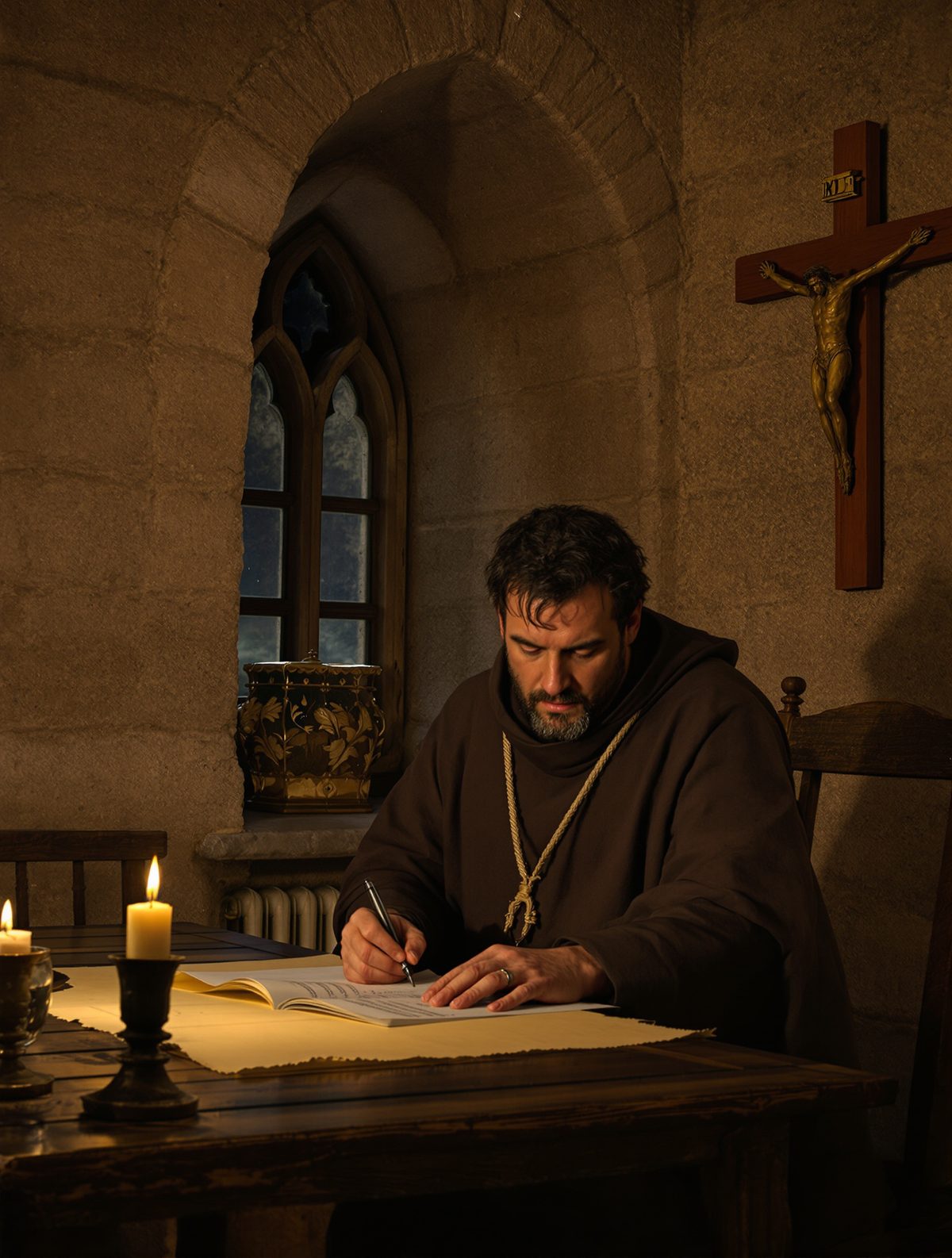
Picture this: a sixteen-year-old boy sits astride his warhorse, his face hidden behind a silver mask to conceal the ravages of leprosy eating away at his features. His hands, wrapped in silk gloves, can barely grip the reins. Before him stretches an army of 26,000 Muslim warriors—the largest force ever assembled by the legendary Saladin. The year is 1177, and young Baldwin IV of Jerusalem is about to pull off one of the most stunning military upsets in medieval history.
What happened next at the Battle of Montgisard would echo through the centuries, proving that sometimes the most unlikely heroes emerge from the darkest circumstances.
The Boy Behind the Silver Mask
Baldwin IV was born into a world that seemed destined for greatness, yet cursed by fate. Crowned King of Jerusalem at just thirteen years old in 1174, he inherited the most precarious throne in Christendom. The Crusader Kingdom of Jerusalem was a thin strip of coastline and inland fortresses, constantly under threat from Muslim forces determined to reclaim the Holy Land.
But Baldwin carried a secret that would have horrified his subjects: he had leprosy. The disease had first revealed itself when his tutor, the scholar William of Tyre, noticed that young Baldwin couldn't feel pain when other children pinched him during games. By the time he became king, the illness was slowly but relentlessly destroying his body.
In medieval times, lepers were considered cursed by God, outcasts who rang bells to warn others of their approach. Yet here was a leper king, ruling over the holiest city in Christianity. Baldwin wore gloves constantly and later donned a silver mask to hide his deteriorating face—a haunting image that struck both fear and pity into those who saw him.
Despite his condition, Baldwin possessed a brilliant military mind and an iron will that refused to bend. He had to prove himself constantly, not just to his enemies, but to his own nobles who whispered about divine judgment and questioned whether a diseased king could truly represent God's will on earth.
Saladin's Master Plan
While Baldwin struggled with his deteriorating condition, a formidable enemy was rising in the south. Salah ad-Din Yusuf ibn Ayyub—known to history as Saladin—had unified Egypt and Syria under his rule and set his sights on the ultimate prize: Jerusalem itself.
In November 1177, Saladin launched what he intended to be his masterstroke. Rather than assault Jerusalem's formidable walls directly, he devised a cunning strategy. He would march north with a massive army, drawing Baldwin's forces away from the capital, then wheel around and strike at the holy city when it was defenseless.
The plan was brilliant in its simplicity. Saladin assembled approximately 26,000 men—a staggering force for the time, including elite Mamluk cavalry, Syrian infantry, and Egyptian auxiliaries. To put this in perspective, most medieval armies numbered in the hundreds or low thousands. This was a host capable of conquering kingdoms.
As Saladin's army swept north toward Ascalon, Baldwin took the bait exactly as planned. The young king rushed south with the bulk of his army to defend the coastal fortress, leaving Jerusalem protected by only a skeleton garrison. Saladin's trap was perfectly set—or so it seemed.
The Trap Becomes a Hunt
What Saladin hadn't counted on was Baldwin's strategic brilliance. The teenager quickly realized he'd been outmaneuvered when his spies reported that Saladin's main force had bypassed Ascalon and was racing toward Jerusalem. In a moment that would define his reign, Baldwin made a decision that seemed like madness: he would pursue Saladin's vastly superior army with his small force.
Baldwin could muster only about 500 knights and 2,000 infantry—roughly one-tenth of Saladin's strength. His nobles urged caution, suggesting they wait for reinforcements or retreat to defensible positions. But Baldwin understood something his advisors didn't: Saladin's army was spread out on the march, confident in their overwhelming numerical superiority and focused on reaching Jerusalem quickly.
The young king's body might have been failing him, but his mind was sharp as a Damascus blade. He realized that Saladin's greatest strength—his massive army—could become a weakness if caught at the wrong moment. A large force on the march is vulnerable, especially when it believes itself safe from attack.
As Baldwin's small army thundered in pursuit, they were joined by an unexpected ally. Raynald of Châtillon, the fierce lord of Kerak, appeared with additional reinforcements just as they neared Saladin's position near the fortress of Montgisard, about 25 miles northwest of Jerusalem.
The Charge That Defied All Logic
On November 25, 1177, the impossible confrontation finally materialized. Saladin's army was strung out along the road, many soldiers scattered as they foraged for supplies in the countryside. When scouts reported a Christian force approaching, Saladin initially dismissed it as a minor raiding party—surely no one would be foolish enough to attack his mighty host with such a small force.
That miscalculation would prove catastrophic. Baldwin, despite his weakened condition, personally led the charge. Contemporary accounts describe the surreal sight of the silver-masked king spurring his horse forward, his silk-wrapped hands somehow managing to guide his mount into battle even as his body betrayed him.
The Crusader charge struck Saladin's scattered forces like a thunderbolt. The famous Muslim general had been caught completely off-guard—his army was dispersed, his commanders unprepared for battle, and his troops were in no formation to resist a coordinated attack. What should have been an easy victory for Saladin became a nightmare.
The psychological impact was devastating. Saladin's soldiers had expected to face desperate resistance at Jerusalem's walls, not a bold attack in open field. When they saw the legendary leper king himself charging toward them, many broke and fled. Medieval warfare was as much about morale as tactics, and Baldwin had shattered his enemy's confidence with one audacious move.
In the chaos that followed, Saladin's mighty army disintegrated. Thousands of his soldiers were killed or captured, their weapons and supplies scattered across the Palestinian countryside. Saladin himself barely escaped, reportedly fleeing on a racing camel with only a handful of bodyguards.
The Aftermath of the Impossible
The victory at Montgisard sent shockwaves throughout the medieval world. Christian Europe erupted in celebration—here was proof that God still favored the Crusader cause. The image of the dying boy-king defeating Saladin's seemingly invincible army became legendary, inspiring songs, chronicles, and artistic depictions that would endure for centuries.
For Saladin, Montgisard was a humiliating defeat that temporarily shattered his aura of invincibility. It would be several years before he could mount another serious threat to the Crusader kingdoms. The battle had bought Baldwin and Jerusalem precious time—time that the young king's deteriorating body could hardly spare.
Perhaps most remarkably, Baldwin had proven that physical weakness need not mean spiritual or strategic defeat. His victory validated his kingship in a way that no amount of royal ceremony could have accomplished. The nobles who had whispered about divine judgment fell silent; surely God's hand had guided their diseased king to this impossible triumph.
Baldwin would continue to rule and fight for several more years, his condition gradually worsening until he became blind and lost the use of his hands entirely. He died in 1185 at just twenty-four years old, but his legacy was secure. He had shown that true leadership comes not from physical perfection, but from courage, intelligence, and an indomitable will.
Why the Leper King Still Matters
Baldwin IV's victory at Montgisard offers us something precious: proof that our limitations need not define our possibilities. In an age obsessed with physical perfection and superficial appearances, the silver-masked king reminds us that true strength often emerges from the most unexpected places.
His story challenges our assumptions about leadership, disability, and what it means to overcome impossible odds. Baldwin couldn't change his disease, but he refused to let it diminish his spirit or his duty to his people. He turned his greatest weakness—a body that was visibly failing—into a symbol of unwavering determination that inspired others to follow him into hopeless battles and emerge victorious.
Today, when we face our own seemingly insurmountable challenges, we might remember the sixteen-year-old who couldn't feel his hands but still gripped his sword, who hid his face but never his courage, and who proved that sometimes the most powerful weapon against overwhelming odds is simply the refusal to surrender.