The volcanic slopes of Mount Etna glowed ominously in the pre-dawn darkness of 440 BC when the search party made their grisly discovery. There, balanced precariously on a jagged ledge just meters from the crater's rim, sat a single golden sandal—still warm to the touch. The ornate footwear belonged to Empedocles, the most brilliant and eccentric philosopher in all of Sicily, who had vanished without a trace three weeks earlier. But this wasn't just any missing person case. Empedocles had publicly declared himself an immortal god, and some whispered that he had thrown himself into the volcano's fiery maw to prove his divine nature once and for all.
The God in Human Form
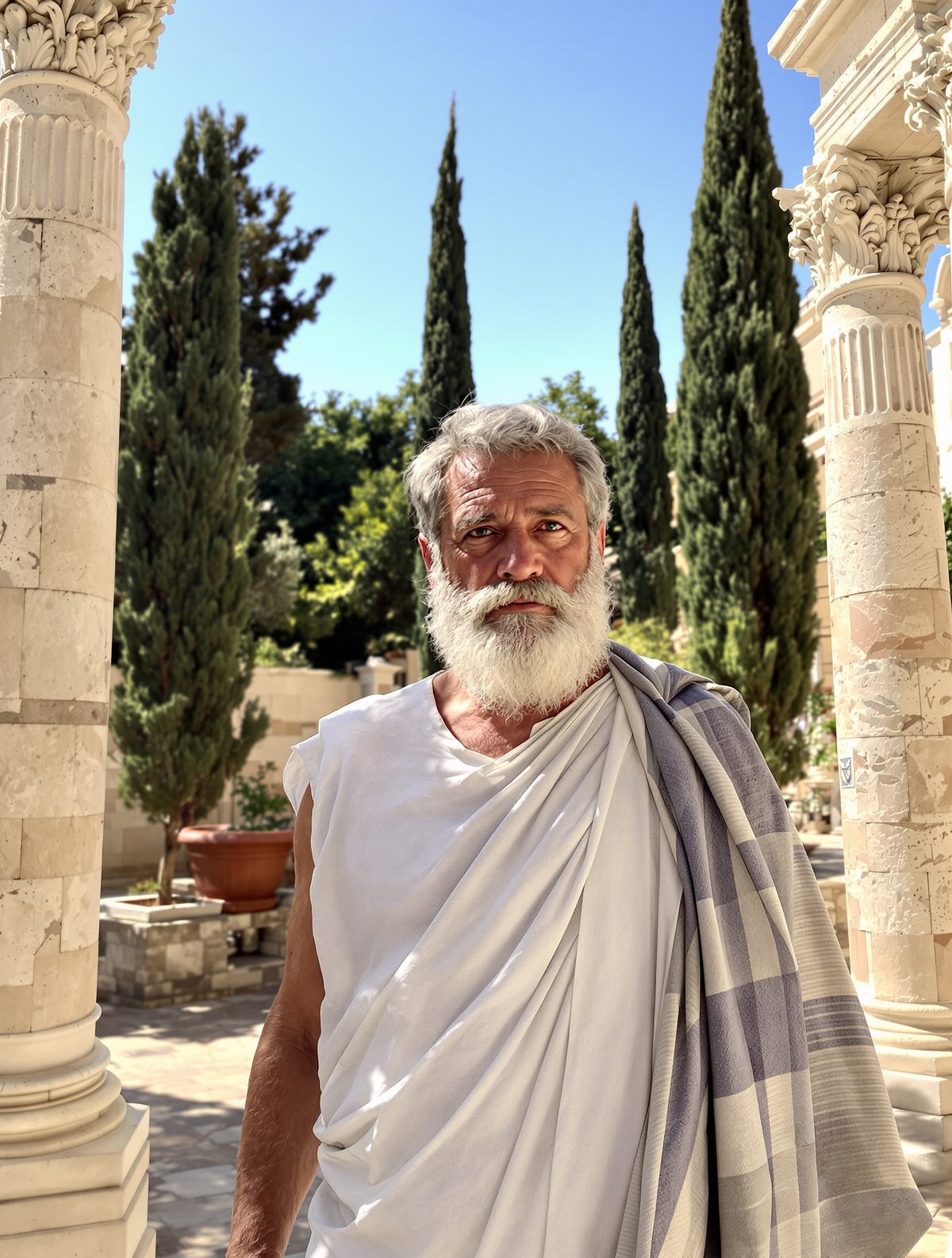
Empedocles of Akragas wasn't your typical ancient Greek thinker. Born around 494 BC into one of Sicily's wealthiest families, he possessed a mind that bridged the gap between rational philosophy and mystical religion in ways that both dazzled and disturbed his contemporaries. While other philosophers debated abstract concepts in marble halls, Empedocles strutted through the streets of his hometown wearing purple robes, bronze slippers, and a golden diadem, proclaiming to anyone who would listen that he was no mere mortal.
"An immortal god, no longer mortal, I go about honored by all, as is fitting," he wrote in his philosophical poems. This wasn't metaphorical language—Empedocles genuinely believed he was a deity who had been exiled from Mount Olympus and trapped in human flesh as punishment for some ancient transgression. To the modern mind, this sounds like the ravings of a madman, but Empedocles backed up his claims with demonstrations that seemed to defy natural law.
Witnesses reported seeing him control the winds, bring the dead back to life, and cure incurable diseases with nothing but spoken words. When a woman named Panthea lay dead for thirty days, Empedocles allegedly restored her to life before a crowd of hundreds. Whether these were clever tricks, mass hallucinations, or something more mysterious remains one of history's most intriguing puzzles.
The Four-Element Revolutionary
Beyond his theatrical claims to divinity, Empedocles revolutionized how humans understood the physical world. He was the first philosopher to propose that all matter consisted of four fundamental elements: earth, air, fire, and water. This theory would dominate scientific thinking for over 2,000 years, influencing everyone from Aristotle to medieval alchemists.
But Empedocles didn't stop there. He theorized that two cosmic forces—Love and Strife—governed how these elements combined and separated. During periods when Love dominated, the elements merged harmoniously to create life and beauty. When Strife took control, everything dissolved back into chaos. This wasn't just abstract philosophy; Empedocles used these principles to explain everything from human emotions to the formation of the cosmos.
His scientific observations were remarkably advanced for the 5th century BC. He correctly deduced that light travels at a finite speed, theorized that the moon shines by reflected sunlight, and proposed an early version of evolutionary theory, suggesting that only the most well-adapted creatures survived in nature's struggle. Nearly 2,400 years before Darwin, Empedocles was describing natural selection.
The Mysterious Disappearance
In the spring of 440 BC, Empedocles was at the height of his fame and influence. As a democratic politician, he had helped overthrow the oligarchy in Akragas and champion the rights of common citizens. His philosophical school attracted students from across the Mediterranean. His medical practice had earned him a reputation as a miracle worker. Yet something was troubling the great philosopher.
Friends and disciples later recalled that Empedocles had become increasingly obsessed with proving his divine nature to skeptics. The problem was that despite all his apparent miracles, he remained frustratingly trapped in mortal flesh. He aged, he bled when cut, and he required food and sleep like any ordinary human. For someone who claimed to be an exiled god, these limitations were becoming unbearable.
On the night of his disappearance, Empedocles hosted a grand feast at his villa overlooking the Sicilian countryside. Guests remembered him as being in unusually high spirits, speaking cryptically about an upcoming "transformation" and "return to divine glory." As the evening wound down, he dismissed his servants and retired to his chambers. When dawn broke, his bed was empty, his purple robes lay neatly folded, and the philosopher was nowhere to be found.
The Volcano's Secret
For three weeks, search parties scoured every corner of Sicily looking for the missing philosopher. They checked the ports in case he had sailed away, explored caves where he might have retreated for meditation, and questioned travelers on every road. Then Mount Etna began to rumble ominously, and streams of lava started flowing down its slopes—the first eruption in over a decade.
It was Pausanias, Empedocles' most devoted student, who first suggested searching the volcanic slopes. He reasoned that if his master truly intended to prove his divinity, what better stage than Sicily's most dramatic natural wonder? The search party that climbed Etna's treacherous slopes found more than they bargained for. Not only was there the golden sandal, but witnesses reported seeing strange lights dancing around the crater on the night Empedocles vanished—lights that didn't match the usual glow of lava.
The discovery of the sandal created an immediate sensation throughout the Greek world. Some proclaimed it definitive proof that Empedocles had achieved divine transformation by throwing himself into the volcano. Others suggested he had been murdered and his body hidden, with the sandal planted as misdirection. The most cynical observers claimed Empedocles had staged his own disappearance, deliberately leaving the golden sandal to fuel legends about his divinity.
The Legend Lives On
The mystery of Empedocles' fate captured imaginations for centuries. Roman writers like Horace mocked him as a vainglorious suicide who "burned to be thought a god." Medieval scholars debated whether his disappearance represented divine ascension or demonic deception. The Renaissance poet Matthew Arnold penned a haunting drama imagining Empedocles' final moments on the volcanic rim, torn between human despair and divine aspiration.
Modern investigations have yielded few concrete answers. Geological surveys of Mount Etna have never uncovered human remains that could be definitively linked to the philosopher. Some historians argue that the golden sandal story was invented decades after Empedocles' death to enhance his legendary status. Others point out that the sandal's discovery was witnessed by multiple credible sources and recorded in contemporary documents.
What we do know is that Empedocles' ideas outlived whatever fate befell his physical body. His four-element theory became the foundation of ancient and medieval science. His concept of Love and Strife as competing cosmic forces influenced everyone from the Stoics to Carl Jung. His belief in reincarnation and the divine nature of the human soul helped shape both Christian mysticism and modern spiritual movements.
The Eternal Question
Perhaps the real significance of Empedocles' mysterious disappearance lies not in solving the puzzle of what happened to him, but in understanding what drove him to such extremes in the first place. Here was a man who possessed wealth, fame, political power, and intellectual brilliance—yet remained tormented by the limitations of mortal existence. His alleged leap into Mount Etna represents the ultimate expression of humanity's eternal struggle with mortality and our desperate desire to transcend the boundaries of physical existence.
In our modern age of social media personas and carefully curated public images, Empedocles' story resonates with new urgency. We live in a world where ordinary people claim extraordinary status, where the line between genuine achievement and manufactured fame grows increasingly blurred. The philosopher's golden sandal serves as a reminder that the human desire for transcendence—whether through fame, wealth, or spiritual transformation—remains as powerful and potentially destructive as ever.
Whether Empedocles achieved divine transformation, committed spectacular suicide, or simply vanished into legend, his story continues to challenge us to examine our own relationship with mortality, ambition, and the eternal human quest to become something more than what we are. Sometimes the most important historical mysteries are the ones that remain forever unsolved, continuing to illuminate the deepest contradictions of human nature across the centuries.