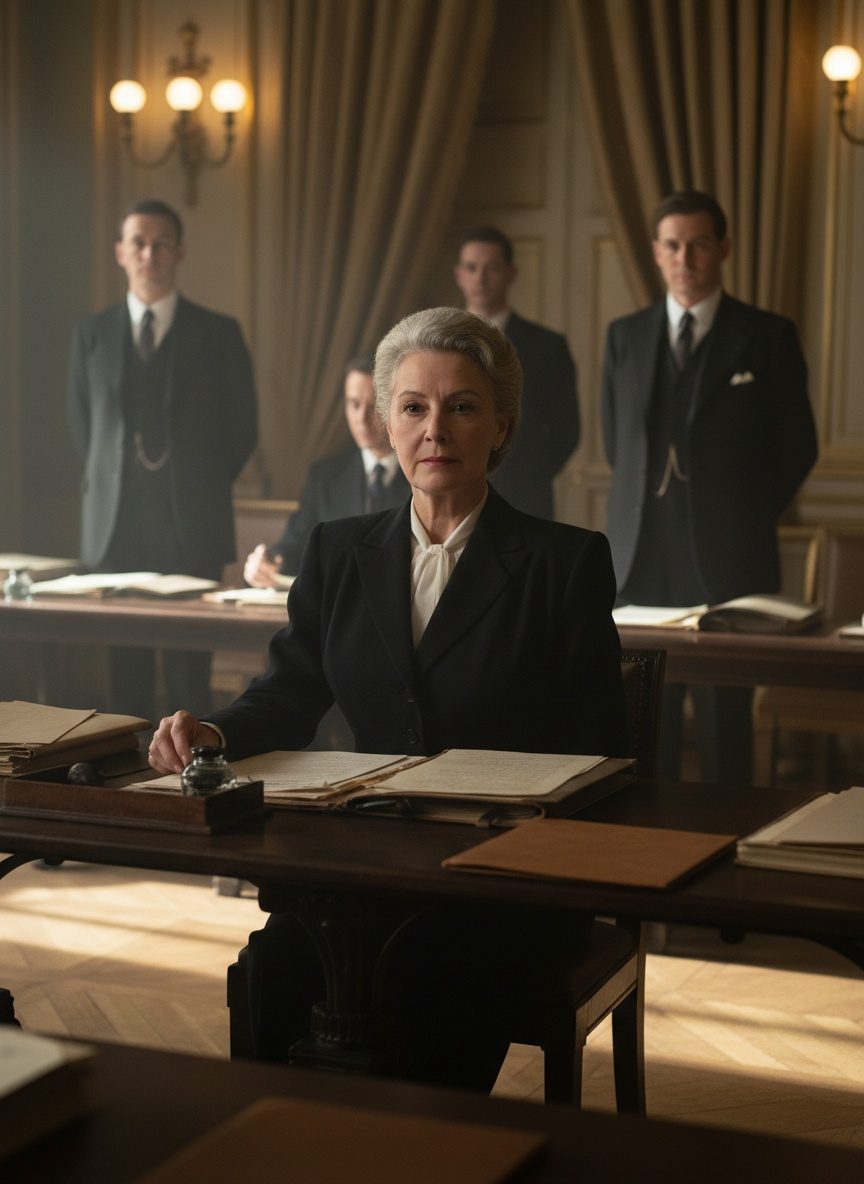
She was not the president, nor did she hold any official government position other than her previous role as First Lady. Yet, Eleanor Roosevelt wielded a power unmatched in her era — the power of words. At a time when global tensions simmered in the aftermath of World War II, a pivotal shift took place in a Parisian conference hall. Here, amidst the diplomatic wrangling and cultural clashes of delegates from 58 nations, Eleanor Roosevelt chaired the drafting of the Universal Declaration of Human Rights. Her task was Herculean: to forge consensus where there was division, to unify disparate worldviews into a coherent, universal commitment to human dignity and rights.
The scene in Paris was one of intense debate, where negotiation became both an art and a marathon. Words were dissected, phrases contested, and every sentence was an arena for ideological battles. In this volatile environment, Eleanor Roosevelt’s presence was akin to that of a seasoned conductor orchestrating a symphony amidst a cacophony of instruments. She wielded no sword, commanded no army, yet her influence was felt in every corner of the room. This was a woman whose early life bore little indication that she would become one of the most pivotal figures of the 20th century in the arena of human rights.
Born into privilege in 1884, Eleanor was far from the archetype of a public leader. Her upbringing was tinged with personal tragedy, losing both parents by the age of ten. Yet, it was perhaps this adversity that forged within her a deep empathy and determination that would later manifest in her public life. As a First Lady, she redefined the role, stepping out from the shadow of the presidency to champion justice, equality, and human rights both domestically and internationally. Her column "My Day" and countless public appearances offered her a voice that reached millions. But it was her work after leaving the White House, not her tenure within it, that led to her defining moments on the global stage.
When Eleanor Roosevelt was appointed by President Harry Truman as a delegate to the United Nations General Assembly in 1946, many viewed her initial role as honorary, a symbolic gesture to acknowledge her past contributions. However, she swiftly defied expectations, injecting vigor, tenacity, and an unwavering commitment to the nascent United Nations' mission. Her most significant challenge came as the chairperson of the United Nations Commission on Human Rights, where her task was to oversee the drafting of what would become the Universal Declaration of Human Rights.
From the outset, the barriers were formidable. The world was split by ideological divides, primarily between the capitalist West and the communist East, with each side wary and suspicious of the other's intentions. Compounding this were the cultural and political differences between nations emerging from colonial rule and industrialized powers. Yet, amidst these tensions, Eleanor demonstrated a gift for diplomacy that was both gentle and firm. Her approach was not to dominate but to inspire. Through her meticulous negotiation skills and a disarming personal touch, she managed to align delegates who instinctively operated under power struggles and mistrust.
The marathon discussions and late-night sessions were steered by Eleanor's ability to listen intently, a trait that earned her the respect of even the most skeptical delegates. She championed the principle that this document was meant to be an aspirational guide, not a legally binding treaty. Her vision was for these rights to speak directly to the ordinary individual, transcending legal and political barriers to affirm the inherent worth and dignity of every human being.
As the sun filtered through the ornate windows of the Palais de Chaillot on the morning of December 10, 1948, the sense of history being made was palpable. Delegates gathered for the final vote, the air thick with anticipation. Years of intense negotiation, numerous drafts, and countless debates culminated in a document that sought to encapsulate the fundamental rights and freedoms every person on the planet should enjoy. When the votes were counted, the Universal Declaration of Human Rights was adopted with a resounding majority. It was a moment of triumph, not just for the assembled delegates but for humanity itself.
The declaration, with its 30 articles, stood as a testament to a shared global aspiration for a better world. Though challenges remained and criticism persisted regarding its non-binding status, its moral authority reverberated globally. The chamber, filled with a diverse tapestry of garb and language, erupted in thunderous applause, a sea of delegates on their feet, giving Eleanor the standing ovation she so richly deserved — the sole delegate so honored on that momentous day.
Eleanor Roosevelt's role in the drafting of the Universal Declaration of Human Rights was not merely an accomplishment of leadership; it was a transformative moment in the history of human rights. This milestone turned the page on a new chapter for human society, moving from declarations of intent to the pursuit of true equality and justice. As she stood amid the accolades, Eleanor reportedly reflected on the journey of the marginalized and the oppressed. Her work was not a finale but a commencement, a call to action for generations that would follow.
The story of Eleanor Roosevelt before the United Nations in 1948 is one where words became the weapons of peace and justice. It is a profound reminder of the silent potency that resides within commitment and resolve, especially when aligned with a vision for a better collective future. As conflicts persist and new challenges emerge, her legacy endures as a beacon of hope, signifying the enduring power of determined, courageous individuals to shape history and alter its course. In an era where the resonance of words continues to impact global discourse, her contribution remains an unparalleled reminder that the pen, wielded with purpose, can indeed be mightier than the sword.