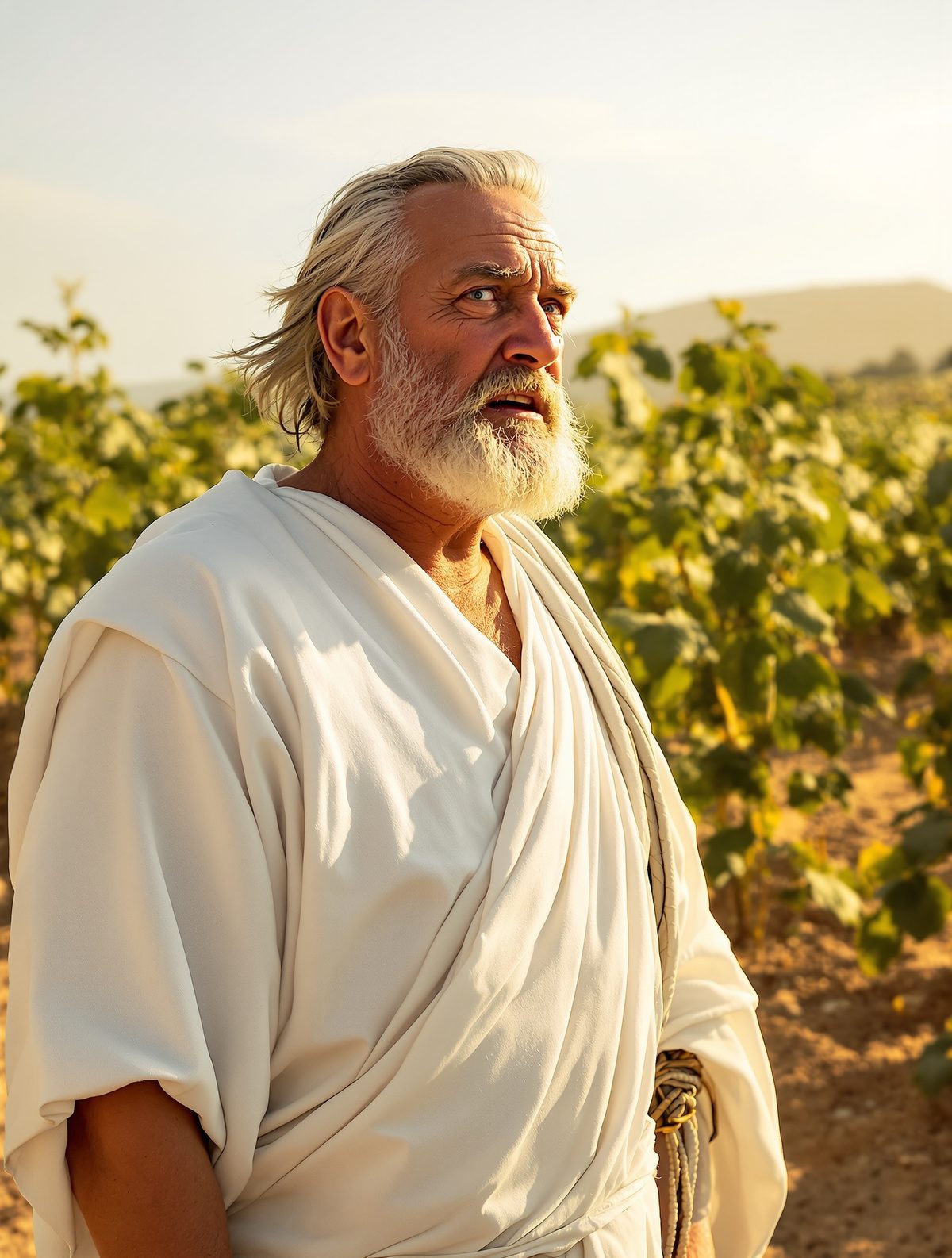
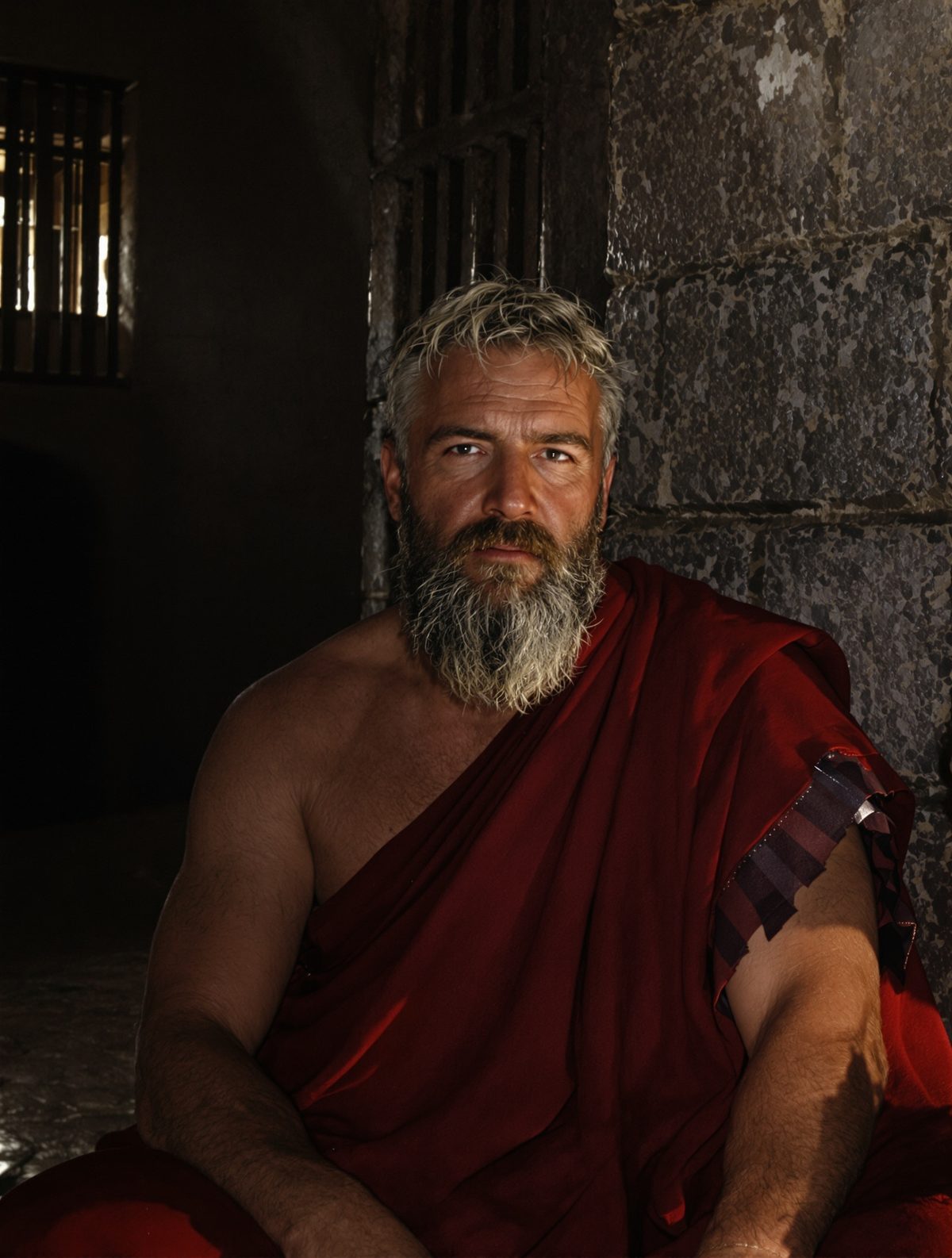
Picture this: the most powerful man in the ancient world, fresh from conquering half the known earth, approaches a homeless philosopher living in a clay pot. Alexander the Great expects the usual ceremony—bowing, scraping, perhaps a request for gold or favor. Instead, he gets the ancient equivalent of "move along, buddy, you're blocking my tan."
This wasn't just any random encounter between ruler and subject. This was the moment when Diogenes of Sinope, history's most audacious philosopher, delivered what might be the greatest power-to-truth moment ever recorded. But to understand why this sunbathing sage could so casually dismiss the conqueror of Persia, we need to dive into one of antiquity's most colorful characters.
The Banker's Son Who Chose Beggary
Diogenes didn't start life as a barrel-dwelling vagrant insulting world leaders. Born around 412 BC in Sinope (modern-day Turkey), he was the son of a wealthy banker named Hicesias. His early life was comfortable, privileged—everything you'd expect from ancient Greek aristocracy. But fate, and perhaps a healthy dose of youthful rebellion, had other plans.
The turning point came when Diogenes and his father were caught debasing currency—literally defacing coins, which was both a serious crime and, ironically, a perfect metaphor for what Diogenes would spend his life doing to social conventions. Exiled from his hometown in disgrace, the young aristocrat found himself in Athens around 355 BC with nothing but the clothes on his back.
Most people would have crawled back home begging forgiveness or tried to rebuild their fortune. Diogenes chose a third option: he decided that possessions, social status, and conventional success were the real crimes against humanity. If he was going to be cast out from polite society, he'd show them just how little their politeness was worth.
What happened next was either the ancient world's greatest philosophical experiment or its most elaborate midlife crisis. Diogenes began systematically stripping away every comfort, every social nicety, every accepted norm of civilized behavior. He became what the Greeks called a kynikos—literally "dog-like"—the founder of Cynicism, a philosophy that would outlast empires.
Life in a Barrel: Ancient Minimalism Taken to Extremes
The famous barrel—technically a large ceramic storage jar called a pithos—wasn't just Diogenes' home; it was his manifesto. Imagine walking through the bustling Athenian agora and seeing this wild-haired philosopher emerging from what looked like an oversized pickle jar, completely unbothered by the stares of merchants and citizens hurrying past with their daily concerns.
But Diogenes wasn't just playing at poverty for shock value. He genuinely believed that human beings had been corrupted by civilization's artificial needs. He ate simple food, wore a rough cloak (when he bothered wearing anything at all), and owned virtually nothing. Legend has it that when he saw a child drinking from cupped hands, he threw away his cup, declaring he'd been carrying around useless luxury.
His daily routine would have horrified any respectable Athenian. He relieved himself in public, ate in the marketplace, and slept wherever he pleased. When critics called his behavior shameful, Diogenes shot back with devastating logic: why should natural human functions be hidden away as if they were crimes? Who decided that embarrassment was more important than honesty?
The most shocking detail? People actually came to listen to him. Despite—or perhaps because of—his outrageous lifestyle, Diogenes attracted students and admirers. His poverty wasn't pathetic; it was powerful. Here was a man who had achieved something most people only dreamed of: complete freedom from social expectations.
The Art of the Ancient Insult: Diogenes vs. Everyone
Diogenes wasn't just philosophically radical; he was hilariously ruthless. His wit was so sharp it could have been registered as a weapon, and he used it on everyone from fellow philosophers to political leaders. His verbal sparring matches became legendary throughout the Greek world.
When Plato defined humans as "featherless bipeds," Diogenes plucked a chicken and declared, "Behold! Plato's man!" The great philosopher was forced to revise his definition to "featherless bipeds with broad flat nails." Score one for the barrel-dweller.
He once walked through Athens in broad daylight carrying a lamp, claiming to be "looking for an honest man." When people asked if he'd found one, his silence was answer enough. Another time, when someone praised the luxurious marble of a wealthy man's house, Diogenes spat on the owner, explaining that it was the only ugly thing available to spit on.
His insults weren't just clever—they were surgical strikes against hypocrisy and pretension. When a young man was showing off his expensive clothes, Diogenes observed that if the display was for men, it was foolish, and if it was for women, it was wicked. The youth apparently never dressed to impress again.
But perhaps most remarkably, Diogenes seemed immune to retaliation. His poverty was his armor—what could anyone take from a man who owned nothing? His shamelessness was his shield—how could you embarrass someone who had no dignity to lose?
The Meeting That Stopped History
By 336 BC, Alexander had inherited his father's throne and his impossible ambitions. At just 20 years old, he was already consolidating power and preparing for his legendary campaign against the Persian Empire. But first, he needed to secure Greece, which meant making the rounds to various city-states, accepting their submission and dispensing royal favor.
The meeting between Alexander and Diogenes probably occurred in Corinth, where the young king was holding court and receiving delegations from across Greece. Picture the scene: Alexander, resplendent in royal regalia, surrounded by generals and courtiers, the very image of divine kingship that Greek rulers cultivated.
And then there was Diogenes, lounging outside his barrel like a contented cat, completely unbothered by the royal circus happening around him. He didn't join the crowds gathering to glimpse the famous king. He didn't send gifts or envoys. He just lay there, soaking up the Mediterranean sun.
Alexander, perhaps intrigued by this obvious slight, decided to approach the philosopher personally. Here was the conqueror who would soon march his armies across three continents, standing before a homeless man who couldn't have cared less about his titles or his power.
"I am Alexander the Great," the king announced. Diogenes looked up with the mild interest you might show a cloud passing overhead. "I am Diogenes the Dog," he replied, using his own philosophical nickname with evident satisfaction.
What happened next has echoed through history: Alexander, in a gesture of magnanimity that was probably calculated to impress the watching crowds, offered to grant the philosopher any wish. Anything at all. Wealth, position, land—the world was quite literally his to give.
Diogenes studied the most powerful man alive, then delivered his immortal response: "Stand out of my sunlight."
When Kings Meet Their Match
The crowd must have held its breath. Rulers had killed men for far less dramatic slights. Alexander's generals probably reached for their swords, expecting their king to order this insolent beggar's immediate execution.
Instead, something extraordinary happened. Alexander laughed. Not the forced laughter of someone pretending to be amused by an insult, but genuine delight. Here, finally, was someone who couldn't be bought, impressed, or intimidated. In a world where everyone wanted something from the king, Diogenes wanted nothing except to be left alone.
As Alexander walked away, he reportedly told his companions, "If I were not Alexander, I would wish to be Diogenes." The philosopher's response, when this comment was reported back to him, was typically perfect: "If I were not Diogenes, I would also wish to be Diogenes."
Think about what had just happened. The man who would go on to create one of history's largest empires had been casually dismissed by someone who lived in a pot. And rather than rage against this ultimate rejection of his authority, Alexander recognized something profound: Diogenes possessed the one thing that all the king's power couldn't buy—complete freedom.
The encounter reveals something fascinating about both men. Alexander, for all his world-conquering ambition, was still seeking something—validation, perhaps, or meaning beyond mere conquest. Diogenes had already found what Alexander was looking for, and he'd found it by wanting nothing at all.
The Rebel Who Outlived Empires
Alexander died in Babylon in 323 BC at just 32 years old, his vast empire immediately fragmenting into warring kingdoms. Diogenes outlived him by several years, dying around 320 BC—still homeless, still shameless, still free. His last words were reportedly a request to be thrown unburied to the wild beasts, since even in death he wanted no part of human pretensions.
But here's what makes this ancient encounter feel startlingly modern: we live in an age of unprecedented wealth and technological power, yet surveys consistently show rising rates of anxiety, depression, and existential emptiness. Our social media feeds are full of people desperately trying to project success and happiness, while secretly wondering if any of it means anything.
Diogenes would have recognized our predicament immediately. He spent his life arguing that the pursuit of external validation—whether through wealth, status, or others' approval—was a trap that prevented genuine human flourishing. His radical solution was to opt out entirely, to find freedom through wanting less rather than having more.
You don't have to live in a barrel to appreciate the power of his example. In a world that constantly tells us we need more stuff, more followers, more achievements to be happy, Diogenes stands as a permanent reminder that the person who wants nothing has everything they need. His insult to Alexander wasn't really about sunlight—it was about the radical idea that no external authority, no matter how powerful, has the right to block your path to contentment.
The beggar-philosopher who told the world's greatest king to step aside wasn't just being rude. He was demonstrating that true power comes from within, and that the freest person in any room is the one who has nothing left to lose. In our age of endless consumption and social comparison, that might be the most revolutionary idea of all.