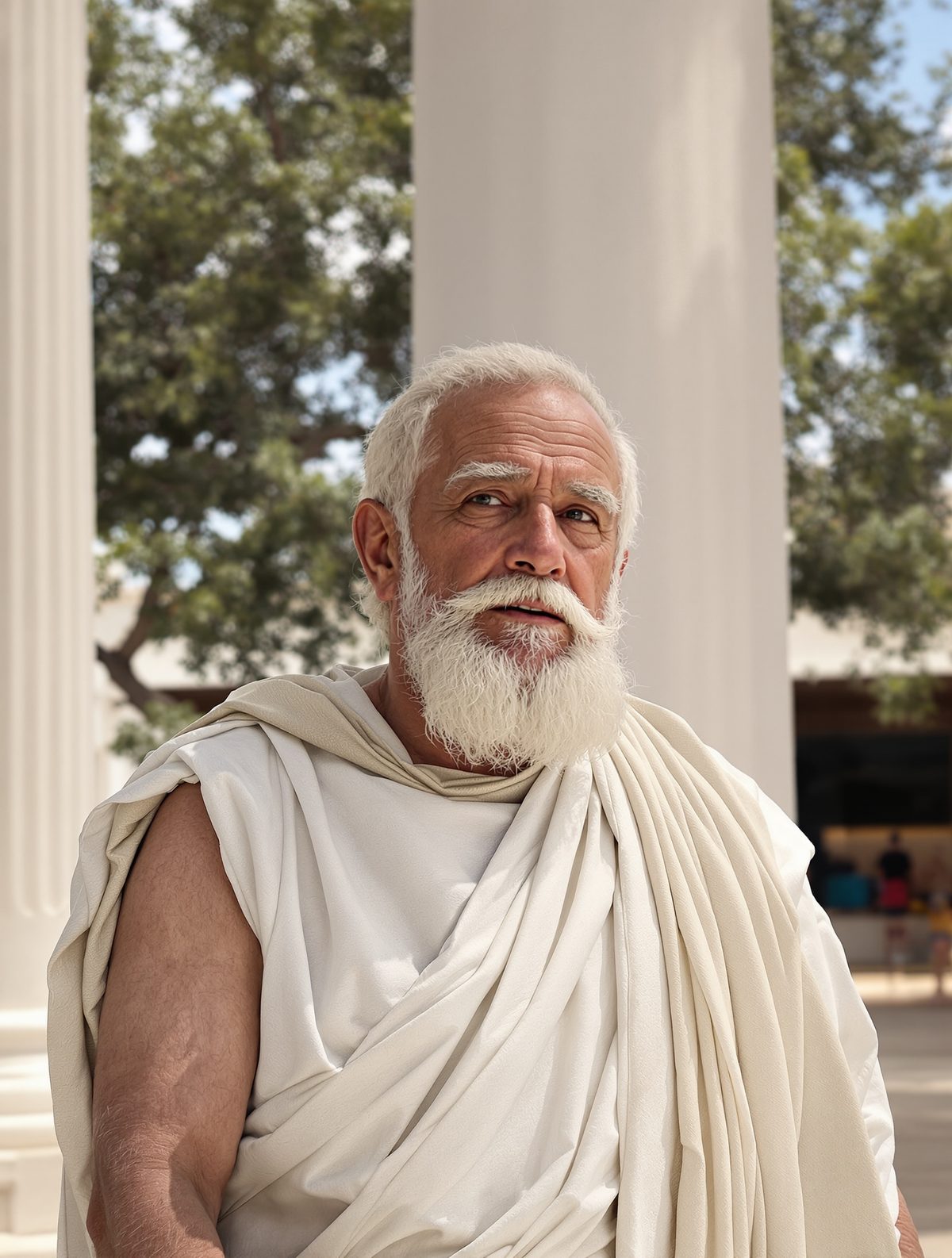
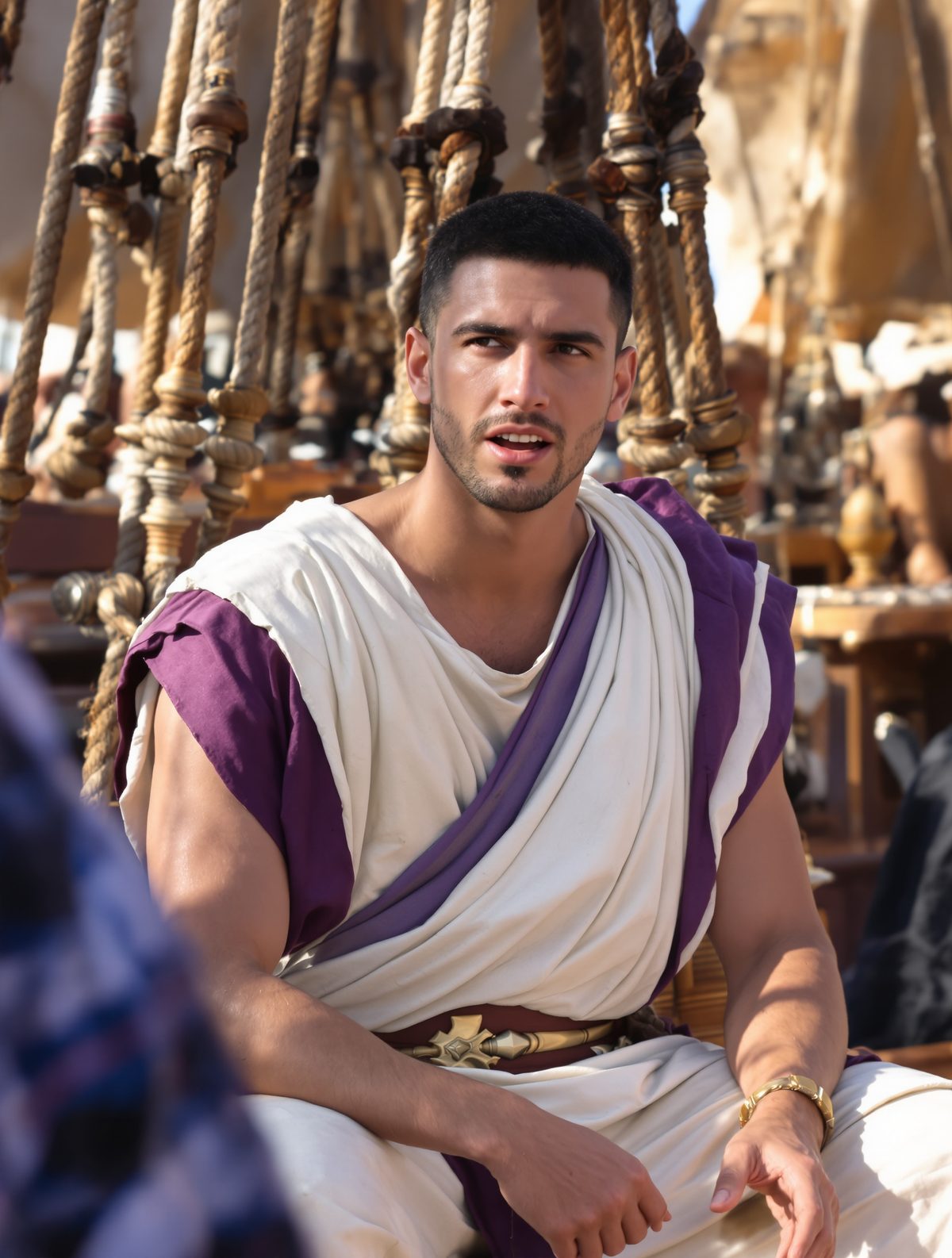
The guards expected to find King Cleomenes I of Sparta either raving mad or silent in his chains when they entered his cell that morning in 490 BC. What they discovered instead would haunt them for the rest of their lives. The once-mighty ruler who had terrorized Athens and reshaped the ancient world lay dead in a pool of his own blood, a small knife clutched in his hand. Starting from his shins and working methodically upward, he had carved away strips of his own flesh until the blade reached his stomach—where his gruesome self-mutilation had finally claimed his life.
This wasn't just any prisoner. This was the man who had transformed Sparta from a regional power into the military juggernaut that would later face down the entire Persian Empire. The king who had crushed tyrants, manipulated oracles, and struck fear into the hearts of every Greek city-state. Yet here he lay, destroyed not by enemy swords or battlefield wounds, but by his own hand in the most horrifying way imaginable.
The Making of a Spartan Legend
Cleomenes I ascended to the Spartan throne around 520 BC, inheriting a kingdom that was already notorious for its warrior culture. But where previous kings had been content to dominate the Peloponnese, Cleomenes had grander visions. He understood something that many of his contemporaries missed: Greece was changing, and only the boldest would survive the coming storms.
The Sparta of Cleomenes' era wasn't yet the legendary war machine of popular imagination. That transformation was largely his doing. He restructured the military, refined the brutal agoge training system that would forge the most feared warriors in the ancient world, and most importantly, he looked beyond Sparta's traditional borders. While other Greek kings squabbled over local territories, Cleomenes was already thinking like an empire builder.
His first major test came in 510 BC when Athenian exiles approached him with a tantalizing proposition. Athens, they claimed, was ripe for conquest. The tyrant Hippias had made himself so unpopular that the people would welcome Spartan "liberation." It was exactly the kind of opportunity Cleomenes had been waiting for—a chance to plant Sparta's flag in the heart of its greatest rival's territory.
The Conqueror of Athens
What happened next would echo through history for centuries. Cleomenes didn't just invade Athens; he systematically dismantled its power structure with surgical precision. In a lightning campaign that caught everyone off guard, his forces surrounded the Acropolis and laid siege to Hippias and his remaining supporters. The tyrant, realizing his position was hopeless, negotiated a surrender that would send him into permanent exile.
But Cleomenes wasn't finished. In a move that shocked the Greek world, he installed a puppet ruler named Isagoras and began purging potential threats to Spartan control. According to Herodotus, he expelled 700 Athenian families—the entire political elite—in a single day. It was ethnic cleansing disguised as political reform, and it worked with terrifying efficiency.
For a brief moment, it seemed like Cleomenes had achieved the impossible: Athens, the city that would one day build the Parthenon and give birth to democracy, was now a Spartan vassal state. The implications were staggering. If this conquest held, the entire trajectory of Western civilization might have been different.
But the Athenians had other plans. In an uprising that caught the Spartans completely off guard, the common people of Athens rose against their occupiers. They surrounded Cleomenes and his forces on the very Acropolis he had captured, turning the tables in spectacular fashion. After three days of siege, the Spartan king was forced to negotiate his own withdrawal. It was a humiliating reversal that would have consequences he couldn't yet imagine.
The Oracle's Curse and Growing Paranoia
Desperate to reclaim his reputation after the Athenian debacle, Cleomenes turned to increasingly desperate measures. In 494 BC, he became involved in one of ancient history's most notorious acts of sacrilege: the bribery of the Oracle at Delphi. The Pythia, the priestess through whom the god Apollo supposedly spoke, had been declaring various omens unfavorable to Spartan interests. Cleomenes decided to buy more convenient prophecies.
Working through intermediaries, he arranged for the Oracle to declare that his co-king Demaratus—Sparta uniquely had two kings ruling simultaneously—was illegitimate and should be deposed. The plan worked initially. Demaratus was stripped of his crown and fled to the Persian court, where he would later advise Xerxes during his invasion of Greece. But the bribery was eventually discovered, creating a scandal that rocked the entire Greek world.
The revelation that a Spartan king had corrupted the most sacred oracle in Greece was more than just embarrassing—it was seen as an act that could bring down the wrath of the gods on all of Sparta. Contemporary sources suggest that this was when Cleomenes began showing signs of the erratic behavior that would eventually be labeled as madness. He became increasingly paranoid, suspicious of his own advisors, and prone to violent outbursts that terrified even his battle-hardened warriors.
The King's Descent Into Darkness
By 491 BC, Cleomenes' behavior had become so erratic that even the notoriously tolerant Spartans could no longer ignore it. According to Herodotus, he had begun striking random citizens in the face with his staff—a breach of protocol so severe that it suggested complete mental collapse. In a society where the king's authority was considered divinely ordained, such actions weren't just inappropriate; they were signs of cosmic disorder.
The breaking point came when Cleomenes attempted to rally support for another military campaign, this time against the island of Aegina. His fellow Spartans, exhausted by his increasingly unpredictable leadership and terrified of further divine retribution for the Oracle incident, finally acted. In an unprecedented move, they declared their own king mentally unfit to rule and placed him under house arrest.
But house arrest quickly became something much more sinister. As Cleomenes' condition deteriorated, his family—fearing for their own safety and political future—had him transferred to a proper prison cell. The man who had once commanded armies and toppled governments was reduced to raving at stone walls, his mind apparently shattered by the weight of his failures and the burden of divine displeasure.
The Horrific Final Act
What happened in that cell during Cleomenes' final days remains one of history's most disturbing mysteries. The official account, preserved by Herodotus, describes a methodical act of self-destruction that seems almost impossible to comprehend. Somehow acquiring a small knife—whether smuggled in by a sympathetic guard or fashioned from prison materials—Cleomenes began the systematic destruction of his own body.
The guards found evidence that this wasn't a moment of sudden madness, but a carefully planned act carried out over hours or possibly days. Starting with his shins, he had carved away strips of flesh in parallel lines, working his way up his legs with what witnesses described as surgical precision. The pattern suggested someone who retained enough mental clarity to execute a complex plan, even as he carried out the most horrific act of self-mutilation in recorded history.
When the knife finally reached his abdomen, the blood loss and trauma proved fatal. But the mystery deepens when we consider the physical impossibility of what was described. Medical experts today question whether anyone could maintain the motor control and consciousness necessary to inflict such extensive wounds on themselves. Some historians have suggested that the official account was a cover-up for murder, possibly arranged by political enemies who wanted to eliminate Cleomenes while making it appear to be the natural end of his madness.
The Legacy of a Mad King's Death
The death of Cleomenes I sent shockwaves throughout the Greek world that extended far beyond mere political intrigue. Here was a king who had reshaped the balance of power in ancient Greece, only to meet an end so grotesque that it seemed to confirm the worst fears about divine justice and the price of hubris.
Within a decade of his death, the military machine he had built would face its greatest test when Xerxes invaded Greece with the largest army the ancient world had ever seen. At Thermopylae, 300 Spartans under King Leonidas—fighting with tactics and training refined by Cleomenes—would write their names in history with a last stand that still inspires people 2,500 years later. The bitter irony is that Cleomenes, the architect of Spartan military supremacy, never lived to see his creation's finest hour.
But perhaps the most unsettling aspect of Cleomenes' story isn't his gruesome end—it's how familiar his trajectory feels to modern eyes. A powerful leader whose early successes bred overconfidence, leading to increasingly reckless decisions and eventual isolation from his own supporters. The corruption of sacred institutions for political gain, followed by paranoia and mental deterioration when the schemes backfired. The systematic destruction of political opponents, and the ultimate self-destruction when those same tactics were turned against him.
In our own age of political upheaval and leaders who seem willing to destroy institutions for short-term gain, the story of Cleomenes I serves as a chilling reminder that the line between visionary leadership and destructive madness has always been thinner than we'd like to believe. The guards who found his mutilated body in that prison cell discovered more than just the remains of a king—they found a warning that echoes across the centuries about the price of unchecked ambition and the terrible justice that awaits those who corrupt the very foundations of civilized society.