The sun was a blinding disc above the plains of Sardis, casting long shadows under the scorched pavilions sprawled across the valley. The warm air trembled with the residual tension of battle — a heavy silence that swelled after the crescendo of conquest. It was not just any expanse of land that lay subdued under the Persian banner, but Lydia, once ruled by Croesus, whose fabled wealth turned men’s dreams into gold. Yet now, where wealth had welled up, there was nothing but desolation. Velvety banners of deep purple fluttered, their shadows barely quivering in the same breeze that carried whispers of fortune lost, signifying that a great empire had fallen.
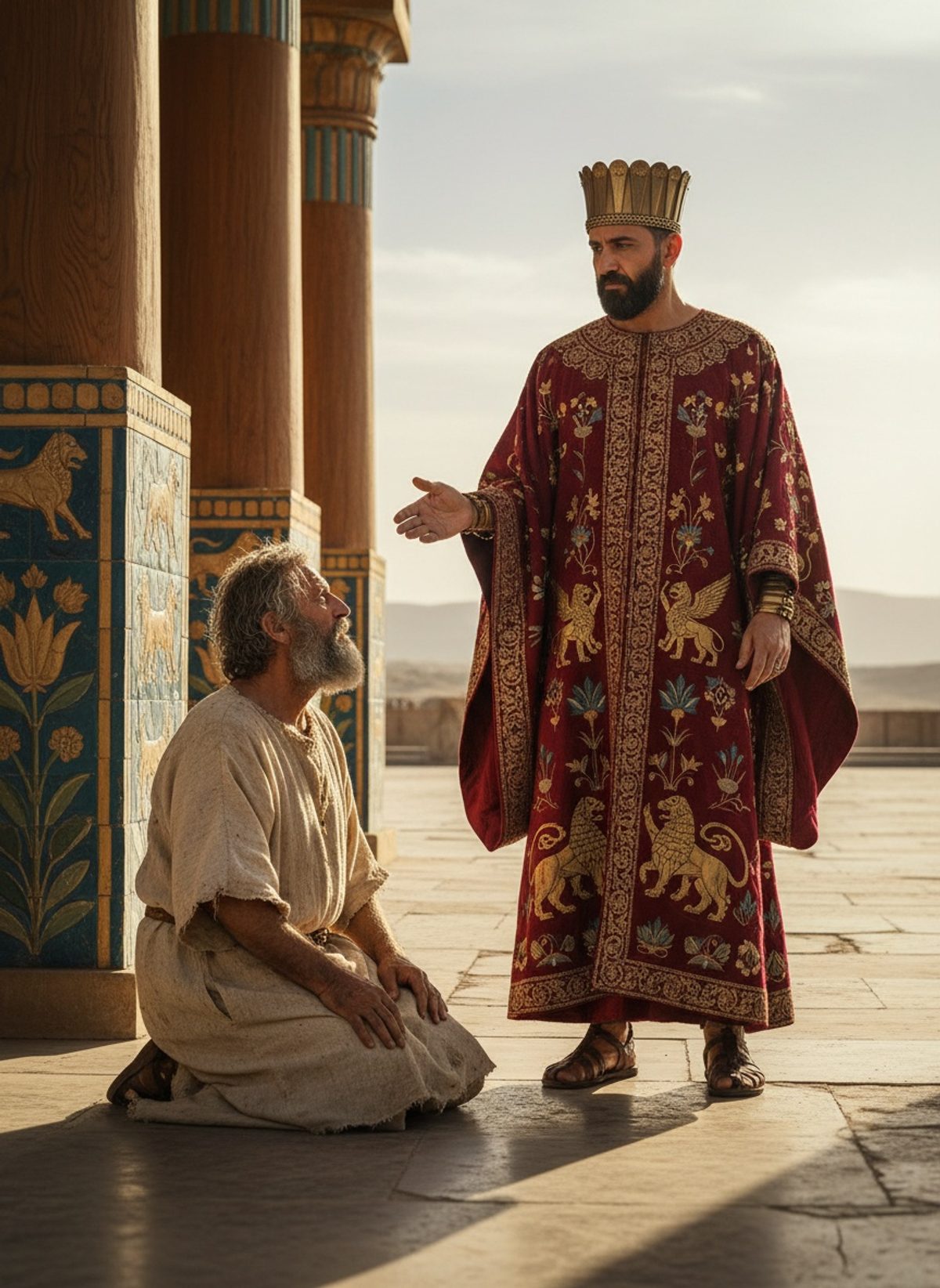
Amidst this stillness sat a man bound by chains, though his spirit fought for escape. Croesus, former king of Lydia, knelt defeated; his dreams of dominion reduced to dust by the relentless advance of Cyrus, the master strategist unparalleled in ancient warfare. The notion of Lydian invincibility had been upended; the sack of Sardis was more than a military triumph — it was an erasure of power. Yet in this moment, a different narrative unfolded, transcending blood and iron. As the conqueror approached, a dramatic change in the script of conquest seemed imminent.
The expectations were clear: chains defined a prisoner's fate, and Croesus was no exception to this enduring legacy of power. Yet, Cyrus, a ruler whose ambitions were as vast as his empire, was renowned for his vision beyond mere subjugation. The flicker of interest in Croesus as a prisoner morphed into something unprecedented. It wasn’t simply calculated mercy; it was an incident that blended elements of governance with personal philosophy. According to accounts handed down through generations, Cyrus approached Croesus, not as a vanquished foe, but as a man laden with grief and the weight of a fallen kingdom.
Cyrus the Great listened. Perhaps envisioning an oracle’s warnings of an empire ending — yet misunderstanding whose it would be — Croesus lamented the ironies that fate bestowed upon kingship. As Croesus wept, recounting tales of his sons and his gilded reign now reduced to memory, Cyrus saw not just the shell of a defeated king but the breathing vestiges of human sorrow. Despite the versatility in the basis for his decision — whether compassion, foresight, or intrigue — Cyrus unleashed a narrative shift. He broke the chains himself, extending a hand to the humbled monarch in a gesture dense with meaning.
Suddenly, the world of ancient warfare knew a new weapon: clemency. To offer Croesus a seat at his side was more than a symbolic act; it was a declaration that strength need not rely exclusively on force. In that silence of liberation, side by side they sat, each man pondering the threads of destiny’s weave. The Persian ruler's innovation in statesmanship stood as an understated revolution in the codes of war.
Consider the backdrop against which this event unfolded: Lydia, fertile and thriving, with its rivers running gold, had been a powerful testament to terrestrial opulence. Croesus, its monarch, was legendary for his untold riches; even the gods, it seemed, had favored him in tales of tribute and triumph. Year upon year, his treasury swelled, reflecting a repeated pattern of conquest funded by the shimmering wealth of his lands. Yet with Persia's rise, a new sun had begun to eclipse Lydia’s once-blazing luminescence, shading Croesus’s fortune with Persia's relentless shadow.
While historians recount the glorious victories of Cyrus, it is this unique act of intellectual bravery and compassion that offers nuanced insights into his reign. Breaking the chain of barbarity that tied victory to subjugation, Cyrus's choice fueled discussions on leadership that have survived millennia. He listened with a rare sophistication that spoke volumes about his grasp of power — one where winning people’s hearts became as vital as winning their lands.
With Croesus by his side, Cyrus championed a form of governance where dialogue could outshine the sword. Drawing on the practical need to incorporate diverse cultures and practices within his burgeoning empire, he redefined inclusivity through decisions enriched with sensitivity and understanding. Historians note this as an astute move that pacified realms and birthed policies of religious and cultural autonomy that would characterize Persian rule for generations.
The story of Croesus and Cyrus reverberates beyond the mere cadences of an ancient narrative. In a world that seemed destined to drown in cycles of retributive violence, their fateful encounter prompts reflections on the possibilities born from listening and learning. It invites us to ponder an alternative fidelity to what grounds empires: enduring respect and shared human experience. This lesson from antiquity continues to resonate today, as the complex interplay of power, mercy, and humanity persists as a center of debate and dialogue in our modern quest for peace.