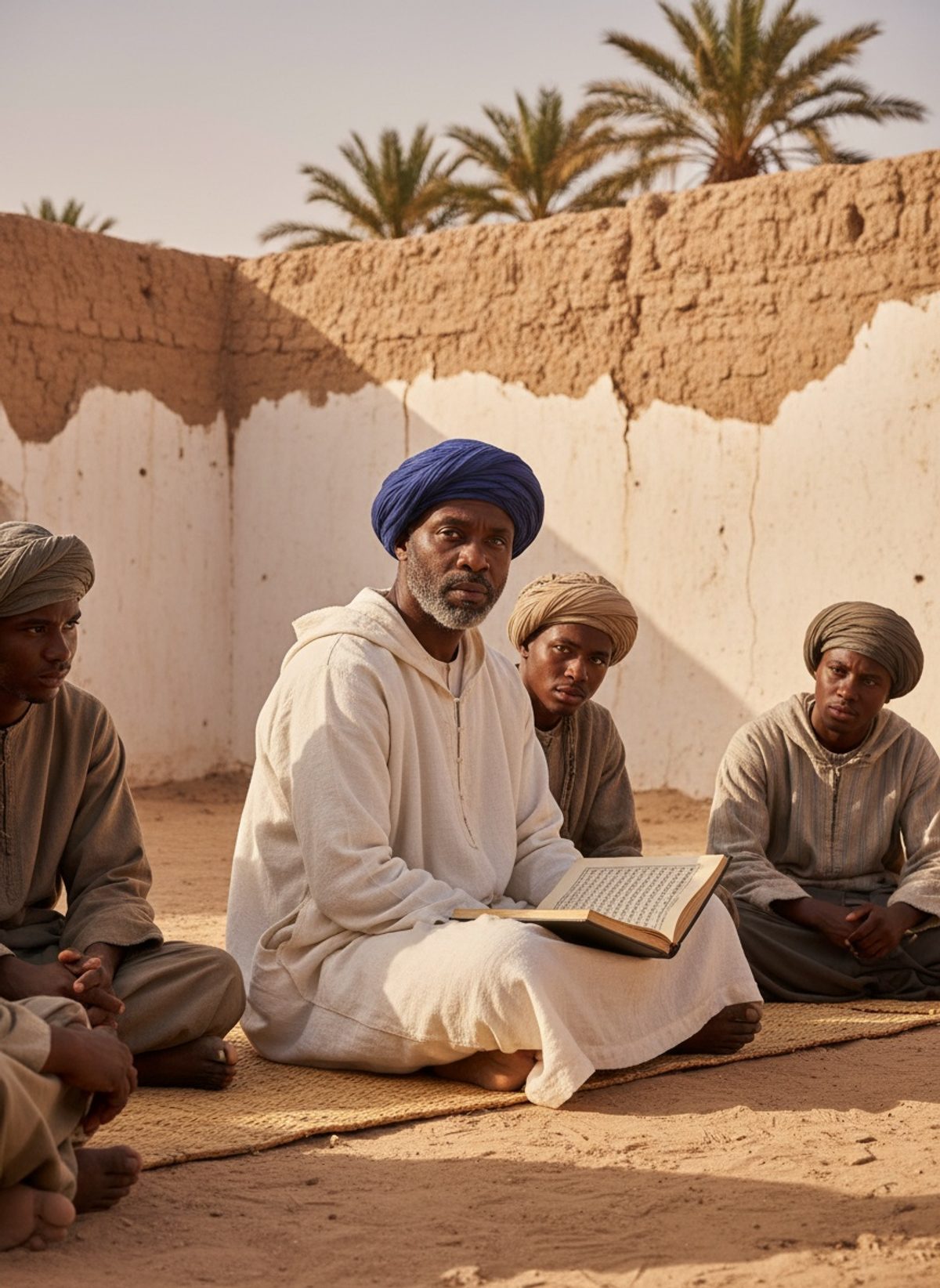
The city of Timbuktu lay under the scorching sun, the air thick with heat and the whispers of ancient knowledge. It was a place where the sand seemed to shimmer with fragments of scholarly pursuit. Yet, in 1593, this beacon of learning bore witness to the echoing clang of chains, a somber note in the city’s symphony of history. The Moroccan invasion had begun, and the unraveling of Timbuktu's intellectual tapestry was imminent.
The Invasion and The Scholar
In the heart of West Africa, Timbuktu was not merely a city; it was an emblem of scholarly excellence. Rich with libraries and schools, it was an intellectual oasis in the Sahara desert. This haven, however, felt the tremors of change when Moroccan troops descended, driven by the desire to control trade routes and the wealth of the Songhai Empire. Amidst the turmoil, one figure stood out—the eminent scholar, Ahmad Baba.
Ahmad Baba was revered for his intellect, a luminary amongst academics, having authored some forty books on a myriad of subjects, from jurisprudence to grammar. He was the custodian of one of Africa's greatest libraries and a respected voice in Islamic scholarship. However, the invasion led by Moroccan forces would attempt to extinguish the light he carried. The Moroccans' actions were swift and unforgiving; libraries were looted, and knowledge, housed in delicate manuscripts, threatened with annihilation. The intent was clear—to strip Timbuktu of its sources of power and prestige.
A Scholar in Chains
As Moroccan soldiers led Ahmad Baba through Timbuktu's dusty streets, the great scholar shared the fate of his beloved city's books: bound and taken from his home. The journey across the Sahara to Marrakesh was arduous, with the sands stretching endlessly, mirroring the grim uncertainty of his exile. With each step, the chains clanked, a cruel counterpoint to the verses and wisdom he had nurtured within.
The transportation of Ahmad Baba was more than just the removal of a man; it was the symbolic attempt to silence an intellectual force. Yet, despite these harsh conditions, Ahmad Baba’s resolve remained unbroken. His captors could separate him from his books, but not from the fountain of knowledge within his mind. In this moment of trial, he became not only a symbol of the lost splendor of Timbuktu but also of the enduring spirit of scholarship.
The Rebirth of Learning
Exile did not stifle Ahmad Baba. Instead, it became fertile ground for his continued contributions to education and scholarship. In Marrakesh, far from the comforting sands of Timbuktu, he found opportunity amidst adversity. Strangers in a foreign city, students were drawn to his knowledge like moths to a flame, eager to learn from the distinguished scholar who had brought with him the legacy of one of Africa's greatest centers of learning.
Ahmad Baba established a school, creating a new hub of thought and discourse. His teachings became a beacon in Marrakesh, as he shared the depths of his wisdom on Islamic jurisprudence. His students were not just pupils but participants in the preservation and spread of ideas that transcended the boundaries of empires. Through this institution, Ahmad Baba continued to breathe life into the scholarly tradition he so cherished.
The Enduring Legacy
While Ahmad Baba's physical presence in Timbuktu was severed, his intellectual footprint remained imperishable. Across the sands that separated Marrakesh from his homeland, his influence spanned regions, ensuring that the spirit of Timbuktu's scholarly heritage reached far beyond the Sahara. His writings, cherished as they were, inspired future generations, securing his place in the annals of African intellectual history.
The lessons imparted by Ahmad Baba during his exile served as a testament to the resilience of the human spirit and the unyielding pursuit of knowledge. His legacy endured through the commitment to education and the relentless quest to preserve the cultural and intellectual wealth of Africa, against the backdrop of political and military upheaval.
A Reflection on Resilience
The story of Ahmad Baba echoes through history as a powerful reminder of the resilience of human intellect against the forces that seek to suppress it. While cities may fall and libraries may burn, the knowledge carried by determined scholars outlasts the transient clang of chains. Ahmad Baba's journey tells us that even in the darkest times, the light of learning can never truly be extinguished. It calls upon us to honor the struggles of those who came before by cherishing and protecting the intellectual pursuits of today and tomorrow.