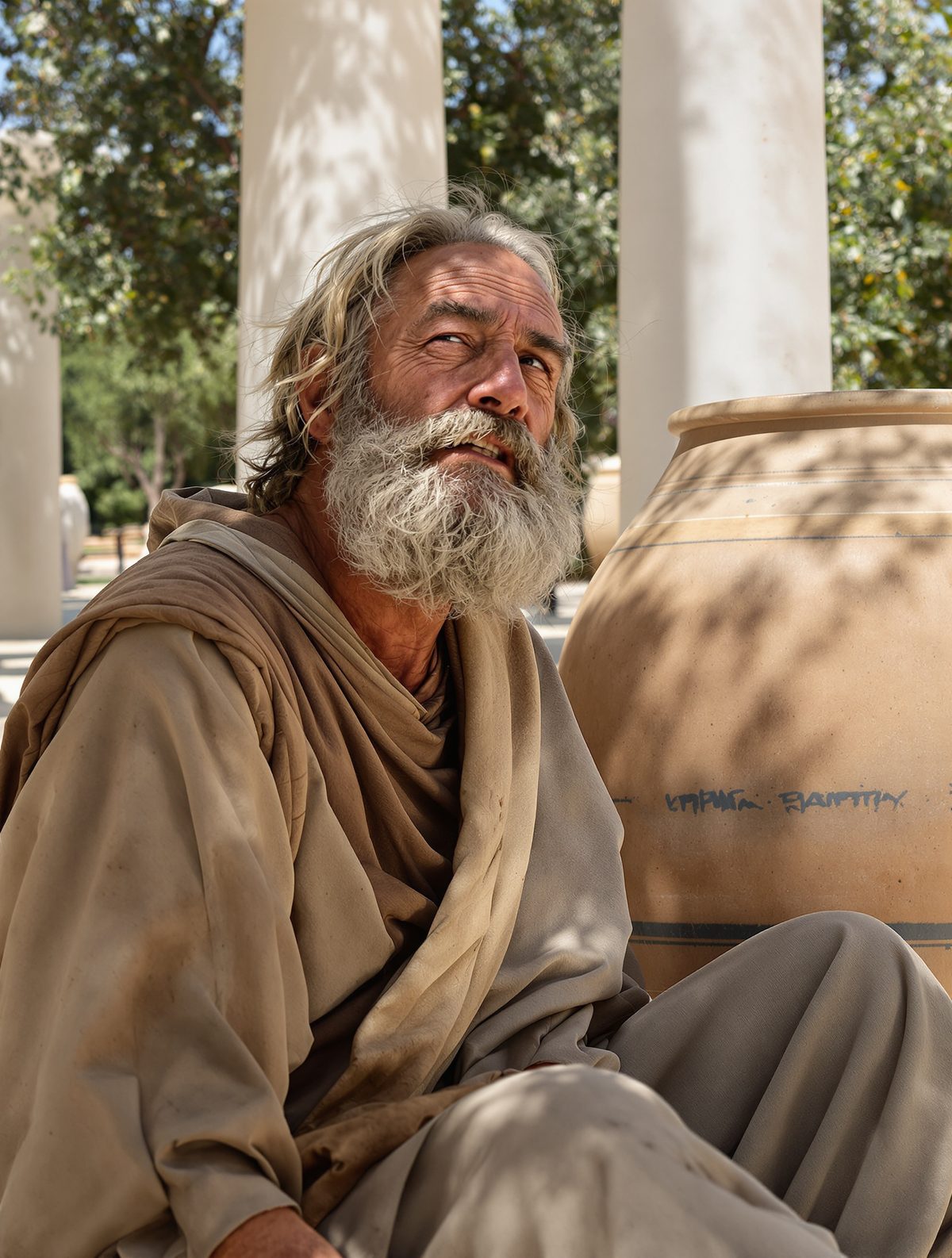
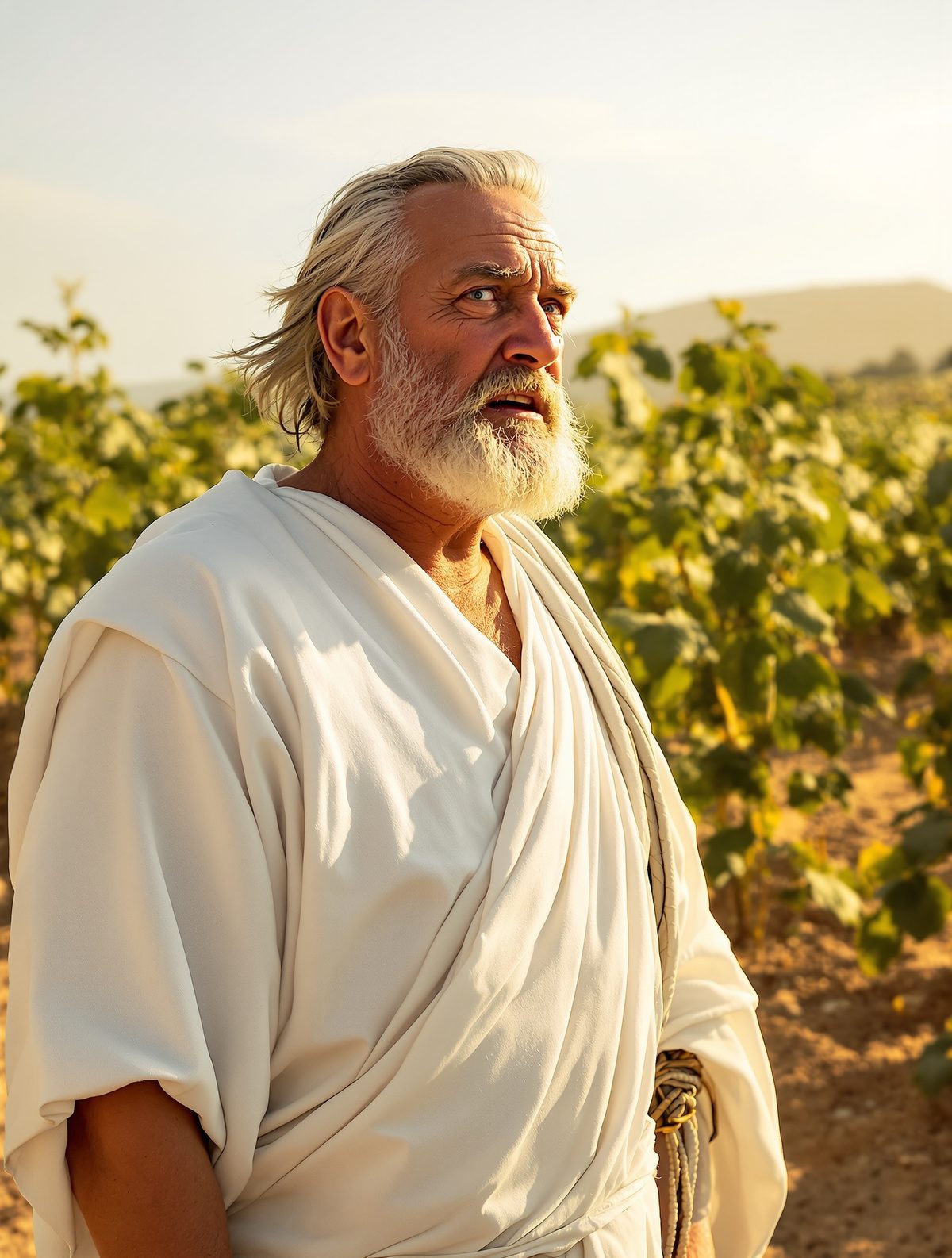
The screams echoed through the Parthian camp as molten gold seared down Marcus Licinius Crassus's throat. Rome's richest man—the owner of countless slaves, sprawling estates, and half the Eternal City itself—gurgled his final breaths while his captors mocked him: "Since you thirst so much for gold, drink gold!" It was 53 BC, and the man who could have bought entire kingdoms was dying the most ironically brutal death in Roman history.
But how did the wealthiest person in the known world end up captured in the desert wastes of Mesopotamia, forced to literally consume the metal that had defined his entire existence? The answer reveals a tale of unbridled ambition, political maneuvering, and greed so consuming it would make modern billionaires blush.
The Real Estate Mogul of Ancient Rome
Marcus Licinius Crassus didn't inherit his staggering wealth—he built it through schemes that would make a Wall Street tycoon proud. Born around 115 BC into a respectable but not extraordinarily wealthy family, Crassus watched his father die during the brutal civil wars that tore Rome apart in the 80s BC. Rather than retreat into obscurity, young Marcus saw opportunity in the chaos.
His most notorious money-making scheme involved Rome's chronic fire problem. In a city where most buildings were wooden death traps packed together like matchsticks, fires were a constant threat. But instead of establishing a proper fire department, Crassus created something far more profitable: a private fire brigade that functioned as an extortion racket.
Here's how it worked: When a fire broke out, Crassus and his 500 trained slaves would rush to the scene—not to fight the flames, but to negotiate. As smoke billowed and neighbors fled, Crassus would offer to buy the burning property at a fraction of its value. Only then would his men spring into action to save the building. Refuse his offer? He'd watch your property burn to ash, then buy the vacant lot for even less.
Through this scheme and similar real estate manipulations, Crassus eventually owned most of Rome. Ancient sources claim he possessed over 7,100 talents of silver—roughly equivalent to $170 billion in today's money. To put that in perspective, he could have personally funded the entire Roman military for multiple years.
The Power Player Behind Rome's Throne
But Crassus wanted more than money—he craved the respect and glory that came with military conquest. This desire led him into an unlikely alliance that would change Roman history forever. In 60 BC, he formed the First Triumvirate, a secret political pact with two other ambitious Romans: Pompey the Great, Rome's most celebrated general, and a rising politician named Gaius Julius Caesar.
The arrangement was beautifully cynical: Crassus provided the money, Pompey brought military prestige and popular support, and Caesar contributed political cunning and ambition. Together, they essentially controlled the Roman Republic from behind the scenes, dividing consulships, provinces, and power among themselves while maintaining the illusion of democratic governance.
Caesar got Gaul to conquer (setting the stage for his legendary campaigns), Pompey secured his veterans' land grants, and Crassus... well, Crassus got the bill. He financed their political campaigns, bribed senators, and kept the triumvirate's war machine running. But watching his partners earn glory while he merely wrote checks gnawed at Rome's richest man.
The breaking point came when Caesar's conquests in Gaul started making headlines across the Mediterranean. Every month brought news of another victory, another tribe subdued, another fortune in gold flowing into Caesar's coffers. Pompey, meanwhile, basked in his reputation as Rome's greatest living general. Crassus, despite being the wealthiest man alive, felt like a forgotten accountant funding other people's adventures.
The Desert Dream That Became a Nightmare
At age 62, when most Romans were contemplating retirement, Crassus decided to prove he was more than just a financier. He secured the governorship of Syria in 55 BC, but the province's routine administrative duties weren't enough. His eyes turned eastward, toward the wealthy Parthian Empire—Rome's greatest rival and the one major power that had never felt Roman steel.
The Parthians controlled the lucrative trade routes between Asia and the Mediterranean, and their capital of Ctesiphon was rumored to contain treasures that would make even Crassus's fortune look modest. Here was his chance: one glorious campaign that would eclipse Caesar's Gallic triumphs and fill Rome's coffers (and his own) with Eastern gold.
Against the advice of virtually everyone—including Caesar, Pompey, and the Roman Senate—Crassus began assembling an invasion force. He raised seven legions, totaling about 42,000 men, plus cavalry and auxiliaries. It was one of the largest armies Rome had ever sent beyond its borders, and Crassus financed much of it personally.
The expedition started badly and got worse. Local Syrian governors warned Crassus that the Parthians were masters of desert warfare, employing horse archers who could strike from impossible distances and vanish like mirages. The Armenian king offered to guide the Romans through mountainous terrain where Parthian cavalry would be less effective. Crassus ignored them all, choosing instead to march directly across the Mesopotamian desert—straight into his enemies' greatest strength.
The Battle That Broke Rome's Richest Man
On a blazing hot day in June 53 BC, near the town of Carrhae (modern-day Turkey), Crassus finally encountered the Parthian army. What he saw must have chilled him despite the desert heat: not the infantry battle he expected, but an endless sea of mounted archers stretching across the horizon like a deadly mirage.
The Battle of Carrhae became a masterclass in military disaster. The Parthian general Surena deployed a devastating tactic: his horse archers would gallop within range of the Roman squares, unleash volleys of arrows, then wheel away before the heavily armored legionaries could respond. When Roman cavalry tried to pursue, heavily armored Parthian cataphracts (armored cavalry) would crash into them like an iron avalanche.
For hours, the Romans stood in the blazing sun while arrows fell like deadly rain. Crassus's son Publius led a desperate cavalry charge and was killed, his head cut off and mounted on a spear for his father to see. The psychological warfare was as brutal as the physical combat—Parthian war drums thundered across the desert while Roman morale crumbled.
By day's end, 20,000 Romans lay dead and another 10,000 were captured. Only Crassus and about 5,000 survivors managed a fighting retreat to the nearby city of Carrhae, but they were trapped. The man who owned half of Rome was now a desperate fugitive in the Syrian desert.
The Golden Death of Rome's Golden Boy
What happened next remains one of history's most grimly poetic endings. Desperate to escape, Crassus agreed to meet with Surena under a flag of truce to negotiate terms. It was almost certainly a trap, but the Roman commander had no other options. As he approached the Parthian lines, fighting broke out—whether by accident or design, no one knows—and Crassus was captured alive.
The Parthians had snared the richest prize in the known world: Marcus Licinius Crassus, the man whose wealth was legendary from Britain to Babylon. But Surena wasn't interested in ransom money. He wanted to send a message about Roman greed that would echo through history.
According to the historian Cassius Dio, the Parthians forced molten gold down Crassus's throat while mocking his legendary avarice. "Satia te auro"—"Drink your fill of gold!" Whether this account is literally true or symbolic storytelling, it perfectly captured how the ancient world viewed Crassus's downfall: a man so consumed by greed that he literally died consuming gold.
The Parthians then sent Crassus's head to their king, who was reportedly watching a Greek tragedy. The severed head of Rome's richest man was used as a prop in the play—the ultimate humiliation for a man who had craved glory above all else.
The Legacy of Liquid Gold
Crassus's death sent shockwaves through the Roman world that extended far beyond one man's gruesome end. The destruction of seven legions created a power vacuum that ultimately doomed the Roman Republic. With Crassus dead, the triumvirate collapsed, leading directly to the civil war between Caesar and Pompey that would end with Julius Caesar crossing the Rubicon and becoming dictator.
But perhaps more importantly, Crassus's fate became an enduring symbol of wealth's limitations. Here was a man who could literally buy anything in the known world—except the military glory he craved and, ultimately, his own life. His story reminds us that no amount of money can purchase respect, fulfillment, or immortality.
In our modern age of tech billionaires and global wealth inequality, Marcus Crassus feels remarkably contemporary. Like today's ultra-wealthy who seem to have everything yet constantly reach for more—whether it's political influence, space exploration, or social media validation—Crassus discovered that infinite wealth can create infinite appetite for whatever money can't buy.
The image of molten gold flowing down the throat of Rome's richest man serves as history's most brutal reminder that greed, taken to its logical extreme, ultimately consumes itself. Some thirsts, it seems, can never be quenched—no matter how much gold you're willing to drink.