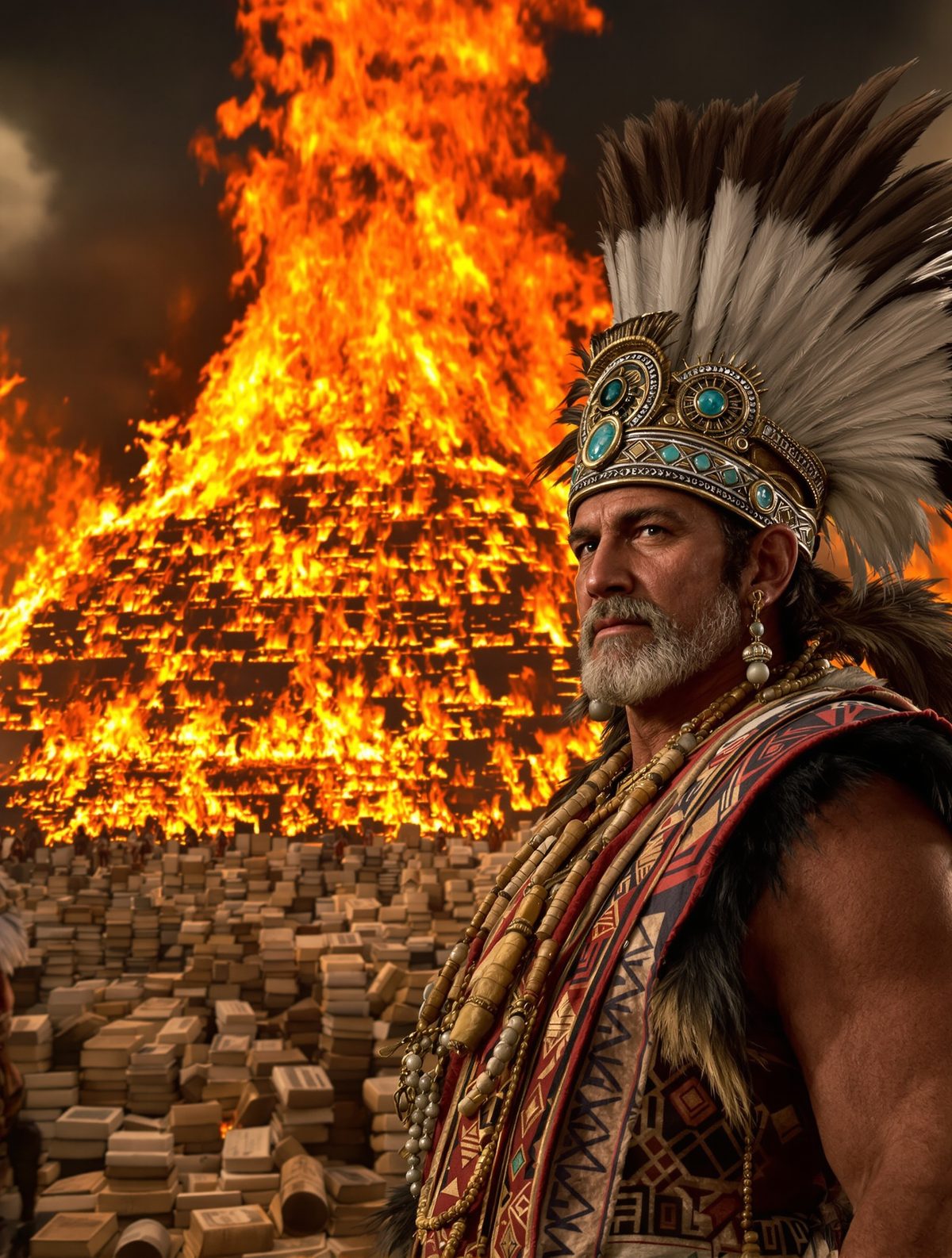
In the dusty corridors of Persepolis, where whispers carried the weight of empires, a prince named Bardiya died twice. Not metaphorically. Not symbolically. Literally twice—once in secret by his own brother's blade, and again months later in front of cheering crowds who believed they were watching an impostor meet his end. The truth? They were right both times.
This isn't the stuff of legends or half-remembered myths. This is documented history from 522 BC, when the Persian Empire stretched from India to Greece and the stakes of royal succession were measured in continents. It's a story of brotherly betrayal, masterful deception, and political intrigue so bizarre that if it appeared in a Hollywood screenplay, critics would dismiss it as too far-fetched to believe.
Yet it happened. And the ripples from this double death would reshape the ancient world.
The Brother Kings and a Secret Murder
King Cambyses II ruled the Persian Empire at its zenith, commanding armies that had conquered Egypt and extended Persian dominion further than any ruler before him. But success abroad couldn't quiet the paranoia at home. His younger brother, Prince Bardiya—called Smerdis by the Greeks—possessed everything that made Cambyses nervous: charisma, intelligence, and a legitimate claim to the throne.
The historical record, primarily from Herodotus and the famous Behistun Inscription carved into a cliff face on Darius's orders, tells us that sometime around 522 BC, while Cambyses was campaigning in Egypt, he made a chilling decision. Unable to bear the thought of his brother as a potential rival, Cambyses secretly ordered Bardiya's execution.
Here's where the story takes its first bizarre turn: the murder was so clandestine that virtually no one in the empire knew it had happened. Bardiya simply... disappeared from court. Officially, he was said to be traveling or hunting in remote provinces. Unofficially, his body was buried in an unmarked grave, and Cambyses continued his campaigns believing he had eliminated the threat to his throne.
But the Persian Empire was vast—stretching over 2 million square miles—and communication was slow. News traveled by horseback along the Royal Road, taking weeks to cross the empire. In this world of delayed information and carefully controlled narratives, a dead prince could remain "alive" for months in the public consciousness.
Enter the Impostor: A Magician's Gambit
While Cambyses campaigned far from home, two Zoroastrian priests—brothers named Patizeithes and Gaumata—were hatching an audacious plan in the heart of the empire. They knew what almost no one else did: Prince Bardiya was dead. And in that secret knowledge, they saw an unprecedented opportunity.
Gaumata bore a striking resemblance to the deceased prince. Whether by fortunate genetics or careful grooming, he could pass for Bardiya at a distance, and with the real prince having been absent from court for months, even close inspection might not immediately reveal the deception. The plan they conceived was breathtaking in its boldness: Gaumata would assume Bardiya's identity and claim the throne.
In March 522 BC, while Cambyses remained in Egypt, "Prince Bardiya" suddenly reappeared. He proclaimed that his brother the king had become a tyrant who cared nothing for Persian traditions, spending the empire's wealth on foreign conquests while neglecting the homeland. This fake Bardiya promised tax relief for three years and exemption from military service—policies that made him instantly popular with the Persian people who had grown weary of constant warfare.
The impostor's timing was perfect. Communication with Egypt was sporadic, and by the time Cambyses learned of his "brother's" revolt, Gaumata had already consolidated power and won over crucial nobles and military commanders. The false Bardiya ruled from the fortress of Sikayauvatis in Media, carefully avoiding areas where he might encounter people who knew the real prince too well.
The King Who Died Trying to Kill a Ghost
When news of Bardiya's rebellion reached Cambyses in Egypt, the king faced a nightmare scenario entirely of his own making. How do you convince an empire that the popular ruler they're following is actually an impostor, when doing so requires admitting you secretly murdered your own brother? How do you prove a man is dead when his "corpse" is sitting on your throne, issuing decrees and winning hearts?
Cambyses immediately began the journey back to Persia, but fate had other plans. In July 522 BC, while traveling through Syria, the king died under mysterious circumstances. Herodotus claims he wounded himself accidentally with his own sword—a wound that became infected and proved fatal. Other sources suggest suicide, driven by the impossible situation he faced. Some whisper of assassination.
Whatever the cause, Cambyses died without ever confronting the man wearing his dead brother's face. The impostor had seemingly won. For seven months, Gaumata ruled the Persian Empire as Bardiya, implementing popular reforms and consolidating power. To most of the empire's subjects, he was Bardiya—the rightful king who had saved them from his tyrannical brother.
But in the shadowy world of Persian court politics, a few people knew the truth. And one of them was named Darius.
The Conspiracy of Seven and the Second Death
Darius was a young nobleman from a cadet branch of the royal family, descended from Arsames and related to Cyrus the Great. More importantly, he was one of the few people at court who knew with certainty that the real Bardiya was dead. Whether he had been informed by Cambyses before the king's death, or pieced together the truth through careful investigation, Darius recognized that an impostor sat on the Persian throne.
But knowledge and action are different things. Gaumata had the support of the people, control of the army, and the legitimacy of apparent royal blood. Challenging him meant risking everything on the word of a dead king that he had murdered his own brother. Darius needed allies, and he found them among six other Persian nobles who shared his suspicions about the false Bardiya.
This group—known to history as the Seven—included Otanes, Intaphernes, Gobryas, Hydarnes, Megabyzus, and Aspathines. Together, they formed a conspiracy that would either save the empire or destroy them all. Their plan was as direct as it was dangerous: infiltrate the royal fortress and confront Gaumata in person.
On September 29, 522 BC, the Seven put their plan into action. They approached the fortress of Sikayauvatis, talking their way past guards by claiming urgent business with the king. Once inside, they cornered Gaumata and, according to Darius's own account in the Behistun Inscription, killed him along with his chief supporters.
The false Bardiya was dead. For the second time, a man claiming to be Prince Bardiya had been executed—this time publicly, his deception revealed to the empire. The real prince had died twice: once as himself, murdered by his brother, and again as an impostor who had stolen his identity and crown.
The Aftermath: How a Double Death Shaped an Empire
With Gaumata dead and the deception revealed, the Seven faced a crucial question: who would rule the Persian Empire? The conspiracy had succeeded, but success brought its own problems. According to Herodotus, they agreed to meet the next morning and let their horses decide—whoever's horse neighed first at sunrise would become king. Through either divine providence or clever preparation by his groom, Darius's horse was the first to make a sound.
Darius became Darius the Great, one of history's most successful rulers. He would reign for 36 years, extending the Persian Empire to its greatest extent, building architectural marvels like Persepolis, and establishing administrative systems that would influence governance for millennia. But his path to power was paved with the strange tale of a prince who died twice.
The story of Bardiya reveals something profound about the nature of power in the ancient world. Identity could be fluid when communication was slow and visual media nonexistent. A skilled impostor with the right knowledge and appearance could literally become someone else, ruling millions who never suspected the deception. Yet it also shows how fragile such deceptions ultimately were—requiring constant vigilance, careful positioning, and tremendous luck to maintain.
In our digital age of instant global communication and biometric identification, it's easy to forget how different identity verification once was. A prince could die in secret and continue "living" for months. An impostor could rule an empire spanning three continents. And a single conspiracy could unravel months of careful deception in a matter of minutes.
Perhaps most remarkably, this isn't just ancient gossip—it's documented history, carved in stone by Darius himself and corroborated by Greek historians. The Behistun Inscription, often called the "Rosetta Stone of Ancient Persia," proudly proclaims Darius's version of events for all posterity. Whether every detail is accurate remains debatable among scholars, but the core story—of a prince who died twice and the impostor who briefly ruled an empire—stands as one of history's most extraordinary tales of political intrigue.
In the end, Bardiya's double death reminds us that truth in history is often stranger than fiction, and that the foundations of great empires sometimes rest on secrets, lies, and the courage of a few people willing to risk everything to set the record straight.