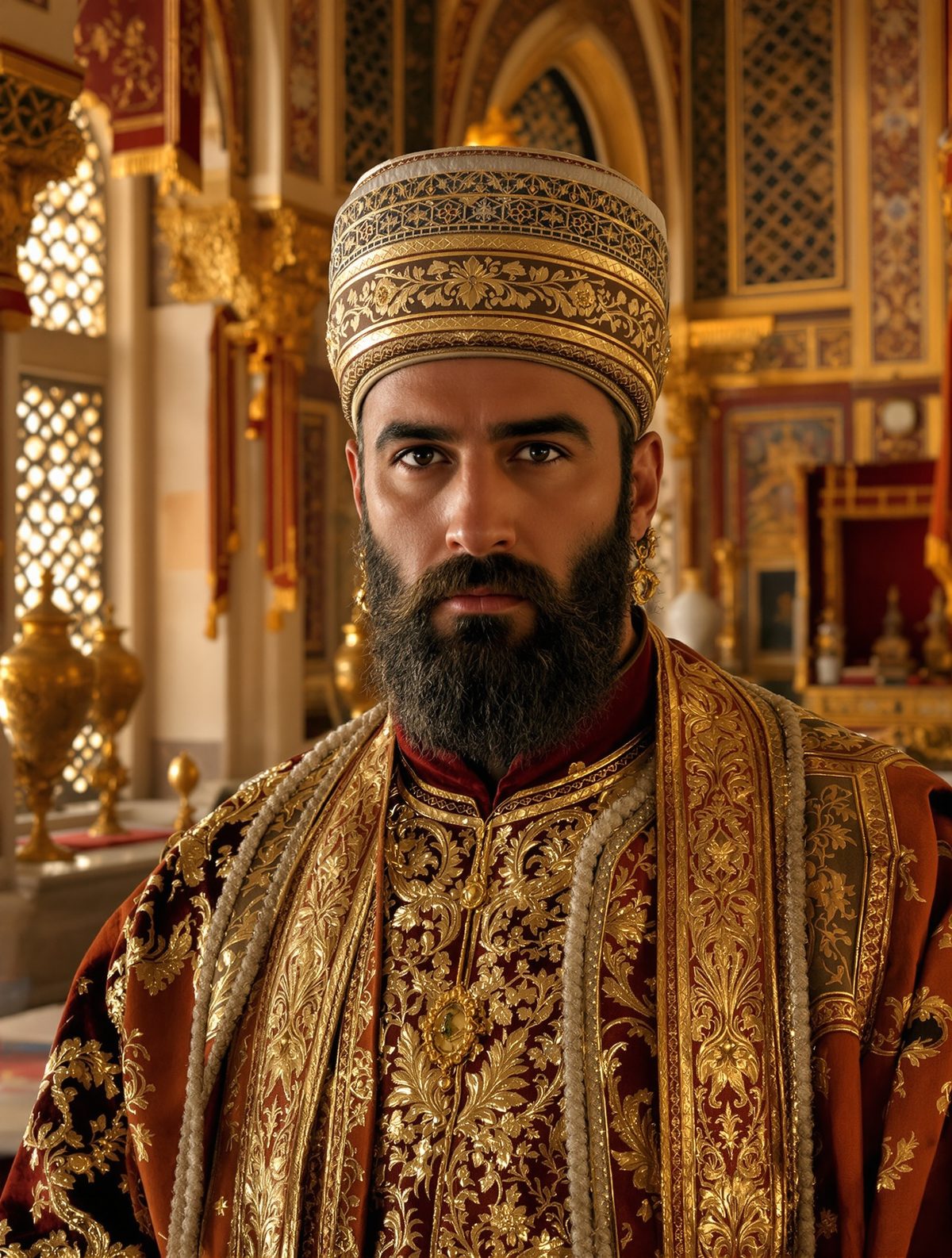
Picture this: It's dawn on December 7th, 43 BC, and the greatest orator in Roman history is fleeing for his life in a litter carried by loyal slaves. Marcus Tullius Cicero—the man whose silver tongue had toppled conspirators, swayed senators, and shaped the fate of empires—was about to discover that sometimes words really can kill you. As assassins closed in on the coastal road near Formia, Cicero made a decision that would become legend: he stuck his head out of the litter and offered it to his executors. "There is nothing proper about what you are doing, soldier," he reportedly said, "but do try to kill me properly." Minutes later, the hands that had penned Rome's most vicious political attacks and the mouth that had delivered them would be severed from his body, destined for a grotesque display that would shock even violence-hardened Romans.
The Man Who Mastered the Art of Political Assassination by Syllable
Marcus Tullius Cicero wasn't born into Rome's elite—he talked his way there. Born in 106 BC to a wealthy but non-aristocratic family in the hill town of Arpinum, Cicero understood early that in a world where birth determined destiny, brilliance would be his ladder to power. By age 30, he had become Rome's most feared advocate, capable of destroying reputations with the precision of a surgeon's blade.
But Cicero's true genius wasn't just in winning cases—it was in understanding that in the Roman Republic, words were weapons of mass political destruction. His speeches against Catiline's conspiracy in 63 BC didn't just expose a plot to overthrow the government; they turned Cicero into Rome's savior, earning him the coveted title "Father of the Fatherland." He had learned to kill careers without drawing blood, and he was about to put that skill to its ultimate test.
When Caesar's Heir Met His Match in Mark Antony
The assassination of Julius Caesar on March 15th, 44 BC, should have been Cicero's moment of triumph. For years, he had watched helplessly as the Republic he loved crumbled under the weight of strongmen and civil wars. Caesar's death seemed like a second chance—until Mark Antony stepped into the power vacuum.
Marcus Antonius—Mark Antony to history—was everything Cicero despised about the new Rome. Where Cicero valued intellect, Antony celebrated brute force. Where Cicero preached republican virtue, Antony indulged in spectacular vice. The man had allegedly shown up drunk to important Senate meetings, vomited during public speeches, and once appeared nearly naked at a religious festival. But here's what Cicero fatally underestimated: Antony was also politically brilliant and utterly ruthless.
The breaking point came when Antony began positioning himself as Caesar's political heir while the real heir—Caesar's 18-year-old grandnephew Octavian (later Augustus)—was still finding his footing. Cicero saw an opportunity to play the two against each other while positioning himself as the elder statesman guiding Rome back to republican government. It was a catastrophic miscalculation.
The Philippics: Fourteen Speeches That Sealed a Death Warrant
Beginning in September 44 BC, Cicero unleashed what would become known as the Philippics—fourteen speeches that represented the absolute pinnacle of political invective in human history. Named after Demosthenes' famous speeches against Philip of Macedon, these orations were verbal assassinations delivered with surgical precision and poetic beauty.
In the First Philippic, Cicero was almost restrained, merely questioning Antony's policies and calling for a return to constitutional government. But by the Second Philippic—which was actually published as a pamphlet rather than delivered orally—Cicero had abandoned all pretense of civility. He accused Antony of being a male prostitute in his youth, a drunkard, a coward who fled battles, and a man who had turned the consul's residence into a brothel.
The rhetorical violence escalated with each subsequent speech. Cicero painted Antony as a barbarian who wiped his hands on his hair at dinner, a man so debauched he made Caesar's other lieutenants look like choir boys. He accused him of stealing from Caesar's estate, of forging documents, of being too drunk to perform his duties. Most damaging of all, he portrayed Antony as fundamentally un-Roman—a man seduced by Egyptian luxury and alien customs through his relationship with Cleopatra.
But here's the detail that makes this story even more fascinating: Cicero was largely telling the truth. Ancient sources confirm that Antony was indeed a heavy drinker, that he did have a talent for spectacular public displays of poor judgment, and that his political methods were often crude. Cicero's genius was taking these acknowledged flaws and weaponizing them into a coherent narrative that portrayed Antony as an existential threat to Roman civilization.
The Deadly Dance of the Second Triumvirate
For a brief, shining moment, it seemed like Cicero's strategy might actually work. The Senate rallied behind his leadership, Octavian appeared willing to play the role of republican champion, and Antony was forced to retreat from Rome. But Cicero had made a fundamental error: he assumed that Octavian, at 19, would remain his grateful protégé forever.
In November 43 BC, the political landscape shifted with devastating speed. Octavian, Antony, and Marcus Lepidus formed the Second Triumvirate—a legal dictatorship that gave them absolute power to "restore the Republic." Their first order of business was drawing up proscription lists: names of enemies who could be killed on sight, their property confiscated, their heads displayed for bounties.
The negotiations over these death lists revealed the cold pragmatism of Roman politics. Octavian demanded the head of Marcus Tullius Cicero. Antony wanted his own stepfather dead. Lepidus insisted on his brother's execution. They traded lives like poker chips, and when the bargaining was done, 300 senators and 2,000 equites (wealthy businessmen) had been marked for death.
The Rostrum's Grisly Trophy
When Cicero's head and hands arrived in Rome, Antony was dining with his wife, Fulvia. According to the historian Dio Cassius, Fulvia took the head into her lap, pulled out the tongue that had delivered those devastating speeches, and repeatedly stabbed it with her hairpin. It was a moment of savage symbolism—the voice that had shaped Roman politics silenced by the crudest possible means.
But Antony wasn't finished. He ordered Cicero's head and hands nailed to the rostra in the Forum—the very speaking platform from which the orator had delivered the Philippics. For months, Romans passing through the heart of their city were confronted with this grotesque reminder of what happened to those who opposed the triumvirs. The hands that had written speeches comparing Antony to barbarian kings now hung rotting in the Mediterranean sun.
Here's a chilling detail that ancient sources preserve: many Romans stopped to stare at the display, and some wept openly. Cicero had been an imperfect man—vain, sometimes cowardly, often more concerned with his own reputation than with principles. But in death, he became something more powerful: a symbol of what the Republic had lost.
The Words That Outlived the Executioner
Mark Antony survived Cicero by just thirteen years. In 30 BC, facing defeat by Octavian at the Battle of Actium, Antony committed suicide in Alexandria. His head never adorned any rostrum, but his reputation was destroyed as thoroughly as if it had. Meanwhile, Cicero's words lived on.
The Philippics became a masterclass in political rhetoric, studied by everyone from Saint Jerome to Winston Churchill. Cicero's broader body of work—his philosophy, his letters, his speeches—helped preserve classical learning through the Dark Ages and fueled the Renaissance. The man who died for his words achieved a form of immortality that his executioner never could.
But perhaps the most profound irony is this: in trying to save the Roman Republic through the power of oratory, Cicero helped destroy it. His vicious attacks on Antony contributed to the political polarization that made compromise impossible. His attempt to manipulate Octavian gave the future Augustus the tools he needed to become Rome's first emperor. The greatest defender of republican government inadvertently midwifed its replacement.
In our age of social media pile-ons and viral political attacks, Cicero's story feels uncomfortably contemporary. He shows us both the power and the peril of treating politics as total war, where opponents aren't just wrong but evil, where every disagreement becomes an existential crisis. The man who perfected the art of political destruction ultimately learned that when you weaponize words completely, you may find that your enemies have sharper blades than your syllables. Sometimes the pen really is mightier than the sword—but sometimes the sword gets the last word.