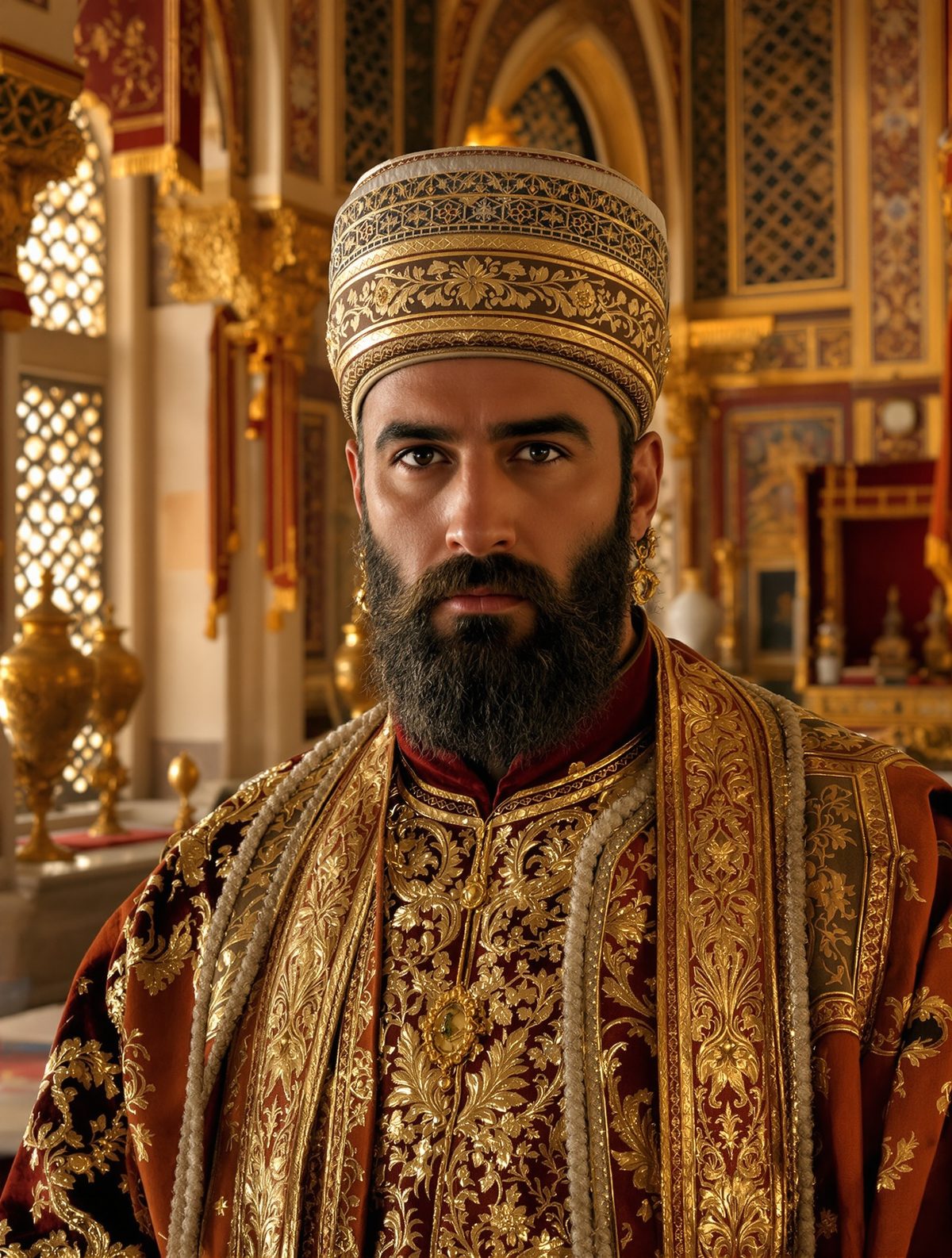
Picture this: A six-year-old boy sits on a throne of gold and ivory, wearing the double crown of Upper and Lower Egypt. His tiny feet barely touch the footrest of the most powerful seat in the ancient world. The year is 2278 BC, and this child has just become the absolute ruler of an empire that stretches for over 600 miles along the Nile River. His name is Pepi II Neferkare, and he will hold that throne for the next 94 years—longer than any monarch in recorded human history.
When Pepi II finally died around 2184 BC, he had ruled Egypt for nearly a century. To put that in perspective, he witnessed roughly 47 generations of his subjects live and die. He saw the rise and fall of kingdoms that most pharaohs never even heard of. And when his impossibly long reign finally ended, it didn't just mark the death of one man—it marked the end of Egypt's Old Kingdom forever.
The Child Who Inherited an Empire
Pepi II wasn't supposed to rule Egypt. He was likely the younger son of Pepi I, and under normal circumstances, would have lived a comfortable but unremarkable life as a royal prince. But death has a way of reshuffling the deck of power. When his older brother Merenre I died after just nine years on the throne, the crown passed to little Pepi II around 2278 BC.
Imagine the scene in the royal palace at Memphis when the news arrived. Court officials scrambling to figure out how a kindergarten-aged child could possibly rule the most sophisticated civilization on Earth. The boy couldn't even read hieroglyphs yet, let alone manage tax collection from dozens of provinces, command armies, or navigate the treacherous waters of palace politics.
But this wasn't just any child. Ancient Egyptian records suggest that even as a boy, Pepi II possessed an almost supernatural charisma. One famous letter, carved in stone and preserved for over 4,000 years, shows the young pharaoh writing to Harkhuf, an expedition leader returning from Nubia. The letter buzzes with excitement because Harkhuf is bringing back a dancing dwarf from the land of the spirits—a pygmy performer who would entertain the royal court.
"Come north to the residence at once!" the boy king commanded. "Hurry and bring with you this dwarf... My Majesty desires to see this dwarf more than the gifts of the mine-land and of Punt!" Here was a child so eager to see this exotic performer that he was willing to mobilize the entire royal bureaucracy to make it happen faster.
The Queen Mother's Shadow Government
Of course, six-year-old Pepi II didn't actually run Egypt by himself. Behind the scenes, his mother Queen Ankhesenamun and a carefully selected council of advisors made the real decisions. This shadow government would prove remarkably effective, maintaining Egypt's prosperity and territorial control for decades while the boy king grew into his role.
Ancient Egyptian art from this period shows us something fascinating: images of the young pharaoh sitting not on his throne alone, but on his mother's lap, both of them wearing crowns. This wasn't just a cute family portrait—it was a political statement. The message was clear: the divine authority of the pharaoh remained intact, but practical governance would be a joint effort.
What's remarkable is how well this arrangement worked. During Pepi II's early decades, Egypt continued to thrive. Trade routes remained open, the annual Nile floods were properly managed, massive construction projects proceeded on schedule, and the kingdom's borders stayed secure. For a government run by a child and his mother, it was an impressive achievement that would make many modern democracies envious.
The queen mother's influence can be seen in surviving administrative documents. Papyrus scrolls from this era show her name appearing alongside the young pharaoh's on important decrees, something almost unheard of in other periods of Egyptian history. She had effectively become co-ruler of the most powerful nation on Earth, all while maintaining the fiction that her young son held absolute power.
Growing Up God-King
As Pepi II transitioned from child to teenager to young adult, something unprecedented was happening: he was becoming the living embodiment of institutional memory. Most pharaohs ruled for 20-30 years before dying and passing power to the next generation. But Pepi II just kept going. By the time he reached middle age, he had been pharaoh longer than anyone in Egyptian history.
This created some bizarre situations. Palace officials who had served under his father and grandfather were now serving under him as elderly men. Governors of distant provinces who had sworn loyalty oaths to three different pharaohs found themselves still answering to the same man decades later. Foreign diplomats would arrive in Memphis to negotiate with a pharaoh their grandfathers had met.
Archaeological evidence suggests that Pepi II embraced his unique position with gusto. His pyramid complex at Saqqara—which archaeologists have spent decades excavating—reveals a man obsessed with permanence and legacy. The complex is massive, covering over 150 acres and containing elaborate chambers filled with some of the most sophisticated religious texts ever carved in stone.
But perhaps the most telling detail is how the pyramid's construction evolved over time. Early sections, built when Pepi II was young, follow traditional architectural patterns. Later additions, however, show increasingly grandiose and experimental designs, as if the aging pharaoh was using his monument to express ideas that no previous ruler had time to develop.
The Price of Immortality
Here's where Pepi II's story takes a dark turn. While an incredibly long reign might sound like a blessing, it gradually became a curse for Egypt. The problem wasn't that Pepi II was a bad ruler—by most accounts, he was competent, sometimes even brilliant. The problem was that he outlived the system designed to support him.
Ancient Egypt's government was built around the assumption that pharaohs would die and be replaced regularly. This natural turnover allowed new ideas to enter the system, regional power structures to be refreshed, and accumulated problems to be addressed by fresh perspectives. But Pepi II never died. He just kept ruling, year after year, decade after decade.
By his 60th year on the throne—around 2218 BC—cracks were beginning to show. Provincial governors who had once been appointed by the central government were now being succeeded by their own sons and grandsons, creating hereditary local dynasties. These regional rulers had become so entrenched that they barely bothered to acknowledge Memphis's authority anymore.
Meanwhile, Pepi II himself was becoming increasingly isolated in his palace. Think about it: by 2200 BC, he had outlived virtually everyone he had ever known. Childhood friends, advisors, generals, priests, servants—all dead. The aging pharaoh was surrounded by the children and grandchildren of his original court, people who knew him only as a legend rather than a person.
When Gods Grow Old
The final decades of Pepi II's reign read like a slow-motion catastrophe. Climate records suggest that around 2200 BC, a severe drought began affecting the entire Mediterranean region. The Nile's annual floods—the foundation of Egypt's prosperity—became unreliable. Harvests failed. People began to starve.
In normal circumstances, this crisis might have prompted revolutionary changes in how Egypt managed its resources and organized its society. But change requires decisive leadership, and Pepi II was now an elderly man who had been making the same kinds of decisions for over 80 years. The government response was slow, ineffective, and based on outdated assumptions about how the kingdom worked.
Provincial governors, no longer truly controlled by Memphis, began hoarding grain and resources for their own regions. Trade networks that had operated smoothly for centuries started breaking down as local authorities pursued conflicting policies. The mighty Egyptian state, which had seemed eternal and unchangeable, was quietly falling apart.
Yet Pepi II ruled on. Ancient texts from his final years describe a pharaoh who seemed almost supernatural in his persistence, continuing to issue decrees and perform royal ceremonies even as his kingdom crumbled around him. Some scholars believe he may have lived past 100—an almost impossible age for the ancient world.
The End of Everything
When Pepi II finally died around 2184 BC, the Egypt he left behind was unrecognizable from the one he had inherited as a child. The central government's authority had effectively collapsed. Regional warlords controlled most of the country. The sophisticated bureaucracy that had made Egyptian civilization possible had fragmented into dozens of competing local administrations.
What followed was called the First Intermediate Period—a century and a half of chaos, civil war, and social collapse. Egyptian texts from this era describe a world turned upside down: "The poor have become rich, and the rich have become poor. Towns are destroyed. Upper Egypt has become dry. The dead are thrown into the river."
It would take nearly 200 years before Egypt could reunite under a strong central government. The Old Kingdom—the Egypt of the great pyramids and absolute pharaohs—never returned. When Egyptian civilization finally recovered, it was fundamentally different: more militaristic, less confident, more aware of its own mortality.
Pepi II's record-breaking reign offers a sobering lesson for our own era. In a world where political leaders, corporate executives, and institutional authorities seem to hold power longer than ever before, his story reminds us that even the most capable individuals can outlive their usefulness. Sometimes the greatest service a leader can provide is knowing when to step aside.
The boy king who ruled Egypt for 94 years achieved a kind of immortality—but it was the wrong kind. Instead of being remembered as the pharaoh who perfected the Old Kingdom, he became the man who accidentally destroyed it, simply by refusing to die. In the end, Pepi II's greatest achievement and his greatest failure were exactly the same thing: he never let go.