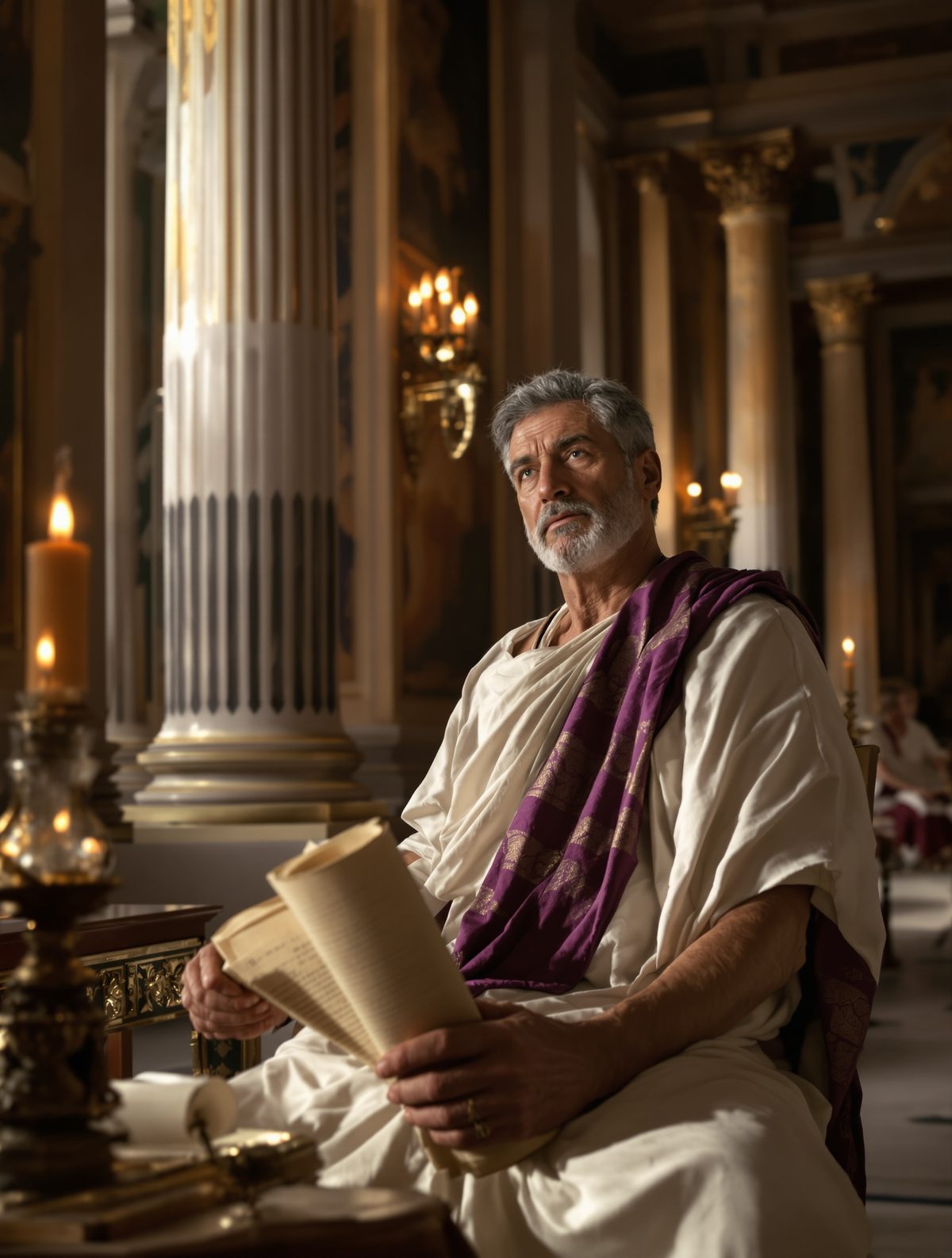
Picture this: You're standing in the opulent throne room of Persepolis in 522 BC, watching a man claim the crown of the mightiest empire on Earth. The nobles bow, the guards salute, and the empire accepts him as their rightful king. There's just one small problem—this man has been dead for months, buried in an unmarked grave by his own brother's command. Yet here he stands, very much alive, ruling over millions of subjects who have no idea they're being governed by a ghost.
This is the story of Bardiya, the dead prince who somehow rose from his grave to rule the Persian Empire for seven months, fooling an entire civilization in one of history's most audacious deceptions.
The Brother Kings and a Murder Most Secret
To understand this impossible tale, we must first meet the players in this deadly game of thrones. Cyrus the Great, founder of the Persian Empire, had two sons: Cambyses II and Bardiya (known to the Greeks as Smerdis). When Cyrus died in 530 BC, the crown passed to his eldest son Cambyses, but the succession came with a dangerous complication—Bardiya had a legitimate claim to power and, more importantly, the love of the Persian people.
Cambyses II was a capable but paranoid ruler who spent much of his reign conquering Egypt and expanding the empire's borders. But success abroad couldn't quiet the whispers at home. Bardiya was popular, charismatic, and worst of all for Cambyses, legitimate. Persian succession laws were murky at best, and a popular prince with royal blood could easily become a rallying point for rebellion.
So Cambyses did what paranoid kings throughout history have done—he eliminated the threat. According to the ancient historian Herodotus, Cambyses secretly ordered Bardiya's assassination around 525 BC. The murder was carried out by Prexaspes, one of the king's most trusted nobles, in a hunting "accident" that left no witnesses and no questions asked. The prince simply disappeared, and the official story was that he had died of natural causes.
But here's where the story takes its first shocking turn: Cambyses told absolutely no one about the murder. Not the nobles, not the priests, not even his closest advisors. As far as the Persian Empire knew, Prince Bardiya was alive and well, simply staying out of the public eye. This decision would prove to be Cambyses' fatal mistake.
Enter the Magus: A Master of Deception
While Cambyses was busy conquering Egypt and hiding his dark secret, a man named Gaumata was watching and planning. Gaumata was a Magus—a member of the powerful Median priestly class that had been conquered by the Persians decades earlier but still wielded considerable influence behind the scenes. These weren't just religious figures; they were educated, politically savvy, and harboring deep resentments against their Persian overlords.
What made Gaumata special wasn't just his ambition, but his appearance. By some twist of fate—or perhaps careful planning—he bore a striking resemblance to the murdered Prince Bardiya. Same height, similar build, comparable features. In an age before photography or mass media, when most people had never seen their rulers up close, physical resemblance was often enough to fool entire populations.
Gaumata began to hatch what might be history's most audacious identity theft. He studied Bardiya's mannerisms, learned his personal history, and most crucially, he waited for the perfect moment to strike. That moment came in March 522 BC, when news reached Persia that King Cambyses II had died in Syria under mysterious circumstances—some said suicide, others suspected divine punishment for his sacrilegious behavior in Egypt.
With the throne vacant and the empire in uncertainty, Gaumata made his move. He appeared at the royal court in Susa, claiming to be Prince Bardiya, the rightful heir to the Persian throne. The timing was perfect, the resemblance was convincing, and most importantly, no one knew the real Bardiya was dead.
The Dead King's Reign: Seven Months of Stolen Glory
What happened next defied all logic and precedent. The Persian nobles, generals, and administrators not only accepted Gaumata's claim—they embraced it. Here was their beloved prince, returned from obscurity to claim his birthright. The succession crisis was over before it began, and the empire had its new king.
But "Bardiya" wasn't content to simply wear the crown. He proved to be a surprisingly effective ruler, implementing popular policies that won him genuine support across the empire. He reduced taxes, freed slaves, and showed unusual tolerance for local customs and religions—policies that stood in stark contrast to his supposedly harsh brother Cambyses. The people loved their new king, never suspecting they were cheering for an impostor.
Gaumata's performance was so convincing that he fooled even those who had known the real Bardiya personally. He held court, made royal decisions, and conducted the business of empire with confidence and skill. For seven months, a dead man ruled the known world, and nobody was the wiser.
There was just one person who could expose the deception: Prexaspes, the nobleman who had murdered the real Bardiya on Cambyses' orders. But Prexaspes faced an impossible dilemma. If he revealed the truth, he would be confessing to regicide—a crime punishable by the most gruesome death imaginable. So he kept silent, watching in horror as a stranger wore his victim's face and ruled his victim's empire.
The House of Cards Collapses
Like all great deceptions, Gaumata's masquerade contained the seeds of its own destruction. The first crack appeared when Otanes, a powerful Persian noble, began to suspect something was wrong. His daughter Phaedyme was married to the new king, giving Otanes access to inside information. He instructed his daughter to check whether "Bardiya" had ears—because according to some sources, the real Bardiya had lost his ears as punishment for a crime years earlier.
When Phaedyme reported back that her husband had no ears, Otanes knew the truth: this was not Prince Bardiya. But rather than act alone, he carefully assembled a conspiracy of six other Persian nobles, including a young man named Darius who would soon become one of history's greatest kings.
The conspiracy moved with deadly precision. In September 522 BC, exactly seven months after Gaumata had claimed the throne, the seven conspirators struck. They stormed the royal palace, cornered the false king, and executed him on the spot. The dead prince's reign was finally, truly over.
The aftermath was swift and brutal. Gaumata's supporters were hunted down and killed, and anyone associated with the Magi faced persecution. Darius, one of the conspirators, claimed the throne and became Darius I, one of Persia's greatest rulers. He commissioned detailed inscriptions celebrating the conspirators' heroic deed, ensuring that future generations would know how seven brave men saved the empire from a pretender.
The Truth Behind the Legend
But here's where this already incredible story takes another twist: we might not know the real truth at all. Some modern historians question whether Gaumata was actually an impostor, or whether Darius and his fellow conspirators invented the entire story to justify their coup against the legitimate king.
Think about it from Darius's perspective: he was a relatively minor noble with a weak claim to the throne. By killing "Bardiya" and claiming he was actually an impostor, Darius could present himself not as a usurper, but as a hero who saved Persia from deception. The story of the false Bardiya served Darius's political needs perfectly—almost too perfectly.
Adding to the mystery, Prexaspes, the supposed murderer of the real Bardiya, died under suspicious circumstances just as the truth was supposedly being revealed. Dead men tell no tales, and Prexaspes took whatever secrets he held to his grave.
Whether Gaumata was a brilliant impostor or Bardiya was a legitimate king murdered by ambitious conspirators, the story reveals the precarious nature of ancient power. In a world without mass communication or reliable documentation, identity itself became a weapon, and the line between truth and deception could determine the fate of empires.
Echoes Across the Ages
The tale of Bardiya—real or fabricated—resonates through history because it exposes timeless truths about power, identity, and the stories we tell ourselves about our leaders. In our modern age of deep fakes, social media manipulation, and "alternative facts," the story feels surprisingly contemporary.
How well do we really know our leaders? How easily can identity be manufactured, and how quickly can populations be convinced to believe convenient lies? Gaumata's seven-month reign—whether as master deceiver or legitimate ruler destroyed by ambitious rivals—reminds us that the relationship between truth and power has always been more complicated than we'd like to believe.
In the end, perhaps it doesn't matter whether Bardiya was really dead or Gaumata was really an impostor. What matters is that 2,500 years ago, the fate of the world's greatest empire hung on questions we're still asking today: Who can we trust? What makes a leader legitimate? And in a world of competing narratives, how do we separate truth from the stories that power tells about itself?
The dead prince's reign lasted only seven months, but the questions it raises about truth, power, and identity have proved far more enduring than any empire.