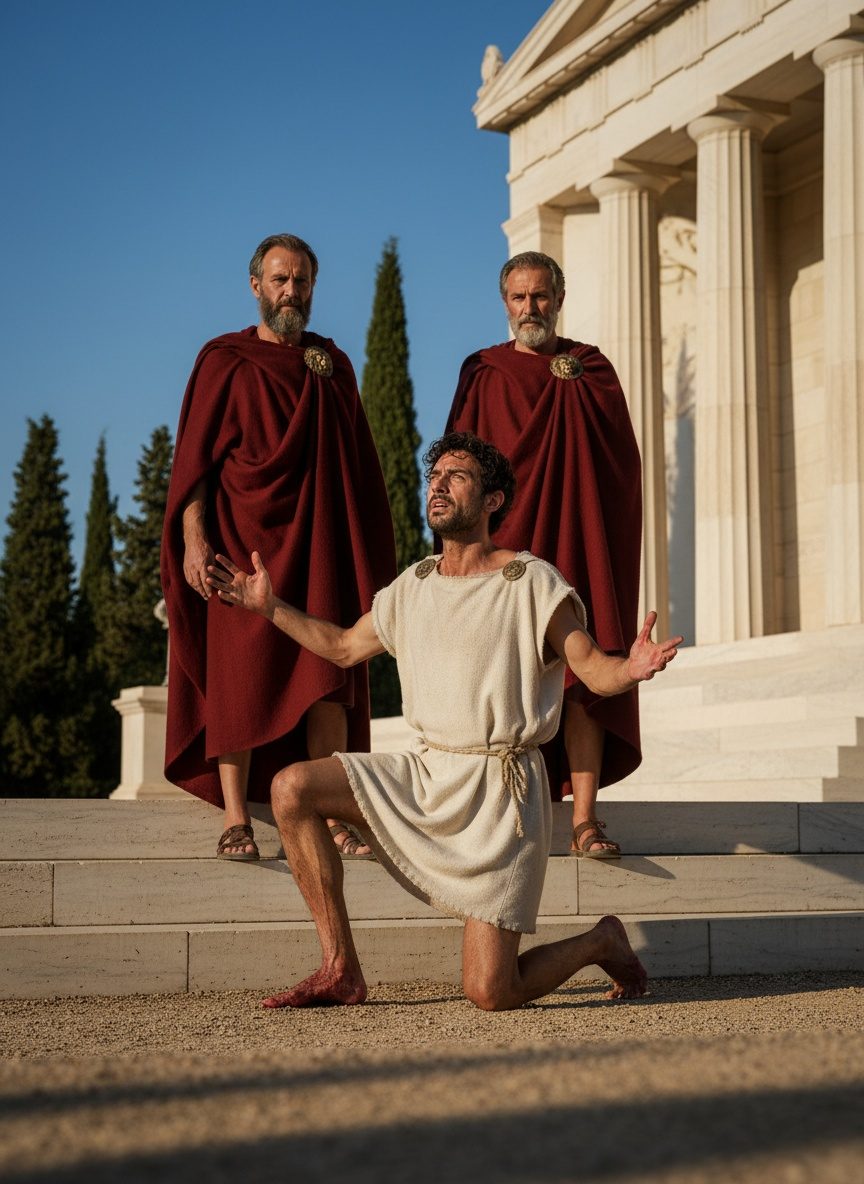
445 BCE. The sun cast long, golden shadows over the city of Athens.
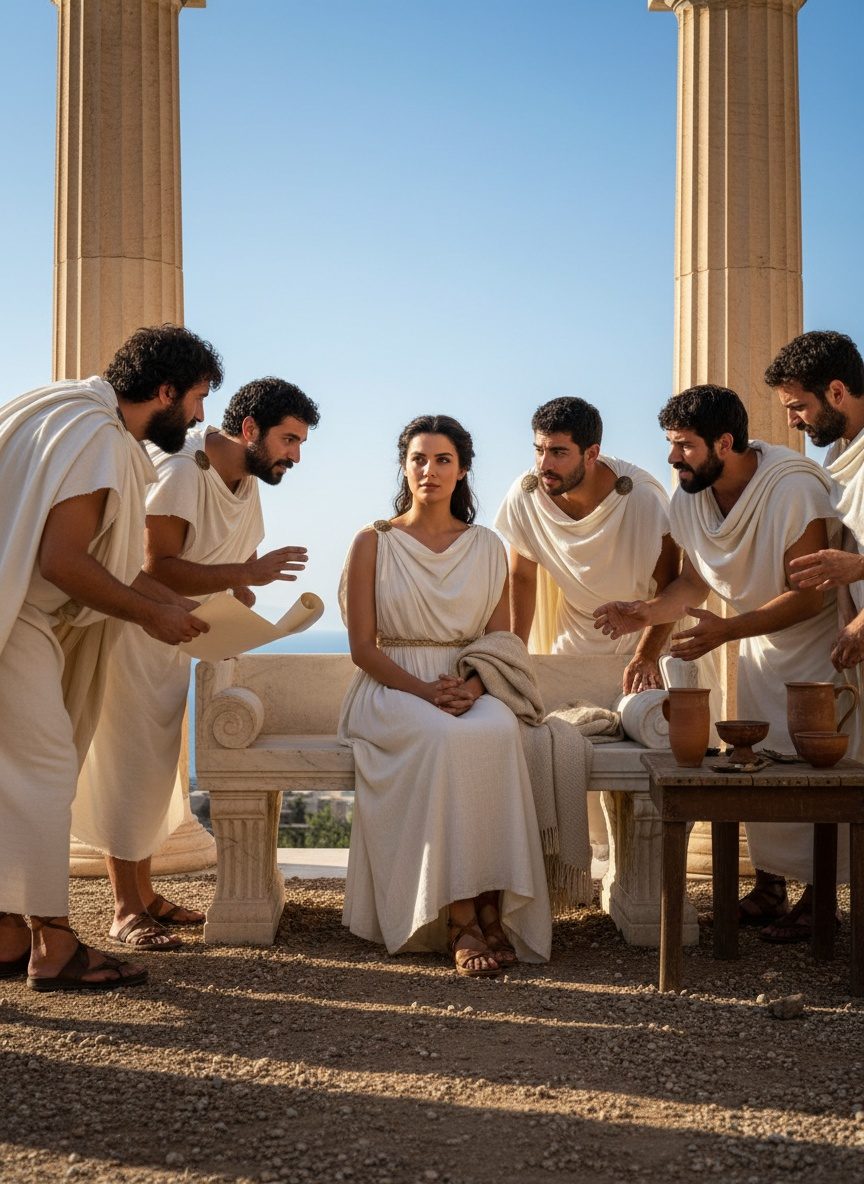
Perched amidst the vibrant hum of the Agora, a small group of men gathered, each captivated by an unassuming woman with an extraordinary mind. Her name was Aspasia, and she was speaking with a command that belied her customary exclusion from Athenian civic life. In an age where women were expected to remain silent, Aspasia’s voice held sway over the sharpest minds of her time. From Socrates, who often professed not to know anything, to the influential statesman Pericles, whose policies shaped the Athenian state, they all came to her seeking discourse and enlightenment.
In this city acclaimed for its democracy, irony thrived. Women were sequestered from public debates and barred from intellectual exchanges. Yet, nestled within the home of Aspasia, even the most rigid of societal norms seemed to sway and retreat. It was here that the greatest intellects found a space rich in dialogue, unshackled from the constraints of the world outside. This setting of intimate confabulations became a salon of sorts, one of revolutionary significance.
Aspasia hailed from Miletus, a bustling coastal city renowned for its rich trade and cultural exchanges. Her arrival in Athens marked a subtle yet impactful cultural shift, and those who encountered her could not help but be drawn to her intellect. She possessed not only beauty and charm but an unprecedented audacity to engage in philosophical debates and oratory discourse, domains predominantly ruled by men. In a society that relegated women to the domestic sphere, Aspasia was something of an enigma.
Her partnership with Pericles was widely noted and, by all accounts, treasured. Aspasia offered more than the silent companionship expected of women at the time; she was his confidant and equal in countless respects. Her influence on Pericles was unmistakable, shaping not just his personal life but also his public policies. The extent of her reach was such that she was rumored, albeit maliciously, to have had a hand in the Peloponnesian War, a clear testament to her perceived power and involvement in political affairs.
Despite the societal constraints, Aspasia's contributions to the intellectual landscape echoed through the ages. She was associated with the Sophists, those perspicacious thinkers who charged for their teaching and were often met with both admiration and disdain. Whether Aspasia was a formal member or merely a sympathizer matters little; her approach to education and eloquence resonated deeply with Socratic philosophies. It is said that Socrates himself was influenced by her teachings on rhetoric, a field traditionally dominated by men and considered essential for those treading the political stage.
Aspasia’s salon was a crucible of intellectual rigor, where ideas were forged in the lively exchange of thought and debate. The painstaking art of persuasion, which she mastered, became a tool wielded by her celebrated attendees. In her presence, the traditional Athenian barriers of class and gender seemed almost permeable, if only temporarily.
However, Aspasia’s role was rendered no less precarious by the openness of her gatherings. Societal disapproval was never far from her door. At times, her name was sullied through scurrilous charges of impiety and immorality, common slanders used to discredit those who disrupted the status quo. The charges reflected the uneasy tension Aspasia’s presence commanded — a woman who, by simply speaking, unsettled the very foundations of Athenian convention.
The enigmatic aspect of Aspasia's life also lies in how history remembers her, or rather, how it has selectively forgotten. Her name does not grace the pages of most historical tomes reserved for her male counterparts. History’s silence forced generations to overlook her influence in shaping the intellectual tenor of Athens, a silence as profound as the storied Parthenon she may have influenced through Pericles.
Peering into this narrative, we uncover a woman who taught the unwilling and transformed the world with discretion and intellect. Her salons became the blueprints upon which the scaffolding of Western philosophy and rhetoric would be erected. The exchanges she fostered were the raw materials of reason, mined eagerly by minds that would come to define not just their time but ages to come. Aspasia’s legacy remains one of paradox, hidden in plain sight, as she influenced the thinkers who steered Athens, and indeed, Western thought.
Why should her story matter today? In uncovering Aspasia’s narrative, we confront a lingering question: how many other Aspasias has history forgotten? As we unravel her impact, we are compelled to reconsider the voices lost amid the cacophony of those deemed more historically significant. Aspasia challenges us to listen, look beyond familiar silences, and recognize the unseen architects of the ideas and ideals that continue to shape society. Her life is a testament to the enduring power of intellectual courage against formidable odds, a potent reminder of the influence the unheard can wield, even when no one is supposed to be listening.