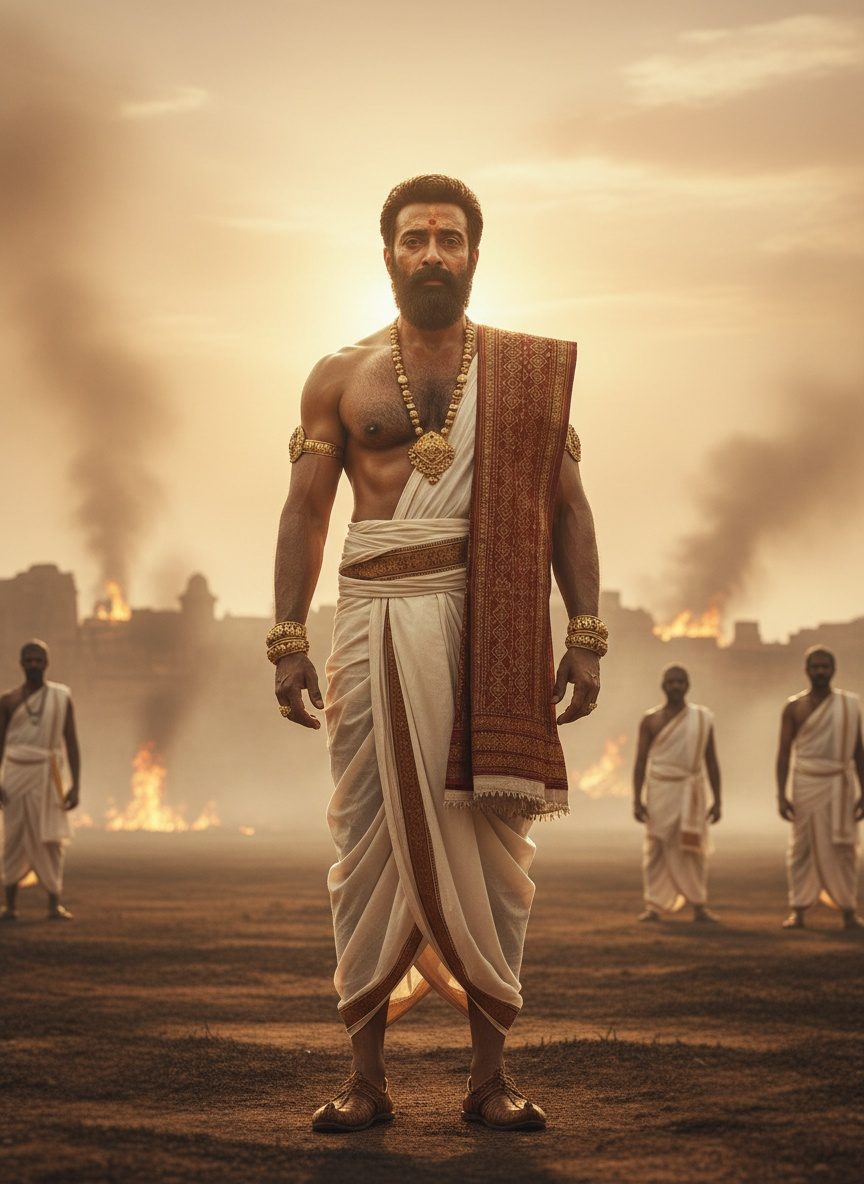
261 BCE. The sun rose slowly over the bloodstained terrain, casting eerie shadows across the field where life and death had danced a brutal tango mere hours before. The battlefield of Kalinga lay eerily silent, the air heavy with the metallic smell of blood and the heartrending cries of the wounded.
For Ashoka, the Mauryan emperor, this was supposed to be the crowning achievement of his military prowess. The conquest of Kalinga was meant to cement his legacy as a ruler who could bring even the fiercest land to its knees. However, as he stepped onto the battlefield alone, victory felt hollow. Here, where the lives of over 100,000 individuals had been snuffed out like flickering candles in a stormy night, Ashoka encountered the weight of his own ambition.
Kalinga had been a prosperous and resilient kingdom, located on the eastern coast of what is now Odisha. Its fierce independence was both admirable and infuriating to its neighbors. For Ashoka, whose ancestors had expanded the Mauryan Empire to unprecedented heights, the stubborn defiance of Kalinga was a thorn in his side. The battle had not been merely about land—it was about quelling a spirit that dared to challenge the rule of Ashoka the Great.
As he maneuvered through the aftermath, stepping over swords that would never be wielded again, Ashoka's mind was pricked by more than just the physical evidence of war. His eyes scanned the devastation—bodies of warriors and innocent civilians alike, the ruins of once sturdy dwellings, the cries of those who had lost not just family members but entire generations. His heart, heavy with newfound introspection, began to crack under the weight of his realization.
Before this battle, Ashoka had been an emperor in the most unflinching sense—a man whose will was unchallengeable and whose conquests were numerous. The Mauryan Empire stretched across vast tracts of India and beyond, a sprawling testament to a dynasty that had seen no peer in its time. Yet for all its wealth and power, the empire had not taught Ashoka the true value of life until this very moment.
With every step, his pace slowed. What was the cost of this conquest? The world watched as he—this most powerful ruler—receded from the thoughts of celebration into a solitary vigil among the specters of his own making. The sun climbed higher, but warmth was a stranger to this scene of carnage, this garden of grief.
He began to understand something few rulers dared to consider—the futility of war. In the shroud of silence, Ashoka saw the battlefield as more than just a ground of victory. It was a solemn testament to human suffering. This land, which he now possessed through force, cried out for peace more than it welcomed its new lord. His shoulders sagged under the twin burdens of guilt and insight.
Back in his capital, Pataliputra, Ashoka would make a decision that no ruler before him had ever contemplated. The transformation was not sudden, but rather a gradual emergence from the shadows of his own remorse. He would abdicate his warlike ways and embrace the tenets of Buddhism, a philosophy he had encountered earlier but had yet to understand fully. It was as though the souls of the fallen whispered this path to him—a journey down a road of non-violence and compassion.
His conversion was not just a personal resolution but a public declaration. Ashoka sent emissaries with messages of peace to distant lands; his mercy was as ambitious as his former conquests. The pillars and edicts of Ashokan law, engraved in stone for millennia, emphasized kindness over cruelty, governance through moral authority rather than military might. These inscriptions, once foreign to the empire, became enduring symbols of Ashoka's enlightened rule.
Across the vast territories of the Mauryan Empire, the transformation in governance signaled a profound shift. Prisons were reformed, slavery was discouraged, and animal sacrifices were abolished. The once iron-fisted emperor now employed his administrative powers to build hospitals, roads, and universities. His devotion to his newly adopted creed became a cornerstone of his leadership. Ashoka himself set an example of piety, conducting dhammayatas—touring the country to preach the principles of dharma and to emphasize the wellbeing of his subjects.
Ultimately, Ashoka's journey from a conqueror to a patron of peace reshaped the cultural and political landscape of ancient India. While many rulers throughout history have sought power to immortalize their reigns, Ashoka's legacy has endured not because of the lands he conquered but because of the lives he endeavored to uplift and harmonize. His story remained whispered through ages, etched indelibly into the tapestry of Buddhist traditions across continents.
The battlefield of Kalinga, though a monument to the harrowing capacity for human conflict, became equally a reminder of the potential for profound change and redemption. Ashoka's reaction to this critical moment in his life offers a timeless reflection on the nature of power and the pursuit of peace. In the annals of history, it stands as a narrative of transformation—reminding us that within the heart of every conqueror lies the potential to become a harbinger of peace.