In 1927, archaeologists working in the cliffs of Deir el-Bahari made a discovery that would rewrite our understanding of ancient Egyptian power. Hidden beneath centuries of rubble, they found a secret tomb belonging to a man whose name had been systematically erased from history. The tomb contained no mummy, no treasures—just empty chambers and defaced inscriptions. But what remained told an extraordinary story: a commoner's son who rose to build monuments for a female pharaoh, only to vanish without a trace at the height of his power.
This is the story of Senenmut, the architect who dared to love a queen—and paid the ultimate price for his ambition.
From Peasant to Palace: The Unlikely Rise of Senenmut
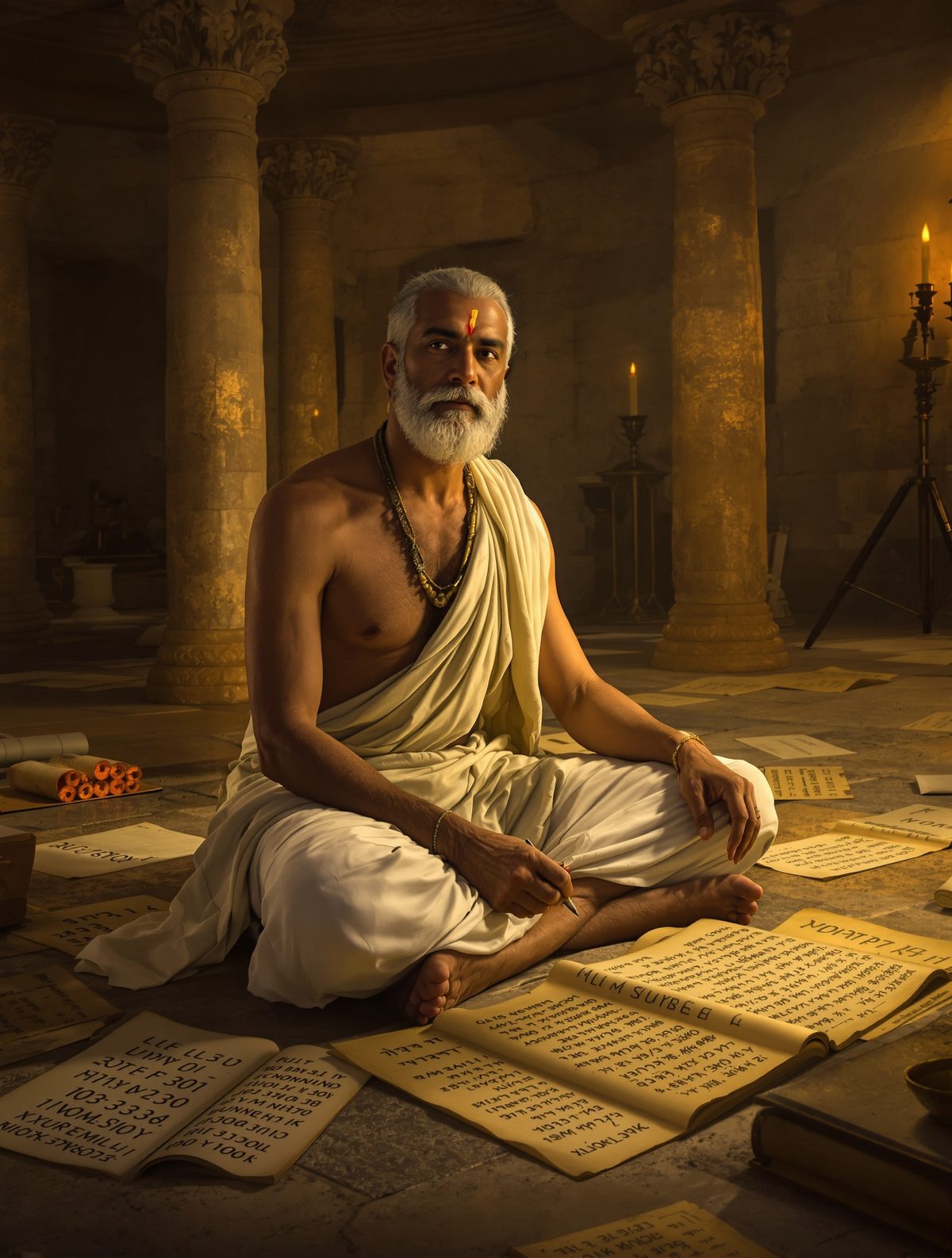
Around 1490 BC, in the bustling town of Armant near Thebes, a boy named Senenmut was born to parents so humble that history barely records their names. His father, Ramose, was likely a farmer or minor craftsman. His mother, Hatnefer, tended their modest household. By every measure of ancient Egyptian society, Senenmut should have lived and died in obscurity, following in his father's footsteps, never rising above his station.
But Senenmut possessed something that transcended social boundaries: an brilliant mind and an insatiable hunger for knowledge. Somehow—perhaps through exceptional talent spotted by a traveling scribe, or sheer determination—this farmer's son learned to read and write hieroglyphs, a skill possessed by less than one percent of Egypt's population. More remarkably still, he mastered mathematics, astronomy, and architecture.
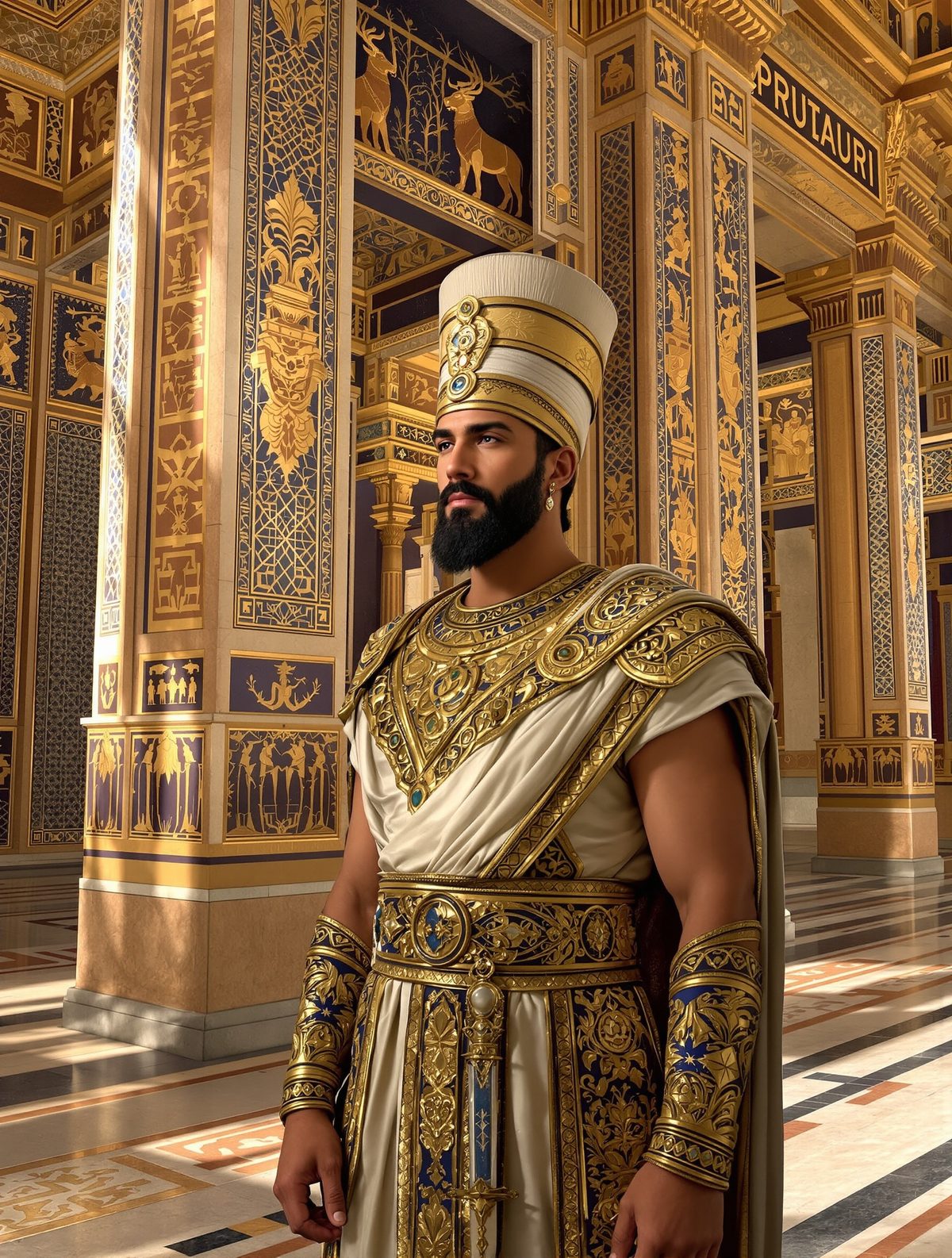
By his twenties, Senenmut had achieved the impossible: he had gained entry to the royal court of Thutmose II. Starting as a minor scribe, he quickly distinguished himself through his administrative brilliance and innovative thinking. When Thutmose II died unexpectedly in 1479 BC, leaving behind a young heir and a formidable widow named Hatshepsut, Senenmut's real opportunity arrived.
What happened next defied every convention of the ancient world. Hatshepsut, who should have faded into the background as queen mother, instead declared herself pharaoh. And standing beside her, as her chief architect and closest advisor, was the commoner's son from Armant.
The Revolutionary Partnership: Pharaoh and Architect
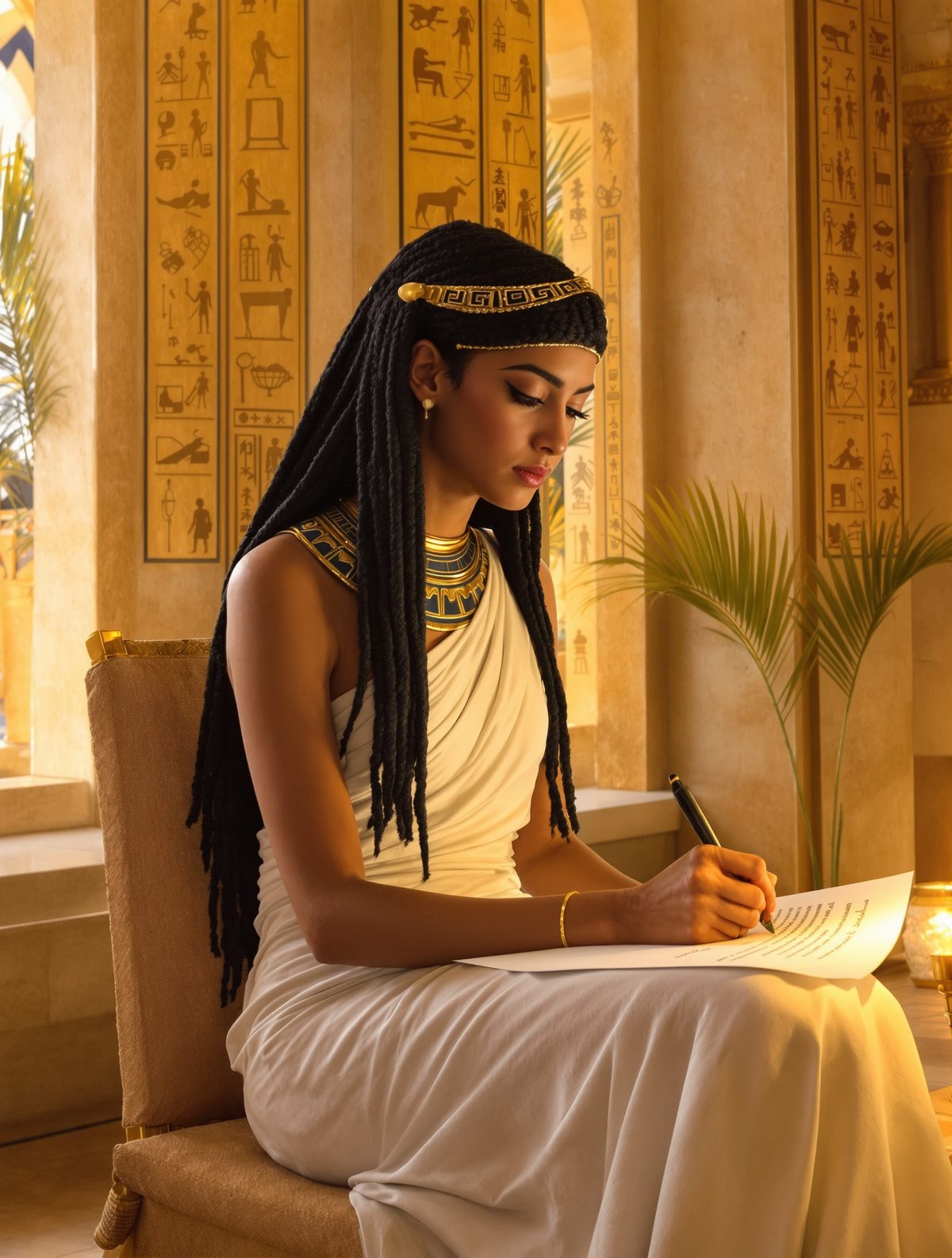
Hatshepsut's decision to rule as pharaoh was audacious enough to shock even a civilization accustomed to divine kingship. For over 1,500 years, no woman had claimed the full pharaonic titles. She needed allies who were brilliant, loyal, and—crucially—owed their positions entirely to her favor rather than ancient bloodlines. Senenmut was perfect.
The relationship between the female pharaoh and her chief architect went far beyond professional collaboration. Ancient inscriptions reveal that Senenmut held an unprecedented collection of titles: "Chief Steward of Amun," "Tutor to the Royal Daughter," and "Overseer of All Works of the King." He controlled access to the royal granaries, supervised the education of Hatshepsut's daughter Neferure, and directed the most ambitious building projects in Egypt.
But perhaps most telling was his role as "Keeper of the Royal Bedchamber"—a position that granted him intimate access to the pharaoh herself. Whispers spread through the palace corridors. Some historians believe their partnership crossed the boundary from professional to personal, though such a relationship would have been scandalous beyond measure in ancient Egypt.
What we know for certain is that Hatshepsut trusted Senenmut with her greatest ambition: creating architectural monuments that would establish her legitimacy as pharaoh for all eternity. And Senenmut would deliver beyond even her extraordinary expectations.
Building for Eternity: The Temple That Defied Convention
Around 1470 BC, Senenmut began work on what would become his masterpiece: Hatshepsut's mortuary temple at Deir el-Bahari. The location alone was revolutionary. Instead of building on the flat desert plains like traditional temples, Senenmut carved directly into the limestone cliffs of the Valley of the Kings, creating a structure that seemed to grow organically from the living rock.
The temple's design was unlike anything Egypt had ever seen. Three massive terraces rose toward the cliff face, connected by grand ramps and surrounded by colonnades that anticipated Greek architecture by a thousand years. Gardens filled with exotic trees from the mysterious land of Punt lined the terraces, creating an oasis of greenery against the stark desert backdrop.
But Senenmut's true genius lay in the details. He positioned the temple so that during the winter solstice, the rising sun would illuminate the inner sanctuary where Hatshepsut's divine image resided. He incorporated sophisticated hydraulic systems to water the gardens and designed acoustic features that amplified the priests' chants throughout the complex.
The construction required unprecedented engineering. Workers had to haul massive stone blocks up steep ramps, carve chambers deep into solid rock, and create foundations stable enough to support the weight of three-story colonnades. Senenmut coordinated thousands of workers, from master stonemasons to humble water-carriers, orchestrating one of the most complex construction projects in ancient history.
Yet even as he built for Hatshepsut's glory, Senenmut couldn't resist leaving his own mark. In hidden chambers and behind closed doors, he secretly carved images of himself—sometimes kneeling before the pharaoh's cartouche, sometimes in poses typically reserved for royalty. These hidden portraits were acts of incredible audacity, suggesting either supreme confidence or dangerous delusions of grandeur.
The Vanishing: A Mystery Written in Silence
Then, sometime around 1458 BC, Senenmut simply disappeared.
The man who had been Egypt's second most powerful figure, who appeared on monuments throughout the kingdom, who controlled vast resources and commanded armies of workers, vanished from the historical record as if he had never existed. His name was systematically chiseled from inscriptions. His statues were smashed. His tomb—one of the most elaborate ever prepared for a non-royal—was left unfinished and abandoned.
What happened? The theories are as dramatic as they are speculative. Some historians believe Senenmut overreached, perhaps plotting to marry Hatshepsut or position himself as her successor. Others suggest he fell victim to palace intrigue, possibly eliminated by supporters of the young Thutmose III who saw him as an obstacle to their own ambitions.
The most tantalizing theory involves forbidden love. If Senenmut and Hatshepsut were indeed lovers, their relationship might have become politically impossible as pressure mounted for the pharaoh to legitimize her rule through more conventional alliances. Perhaps Senenmut was quietly exiled, his erasure from history the price of his life.
What makes his disappearance even more mysterious is that it occurred during the height of Hatshepsut's successful reign. Egypt was prosperous, peaceful, and secure. There was no obvious crisis that might explain such a dramatic fall from grace.
The Secret Tomb: Hidden Treasures and Eternal Questions
For over 3,000 years, Senenmut's tomb lay hidden in the cliffs near his greatest creation. When archaeologists finally discovered it in the 20th century, they found a monument to both ambition and tragedy. The tomb featured innovations that wouldn't appear in royal burials for centuries: astronomical ceilings mapping the night sky, hidden chambers designed to confuse tomb robbers, and inscriptions that pushed the boundaries of what was acceptable for a commoner's burial.
But the tomb was empty. No mummy, no burial goods, no evidence that Senenmut ever occupied the eternal resting place he had so carefully prepared. Either he died elsewhere, was buried in secret, or—most intriguingly—his body was deliberately removed as part of his systematic erasure from history.
Perhaps the most remarkable discovery was a series of ostraca—ancient Egyptian limestone flakes used as scratch paper—found near the tomb site. These contain architectural sketches, mathematical calculations, and hieroglyphic notes that appear to be Senenmut's own working documents. Through these fragments, we can almost see him planning his great temple, calculating angles and proportions, solving engineering problems that wouldn't be tackled again for generations.
Legacy of the Lost Architect
Today, millions of tourists visit Hatshepsut's temple at Deir el-Bahari, marveling at its revolutionary design and perfect integration with the natural landscape. Few realize they're looking at the work of a farmer's son who dared to dream beyond his station and briefly touched the heights of absolute power.
Senenmut's story resonates across millennia because it speaks to timeless themes: the power of merit over birth, the dangerous allure of forbidden relationships, and the thin line between ambition and hubris. In our modern world of social mobility and meritocracy, we want to believe that talent and determination can overcome any obstacle. Senenmut's rise proves this possible—but his fall reminds us that power, no matter how brilliantly earned, remains ultimately fragile.
His architectural innovations influenced Egyptian building for centuries. The terraced design of Deir el-Bahari inspired later pharaohs, while his engineering solutions became standard practice. Even in erasure, Senenmut's genius endured, hidden in plain sight within the monuments that outlived both him and those who tried to destroy his memory.
Perhaps that's the greatest irony of all: in attempting to erase Senenmut from history, his enemies ensured his immortality. Every visitor to Hatshepsut's temple walks through the imagination of the commoner's son who dared to build for a female pharaoh—and who paid for that audacity with everything he had gained.