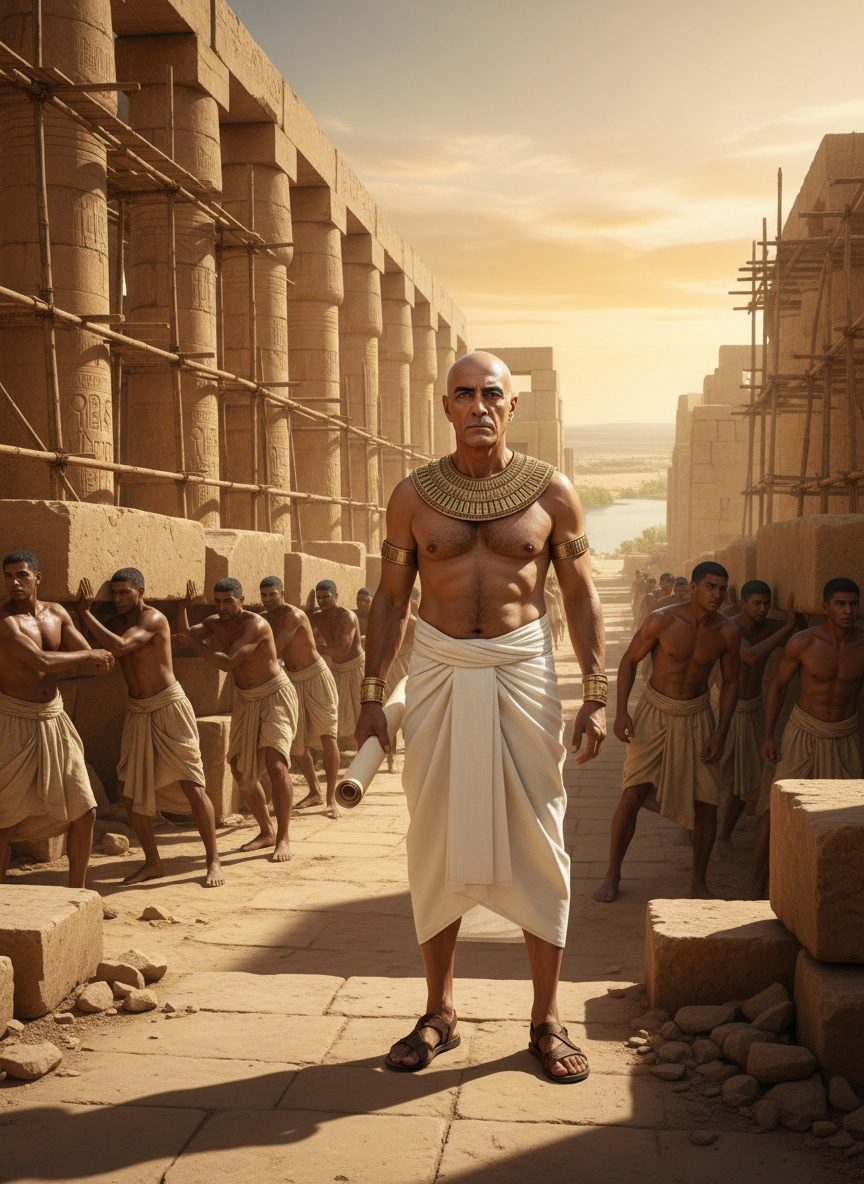
The sound of chisels striking limestone echoed through the scorching air as Amenhotep son of Hapu adjusted his linen kilt. Dust hung like a veil around the Karnak worksite, where thousands of workers busily carved grand sandstone blocks destined for sacred halls. Amidst the din, Amenhotep navigated the maze of scaffolding and half-formed columns, his eyes scanning the laborers, not with detached authority, but with deep kinship.
The Visionary Amongst Builders
Amenhotep was no typical overseer. Born into humble beginnings, his rise in the elite echelons as a royal scribe and then an esteemed architect was as astonishing as the feats he engineered. In an age where divinity was believed to flow through the veins of the pharaohs alone, Amenhotep's ascent was a narrative woven through merit, wisdom, and humanity. While modern depictions of ancient civilizations often lazily label all workers as "slaves," the scene at Karnak was one of organized craftsmanship, underpinned by the respect and foresight of men like Amenhotep.
His influence stretched beyond his monumental projects; he understood that the architectural marvels he constructed required not just stone and wood, but the dedication of skilled hands and creative minds. Realizing this, he ensured workers were compensated, fed, and housed—a radical approach for the era, where such provisions were seldom extended to the laboring class. This sense of provision was not lost on those who toiled—feeding on communal bread, drinking freshly drawn well water, their spirits fueled by the rare acknowledgment of their human dignity.
The Halls of Karnak: A Testament to Ingenuity
Rising from the banks of the sacred Nile, the sprawling temple complex of Karnak stretched ceaselessly toward the sky—a labyrinth of hypostyle halls, majestic columns, and towering obelisks. Heavy with the weight of the gods, its stones still hum with stories of past grandeur. At the heart of this marvel was Amenhotep, whose mind for management met at the crossroads of art and devotion.
Every block and sculpture mapped out by Amenhotep was part of a higher purpose. His designs transformed Karnak into an awe-inspiring spiritual center dedicated to Amun-Ra, where the gods could walk amongst the living. And while the pharaohs claimed divine lineage, it was Amenhotep's hand that crafted their paths. Under his guidance, his men carved out more than stone; they fashioned a timeless testament to their era’s strength and spirituality.
The Philosopher-Architect
Amenhotep’s talents extended beyond bricks and blueprints; he was a philosopher, a sage whose insights transcended his profession. As his reputation swelled, he was granted the rare privilege of deification. This was an unimaginable honor for one of non-royal blood, solidifying his legacy not just in stone, but in the hearts and minds of Egyptian society. But it was not only his contributions to Egyptian theology and architecture that were revered—he was lauded for his humane approach to administration and labor relations, long before such concepts had terms in the historical vernacular.
Despite not being a pharaoh, Amenhotep's teachings and philosophies left a lasting impression. Archaeological findings suggest that he became a figure of worship and wisdom after his passing, viewed by subsequent generations as a model of integrity and intellect. Even the most mighty of rulers would seek the counsel of those echoing his philosophies, ensuring his posthumous position as an immortal figure in Egyptian culture.
The People Who Never Forgot
In life, Amenhotep's empathy towards his workers was a unique form of leadership amid the rigid hierarchies of ancient Egypt. It is this very ethos that left behind a legacy of admiration among the ranks. Workers passing stories of his kindness through generations ensured that his name would echo not just in historical texts, but in the lived heritage of oral tradition.
The lives of the laborers he championed were grueling, yet Amenhotep’s approach to their wellbeing forged a bond of trust—a bridge spanning from overseer to workforce. Tens of centuries later, scribes would inscribe his praises on tablets, elevating him into mortuary temples where Amenhotep's spirit would be consulted, guiding artisans and rulers alike in perpetuity.
Echoes of Propriety in the Sands of Time
Amenhotep's story is a reminder of the impact individuals can make, transcending societal constraints and recognized power structures. As archaeologists continue to uncover layers of Karnak’s history, the tale of Amenhotep serves as a counter-narrative to traditional tales of ancient empires—the stories told by and for the conquerors. Instead, he represents the unsung architecture of humanity itself: the visionaries who sought to unite rather than divide, to build rather than destroy—all licensed by an unwavering commitment to equity and respect.
Amidst the ruins and relics, Amenhotep son of Hapu stands as a beacon of an age, a call that resonates across millennia: the understanding that every stone, every human touch, forms the threads of a vast tapestry. We look back from our modern world, often hastily painting the past in broad strokes, and find rich tapestries of stories, like that of Amenhotep, waiting to be unearthed and celebrated.