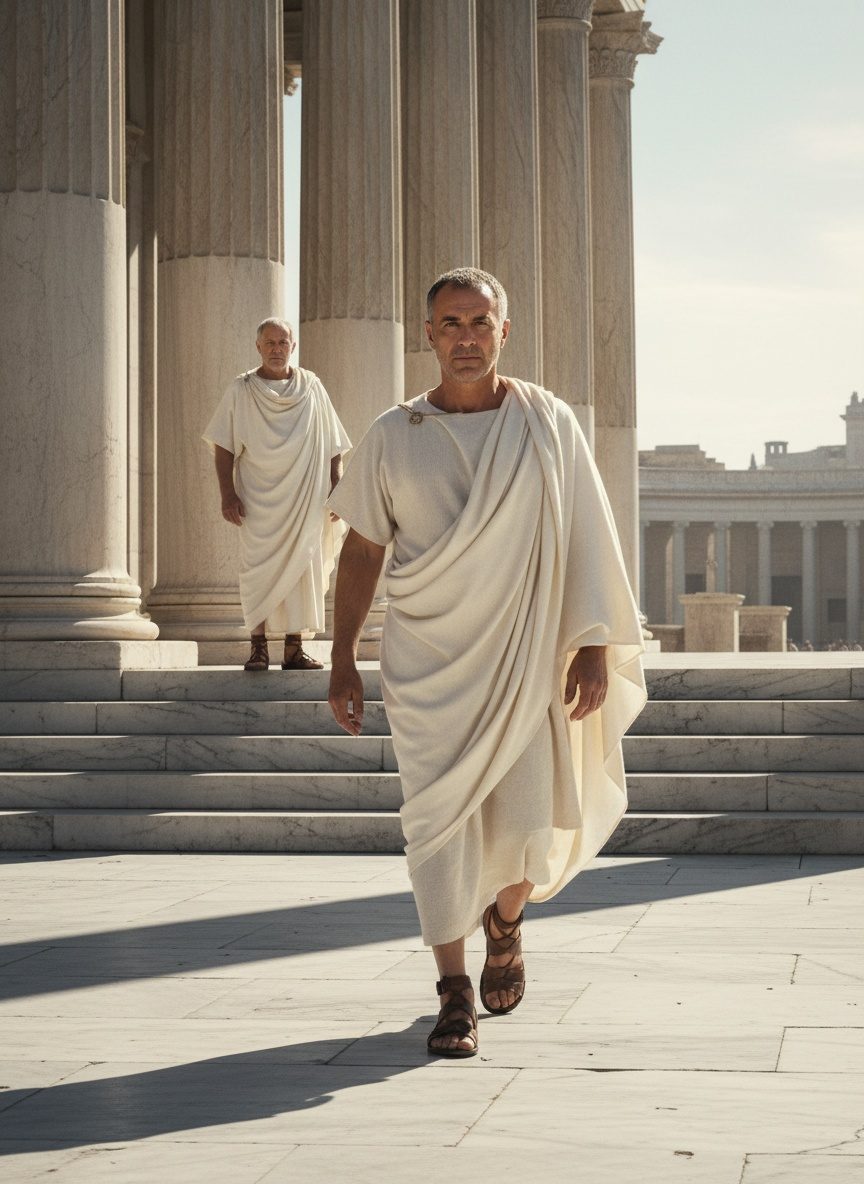
508 BC. A cold wind swept through the Etruscan encampment.
A City Besieged
In the dark and weary landscape of ancient Italy, Rome found itself in a perilous position. The Etruscan king Lars Porsena had brought his forces to the gates of the city, surrounding it with the intention of bringing the young Republic to its knees. The Etruscans, known for their military prowess and tenacity, held the upper hand. Rome was starving, hope dwindling with each passing day. Within the city walls, the tension was thick, the clamor of war a constant reminder of the looming defeat.
Among these beleaguered Romans was a young man named Gaius Mucius. Determined to save his homeland, Mucius devised a daring plan. Inspired by tales of heroism, he resolved to infiltrate the Etruscan camp and assassinate the king. Though the odds were against him, Mucius believed that a single act of bravery might alter the course of history.
The Infiltration
The night was still when Gaius Mucius made his move. Clad in humble attire, he slipped through the labyrinth of tents, shadows dancing beneath the flickering torchlights. Each footfall was carefully measured, each breath methodically quiet. The atmosphere was tense, a heady mix of anticipation and danger. Mucius could feel the weight of his mission, the cold steel of the knife concealed beneath his tunic a constant reminder of its lethal promise.
Upon reaching what he believed to be the heart of the encampment, Mucius encountered a gathering. A group of Etruscan soldiers stood clustered around a central figure. Supposing this man to be Porsena, Mucius struck with lethal intent. His blade found its mark, plunging into the flesh of his target. But fortune can be fickle, and Mucius realized with a shock that he had been deceived. He had slain not the king, but his scribe. Chaos ensued, Mucius seized and dragged before the Etruscan leader he had sought to kill.
The Trial by Fire
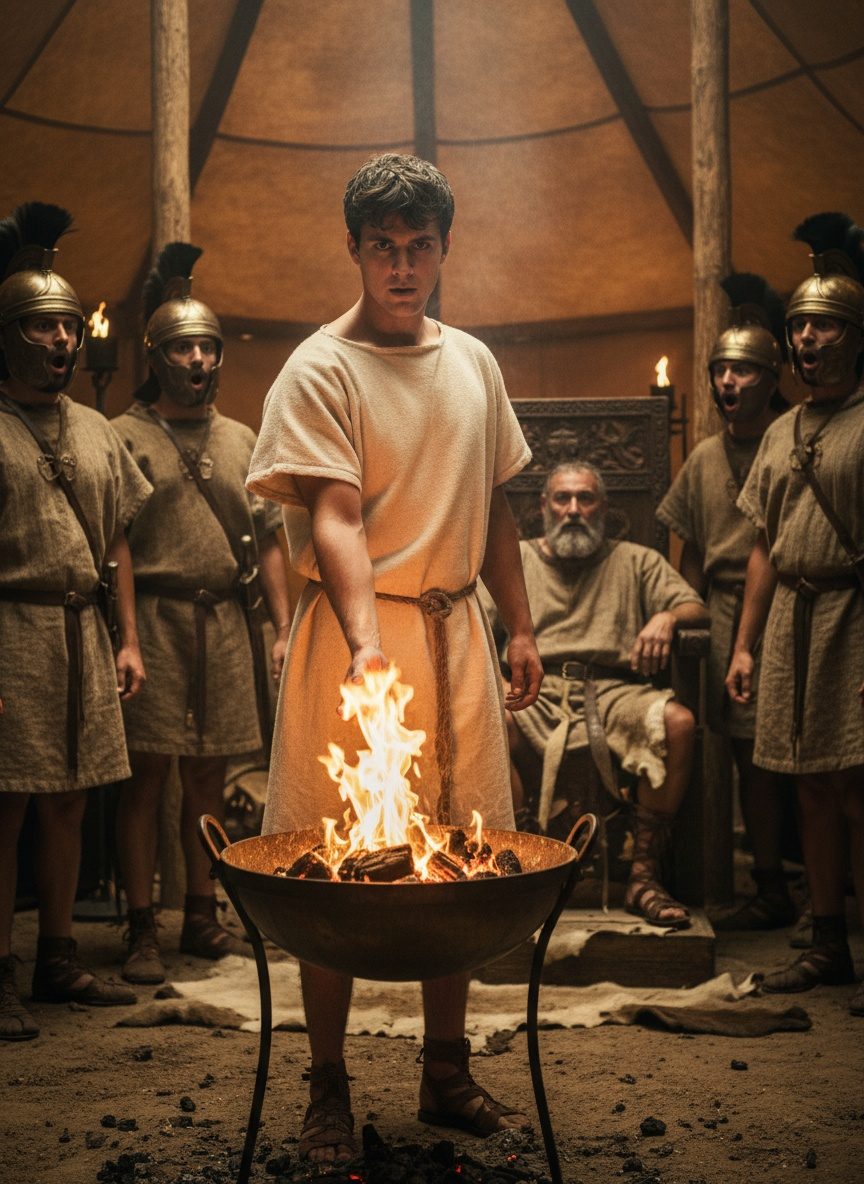
In the Etruscan camp, torches threw jagged shadows against the walls of the tent. Mucius stood proud and defiant before Lars Porsena, his fate uncertain. Accused and unrepentant, he acknowledged his motives with an unyielding conviction that captivated all present. It was then that Porsena threatened him with the fires of torture, hoping to break the would-be assassin’s resolve and extract from him any Roman secrets.
In that pivotal moment, Mucius made a decision that would transform him into a symbol of Roman grit. Without a trace of hesitation, he thrust his right hand into the flames of a nearby altar, maintaining his icy composure as the fire consumed his flesh. The sight was both horrific and awe-inspiring, an act of sheer willpower beyond comprehension. His hand charred and useless, Mucius met Porsena’s gaze with steely defiance, declaring, "Watch, so that you know what little value the body has for those who have a great glory in mind."
A Legacy of Courage
Stunned by Mucius’s bravery, Lars Porsena reconsidered the resolve of the Romans. It was said that his respect for the young man's fortitude prompted him to negotiate peace, ending the siege that gripped Rome. As for Mucius, he returned to his people not as a failed assassin but as a celebrated hero. Henceforth known as Mucius Scaevola—or "Left-Handed"—his legendary resolve became a cornerstone of Roman virtue, epitomizing the unyielding courage and sacrifice in service to the Republic.
The tale of Mucius Scaevola endures across the ages, a testament to the strength of human determination and the power of courageous acts to alter the course of history. It reminds us that even in the face of overwhelming odds, a single act of bravery can inspire change and command respect. In the annals of Roman lore, Mucius emerges not only as a historical figure but as a symbol of the enduring spirit of a people who would eventually shape the destiny of the Western world.