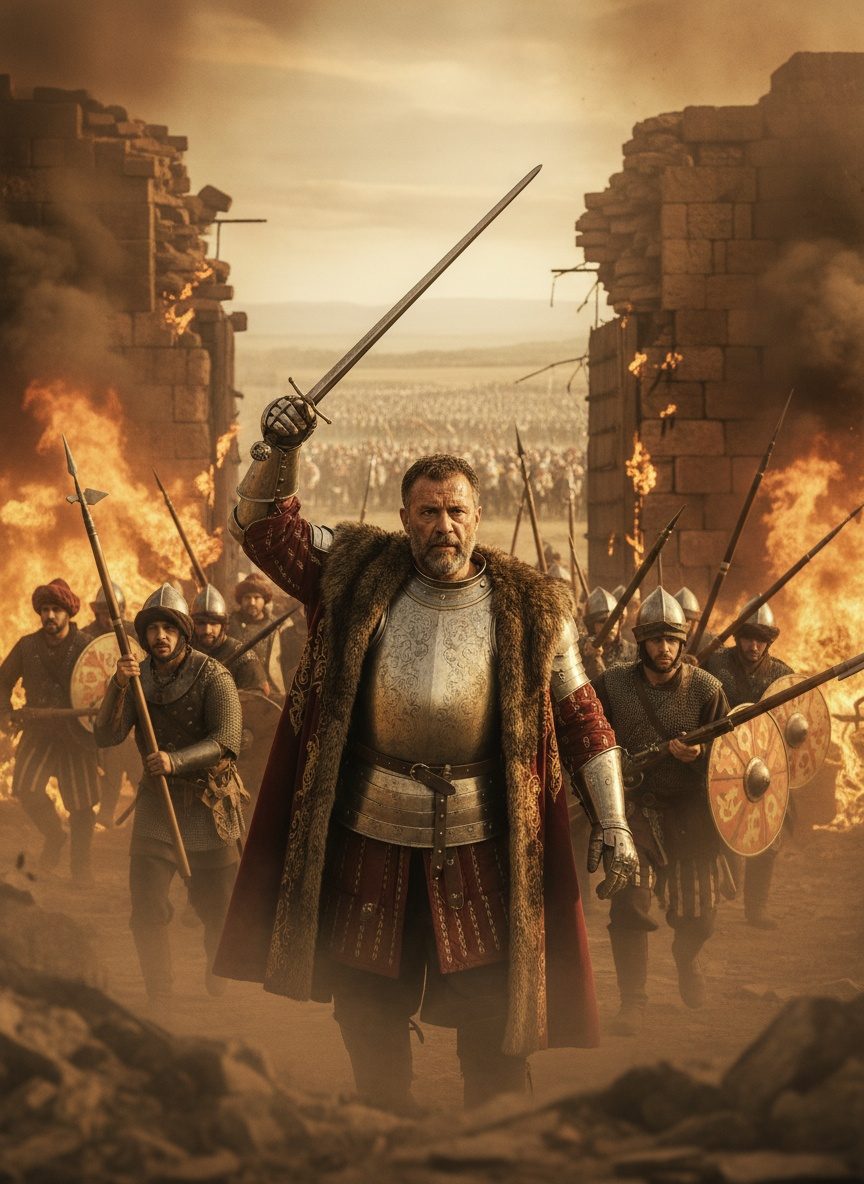
He was a nobleman, a scholar, and a poet. Yet, on that fateful morning in August 1566, as the early sun illuminated the charred ruins of Szigetvár, Nikola Zrinski laid down his pen and prepared for a final act that would etch his name into the annals of history. The fortress, which he had tirelessly defended for weeks, was a smoldering ruin, its once mighty walls reduced to mere ash by relentless Ottoman cannons. Yet, amidst the haze of smoke and the cries of battle, Zrinski made his decision.
The Ottoman Empire, at the height of its power under the aging Sultan Suleiman the Magnificent, had cast its gaze upon the fortress of Szigetvár as a strategic gateway into Europe. With an army said to be one hundred thousand strong, the Ottomans enveloped the fortress, a torrent of humanity against which Zrinski's few stood defiantly. Yet, the seventy-year-old Sultan would not see his ambitions realized. Suleiman lay dead in his tent, a secret kept hidden from all but a few, the formidable weight of his presence no longer on the battlefield.
Inside the crumbling fortress, Zrinski prepared his remaining three hundred men for their final march. Despite the cacophony of war that had become a deafening constant, a solemn silence enveloped them. It was a silence heavy with understanding and resolve. Zrinski, clad in his finest armor — the garnished attire a far cry from the grim circumstances — moved among his men. His presence was a lighthouse amid the storm, kindling a fire of courage within hearts that had long since accepted the inevitable.
The defenders of Szigetvár had held off the Ottomans far longer than anyone expected. Each day had been a battle against overwhelming odds, each night a struggle for survival marked by an unyielding barrage. The fortress itself had become a symbol of stubborn resistance, its walls echoing stories of heroism and sacrifice. Life in the fortress during those grueling weeks was a tapestry woven with threads of grit and valor, all underlined by a grim acceptance that their stand was likely their last.
The Ottomans had unleashed their full might, employing their vast resources to shatter the stronghold. Siege engines hurled stones and fire, while sappers mined beneath the walls. Yet, for more than a month, Zrinski and his garrison defied every assault, thwarting attack after attack with a fierce determination that seemed to multiply their numbers tenfold. It was not just a physical struggle but a battle of wills, where each new dawn was a triumph in itself.
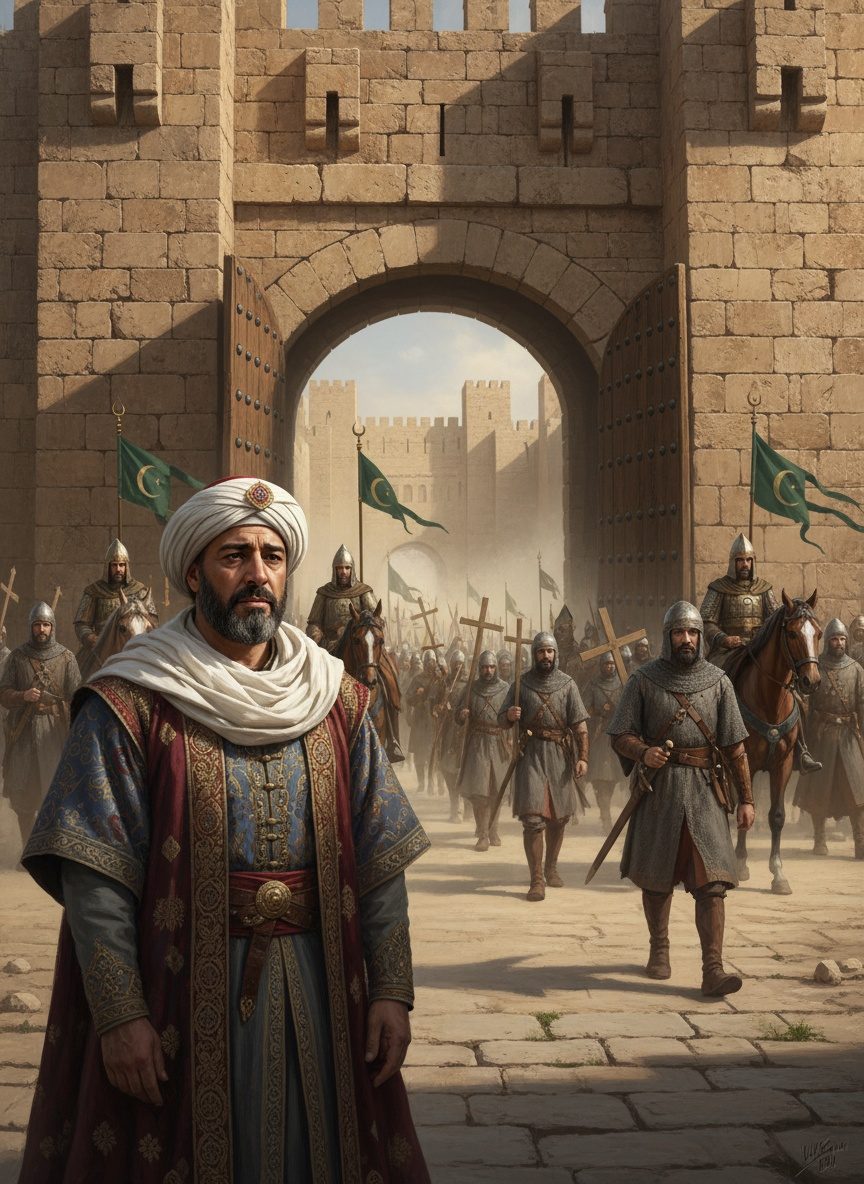
As the final morning dawned, there was no room for fear. Zrinski had made his peace with what fate had chosen for him and his men. The decision to charge was not borne of despair, but of defiance. It was a statement to the world: the bravery and unity of those within the fortress could not be extinguished by mere numbers. The gates of Szigetvár swung open, and the earth trembled under the decisive march of three hundred souls ready to embrace destiny.
The charge was a masterstroke in desperate defiance, not meant for victory, but for honor. The Ottomans, momentarily stunned by the audacity of this small force streaming from the towering gates, watched as Zrinski led the charge, his standard flying high. The clash of steel and the cries of men filled the air, a symphony of valor playing out its final notes on the field of battle. Zrinski fought at the forefront, striking down foes until the weight of numbers bore him down.
To the Ottomans, the death of Zrinski and the fall of Szigetvár were but one chapter in their campaign for European domination. Yet, the charge resonated through time, a thunderous echo of courage reverberating against the tide of history. The stand at Szigetvár, though but a fleeting moment in the span of the conflict, was a poignant reminder of the tenacity and spirit inherent in the human soul. It was a beacon to those who would face their own trials, a testament to resistance in the face of insurmountable odds.
The story of Szigetvár serves as a vivid illustration of the era's brutal conflict between empires, a humanizing chapter amid the grand tapestry of the Ottoman-Habsburg Wars. While Suleiman's campaigns are remembered for their sweeping conquests and territorial ambitions, it is also these moments of fierce individual resistance that capture the imagination and enlighten the spirit. For in the annals of military history, it is not always the victors who are remembered, but those who fought with exceptional bravery, whose deeds defy the passage of time.
Nikola Zrinski's charge was not just a fight to the death; it was a vivid declaration of sovereignty and spirit. The stones of Szigetvár, scorched and crumbled, bore witness to the will of men who met their end with dignity. The tale, passed down through generations, becomes more than mere military history. It is the enduring narrative of human courage in the shadow of overwhelming adversity, a chronicle of how the actions of the few can reverberate across time, inspiring and challenging us to hold our ground in the face of the storms that threaten to engulf our own lives.