She was a pregnant woman on the shores of Vinland, thousands of miles from her homeland. Yet, it was Freydís Eiríksdóttir who stood her ground, wielding a weapon for which she had never trained. When the men around her faltered, she found the courage to face down enemies with nothing but a sword and her will.
The year was around 1010 AD, a turbulent period for Norse explorers as they attempted to settle in the distant lands they called Vinland. Named for its bountiful grapes and fruits, Vinland marked the boldest venture of the seafaring Norsemen — a leap into the unknown beyond their familiar frozen landscapes. Yet, these lands were far from uninhabited. They were home to the people the Norse referred to as "Skraelings," resilient Indigenous groups who viewed these new arrivals with suspicion and hostility.
As with many tales from the Viking Age, our knowledge of events like those involving Freydís comes from sagas passed down through generations, tales molded by the fireside and imbued with the grandeur and grit of their people. One of these is the "Saga of the Greenlanders," an evocative narrative capturing a moment that stands out for its defiance against the odds.
Freydís, daughter of the saga-famous Erik the Red and half-sister to the legendary Leif Erikson, was part of a party that trekked across the Atlantic. In their camp, nestled against the vast, untamed wilderness of North America, survival was a struggle. Resources were scarce, and tensions with the Skraelings frequently bubbled to the surface. One fateful day, a confrontation escalated, and the settlers found themselves under attack, overwhelmed by the strategic ferocity of their opponents.
It was chaos—this sudden clash in a foreign, unforgiving land. The Norse, despite their fame as fierce warriors, found themselves in disarray. Panic took hold as arrows flew, and the settlers—men, the warriors the women relied on—turned and fled for the cover of trees, driven by fear wrenched from their guts. All of them, except for Freydís.
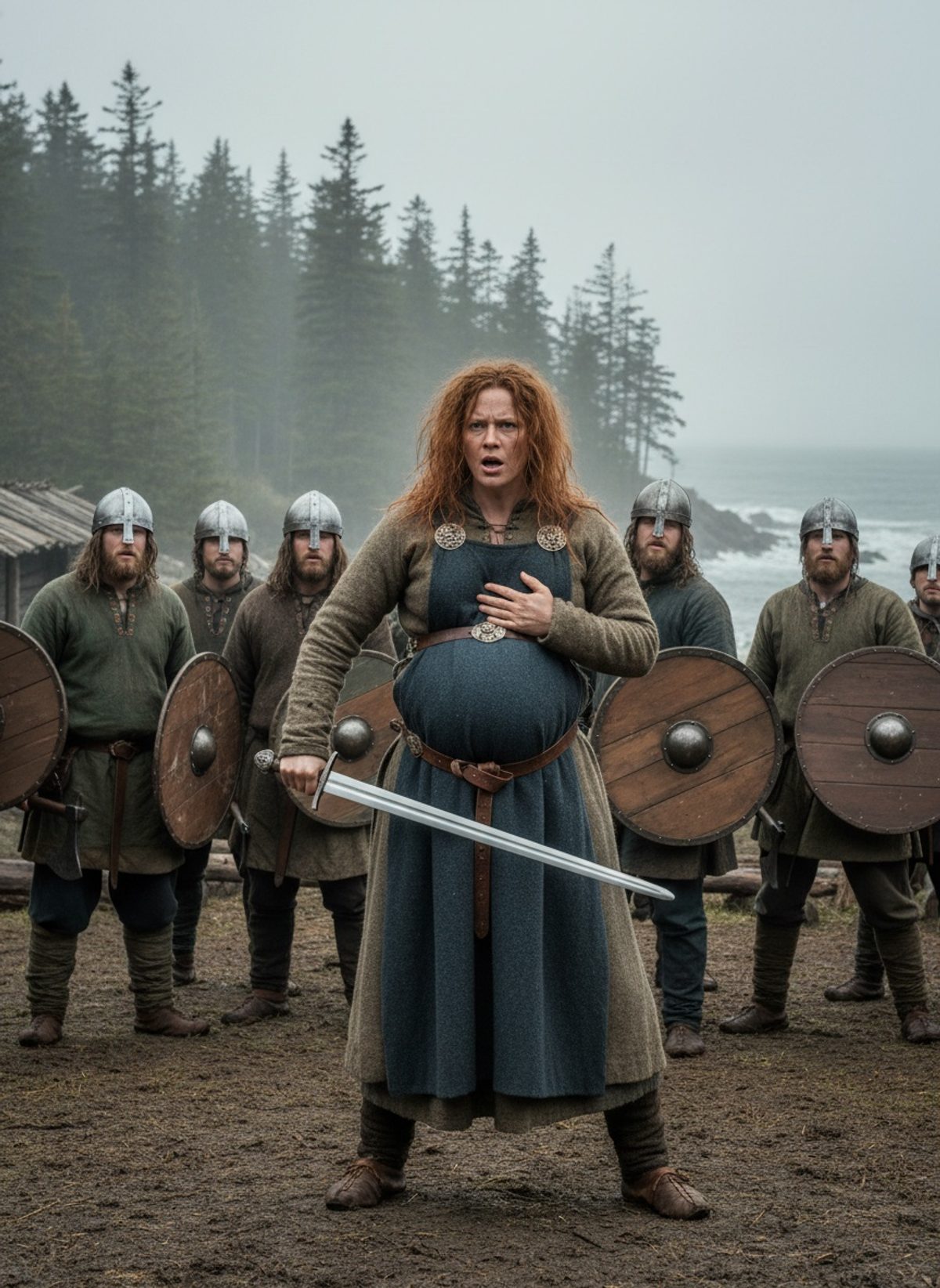
This was no ordinary woman. Freydís stood apart in the sagas for more than her lineage. Known for her stubborn resolve and fiery temper, she embodied the spirit of a people who believed Odin and Thor might yet show themselves on Earth. In that moment of crisis, the sagas recount that Freydís, heavily pregnant and left behind, saw a dying man’s sword lying in the dirt. What happened next defied expectation.
She seized the weapon, a tool unfamiliar in her hands yet fast becoming her only means of defense. Putting every bit of her raw courage into what she did next, Freydís brought the sword to her chest and thumped it hard with her fists. The sound rang out even above the tumult, a clang that seemed to freeze time, drawing the eye of retreating warriors, echoing with a promise of bold defiance.
The Skraelings paused, perhaps taken aback by the sudden display of fearless resolve from a lone, vulnerable figure. Or perhaps they sensed that the spirit within this woman was one to be reckoned with. For whatever reason, the fighting halted. Inspired by Freydís's audacity, the Norsemen forgot their panic, turned back, and fought alongside her with renewed vigor.
In this spontaneous stand, Freydís Eiríksdóttir became more than flesh and blood; she transcended into legend. While the battle and ultimate interactions between the Norsemen and the Skraelings would continue, this moment became emblematic of her fearlessness and quick wit. As with many events recounted in sagas, the exact details are shrouded by the mist of time, yet the essence remains a tale of tenacity and unexpected heroism.
Beyond mere survival, what compels us towards the story of Freydís is the dynamic nature of her spirit, an untamed force in an untamed land. She embodies the bravery that spurred Norse exploration and the reliance on improvisation, even as her story reminds us of the complex interactions between cultures, each striving for dominance, survival, and legacy.
It is intriguing to think of how Freydís's actions—this fierce display of autonomy and strength—might have been perceived among her peers, echoing through the halls and hovels of Greenland and Iceland whenever it was retold. For a time when the roles of women were often restricted by societal norms, Freydís stood as a beacon of unyielding spirit.
Today, the story of Freydís Eiríksdóttir may not be as widely known as those of her more celebrated male relatives, but it finds new resonance in contemporary explorations of forgotten heroes. Her mythic courage speaks across centuries to anyone seeking strength in adversity. As we unearth and acknowledge the fuller tapestry of our shared history, stories like that of Freydís underscore not only the diversity of past narratives but also the power of the individual to inspire—even pregnant and armed with nothing but fierce determination against impossible odds.