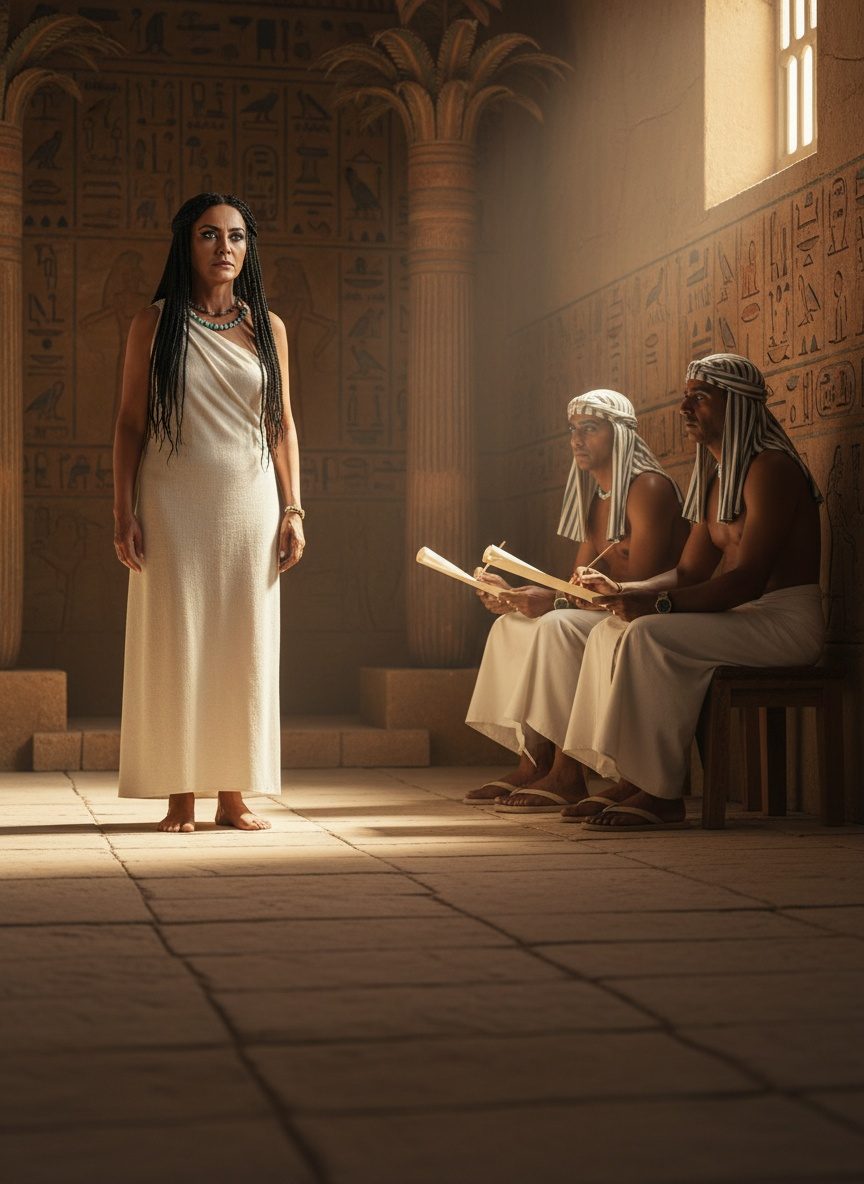
Naunakhte felt the cool, smooth stone beneath her bare feet as she stepped into the grand hall of the pharaoh’s court. The echoes of whispers filled the air like the soft hiss of the Nile’s evening breeze. Her heart raced not from fear, but from resolve. It was an unusual sight for the judges and scribes seated before her—a woman, unaccompanied by any advocate or family, standing before the seat of power, demanding justice.
The Burden of Honor
In the secluded village of Deir el-Medina, nestled on the west bank of the Nile, Naunakhte had spent years by her husband's side. Deir el-Medina was no ordinary settlement; it was the home of artisans and workers who built the grand tombs of the pharaohs in the Valley of the Kings. These laborers were privy to the secrets of the gods and the flesh of the divine that they enshrined. With such proximity to greatness came both privilege and peril.
Naunakhte's husband had been a royal official, a respected man whose name carried weight in the corridors of power. Yet when he passed, the promises of the state—breath painted with hieroglyphs—were left unfulfilled. Alone in their small home, apart from her children and away from the constant rhythm of chisels and hammers, Naunakhte decided she would not let his memory decay into forgotten tales.
Tradition dictated that a widow should be cared for, her needs secured by what her husband had established. Yet the intricacies of bureaucratic transition often left widows like Naunakhte to rely on wits rather than mercy. With determination tempered by years of steadfast devotion, she walked into the heart of an ancient world dominated by intricate hierarchies and immutable laws.
The Woman Who Spoke
The day had arrived, warmed by the Egyptian sun that bathed the temple stones in gold and emblazoned their inscriptions with shadows. Naunakhte's heart was a drumbeat steady beneath the sweeping halls of justice as she presented her case. Her voice, unwavering, echoed the language of contracts and covenants—a dialect not often tripped by the tongues of women.
The judges, wizened in the ways of both honor and concession, were taken aback. Here was a woman with no title, independent in spirit and unheard in her insistence, demanding what was due. It was a request that broke the silence of convention—daring, yet dignified—the kind of audacity that exists only at the crossroads of desperation and righteousness.
She listed the promises made to her and her late husband by the state. She spoke with clarity, each word a thread in a tapestry of argument she weaved from the shrouds of promises past. The court’s scribes hunched over their papyri, noting each claim, each eloquent appeal to the ancient justice system rooted deeper than the foundations of the pyramids.
A Courtroom Drama in Papyrus and Stone
Days turned into nights as the court deliberated. Naunakhte returned home each evening under a sky that mirrored her own uncertain future, glistening with distant stars partially obscured by the veil of earthly concerns. The people of Deir el-Medina, bound by kin and duty, murmured among themselves—some wagering on the likelihood of her success, others moved by the sheer boldness of her endeavor.
Within the austere court, the judges weighed her plea against established precedence. They were guardians of Ma’at—balance and order—a concept intertwined with justice as tightly as the Egyptian goddesses were with divine beauty. To side with Naunakhte would be to honor these ideals, yet it would also set a perilous precedent within the confines of a patriarchal lineage.
But in the depths of their deliberations, a truth emerged more undeniable than the gods themselves: Naunakhte's claim was just, her cause more binding than the glyphs inscribed by hands long dust. When the final decision came, it was as though the sun itself had illuminated the shadowy corners of doubt within the court. She won. Her voice had carved a pathway of justice through the very heart of the pharaonic court.
The Echoes of Her Victory
Naunakhte's triumph was more than her personal relief, more than a resolution to her grievances. Her story rippled beyond the walls of the court, drifting down the river and across the sands like a breath carried on the wind. To those who labored in secrecy for their pharaohs, it spoke of a world where justice was not merely the prerogative of the powerful.
Her words were etched not into stone or papyrus alone, but into the annals of history, a testament to her resolve and the capacity for an individual to challenge the tides of society. Her victory served not only as a claim to her rightful dues but as a beacon that whispered among the reeds: even here, where the river meets the desert, the voice of conscience can ripple outwards, altering the currents of history itself.
In contemplating Naunakhte's story, we glimpse the power of courage to transcend the limitations of circumstance and the resonance of equity in a world where it was an uncommon grace. And so, amid the sands of ancient Egypt, she stood—an embodiment of the quiet hopes carried by those whom history has often overlooked, a guardian of legacies and promises that echo into our own modern quest for justice.