Most temples in ancient Egypt were reserved for gods and mighty pharaohs. But in 1255 BC, Abu Simbel defied this norm.
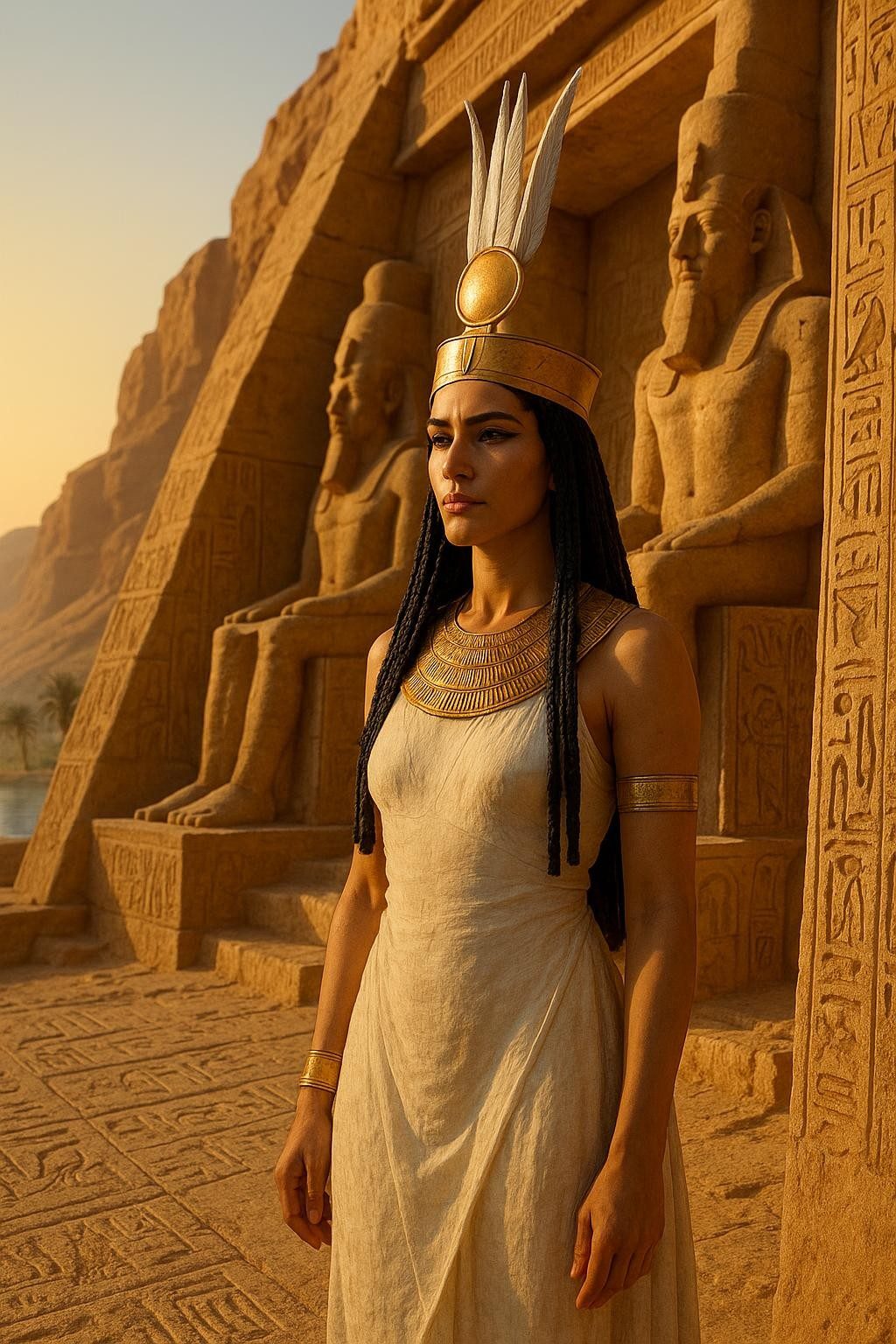
In the sun-drenched sands of Egypt, amidst the echoes of divine worship and monumental stone, rose a testament of love and reverence unparalleled in the annals of history. Here, in the heart of Nubia, the Great Temple of Ramesses II thrust its towering facade above the golden dunes, a scene that dazzled eyes and captured imaginations. But neighboring it, sheltered under the gaze of the undying sun, stood another marvel: the temple consecrated not to deities or gods but to a queen, Nefertari, the beloved consort of Ramesses II. A union of artistry and devotion, this temple was a first in Egyptian custom, a gesture as monumental as the figures chiseled onto its stone face.
The story of Abu Simbel is inseparable from the life of Ramesses II, a pharaoh known for his grand ambitions and enduring legacy. His reign conjured an era of prosperity marked by military campaigns, architectural grandeur, and an unwavering zeal to etch his presence on the sands of time. Yet among his many accolades, it was his unique tribute to Nefertari that would immortalize a deeply personal chapter amidst his colossal public achievements. Until then, no other queen had occupied such a sacred space, her figure combined into the domain of divinity traditionally reserved for gods and pharaohs. It spoke volumes about her prominence at the royal court and in the heart of Egypt's ruler.
This intertwining of the divine and the earthly was not merely a testament to Nefertari’s beauty or influence, but rather a declaration of her deification. The inscriptions surrounding the temple echoed with the reverence of an era that viewed the pharaoh and his queen as avatars of Osiris and Isis, bridging the celestial and terrestrial realms. The epithet carved into the stone declared her "the one for whom the sun shines," a poetic way to solidify her role not just as a beloved wife but a deity in her own right, illuminating the culture’s view of power and its divine mandate. Such inscriptions served a dual purpose – venerating Nefertari while simultaneously amplifying the divine right of Ramesses himself by association. The construction was, in essence, an elaborate dialogue between earth and the heavens, a constant reminder of the characters weaving the fabric of ancient Egyptian spirituality and governance.
As the temples’ walls rose, every chiselled figure and symbol narrated more than a queen’s affinity with her king; they articulated the way of life and the beating heart of Egypt at its golden zenith. A glance at the grandiose edifice reveals carvings of Nefertari and Ramesses, offering to the gods, merging the boundaries between mortality and the sacred. The architectural choice to construct two temples side by side further reinforced the message: where Ramesses went, by divine decree, so too would Nefertari. It was a narrative carved into stone, preserved for eternity.
What strikes an observer today is not just the artistic grandeur but the intricate balance of power, alliance, and love that the temples embody. The two structures, although side by side, present a harmony as undisturbed by time as by the river Nile that flanks them. Ramesses, with his temple, asserts his primacy and strength, while Nefertari stands as his eternal companion, her temple a tribute to the strength not just of their love but of her status within their world. The symmetry speaks to an understanding, an equality of sorts, that was both radical and visionary. What Ramesses may have seen as a personal homage also could be interpreted as a political statement, enhancing his image through the divine portrayal of his queen.
Inside, the temples were no less remarkable. The paintings and reliefs that adorned Nefertari's sanctuary depicted her with a grace and power that spoke not only of her beauty but of her acumen and divine resonance. The art itself stands as evidence of advanced techniques employed by ancient artisans, masters of their craft, who infused life into stone with pigment and chisel. Majesty and intimacy intertwined seamlessly in depictions that seemed almost to breathe, vivifying the bond between Ramesses and Nefertari with each curve and hue.
Through these immortal halls, the Egyptian queen achieved what few had: transcendence past mortality into perpetual remembrance. The pharaoh’s gesture, though layered with political nuance, distilled the essence of a shared rule, a joint mantle between king and queen that left an indelible mark far deeper than any inscription. This act of defying royal tradition whispered of the transformative power of respect and love, threads woven tightly into the tapestry of Egypt’s historical discourse. Ramesses' acknowledgment of Nefertari not just as queen but as an ancient goddess empowered them both, ensuring their voices would echo through the ages, immortal in stone.
As the modern world gazes upon Abu Simbel, imagination flares, connecting with the distant past through the remnants of conscious expression. The temples evoke questions about leadership, companionship, and the evolution of societal values. As the ancient sands continue to shift around these silent yet eloquent stones, they pose a reflective inquiry into our understanding of legacy and memory. Why choose to deify Nefertari when history so often forgot queens? Perhaps, in this unparalleled dedication, Ramesses II achieved more than a noble expression of love or a strategic maneuver; he inspired a narrative of equality and shared strength that resonates with each passing century, urging us to ponder the lasting power of unity and reverence across the stretches of time.