He walked with a limp. But he ran an operation that would change the shape of history forever.
Command at All Costs
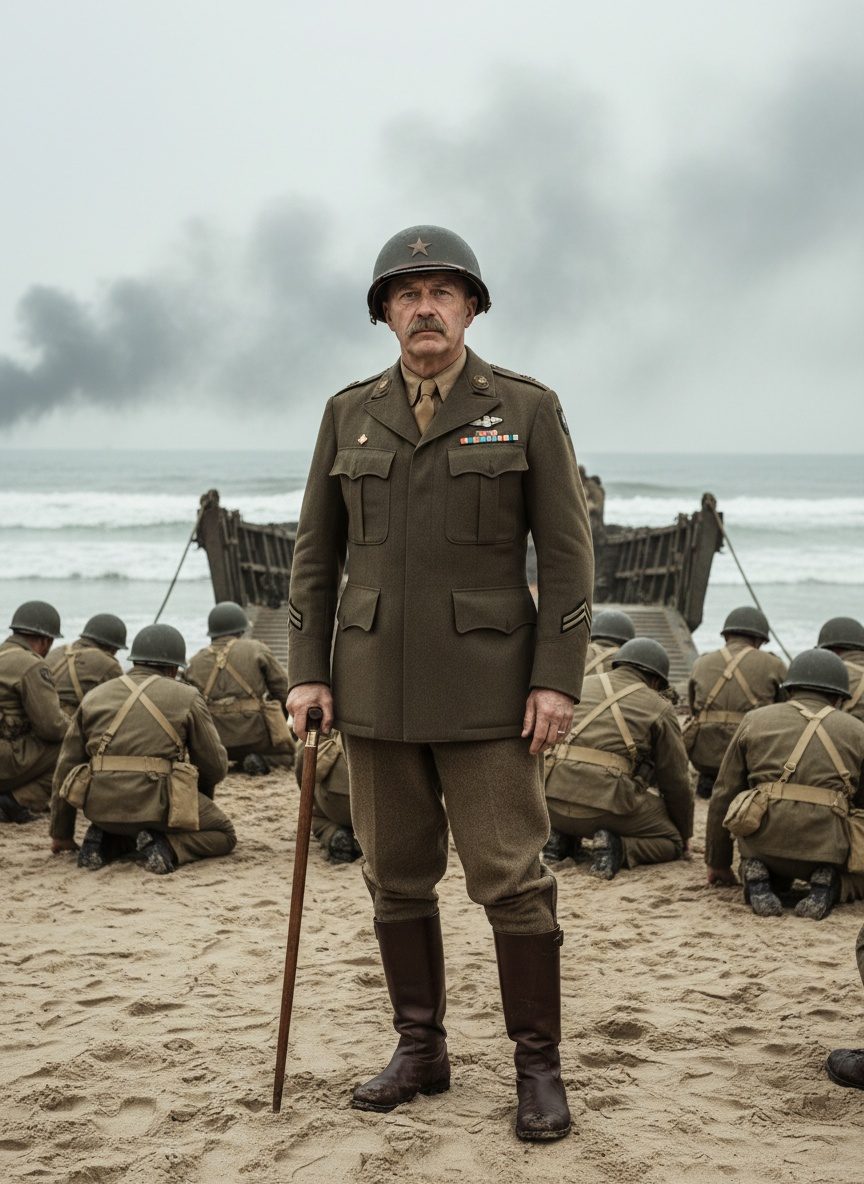
Brigadier General Theodore Roosevelt Jr. was an unlikely figure to be leading a charge onto the beaches of Normandy in June 1944. In an era dominated by young, athletic commanders, Roosevelt was an aberration—a 56-year-old man with a heart condition, arthritis so severe that a cane was not just an aid but a necessity. His military pedigree was undeniable, the son of President Theodore Roosevelt and cousin to the sitting President Franklin D. Roosevelt. Yet, it wasn't his family ties that earned him a place among the brave men landing on Utah Beach; it was his fiery determination and deep sense of duty.
While others might have been content to delegate from afar, Roosevelt insisted on being at the frontline, arguing that his presence could inspire confidence among the troops. His request to come ashore with the first wave initially met resistance from his superiors. They doubted his physical capabilities, questioning whether a man of his age and health was fit to endure the chaos of battle. Yet Roosevelt was undeterred. He argued passionately that his experience and thoughtfulness would be invaluable in those crucial opening moments. Finally, his persistence paid off, and he was granted permission.
History seems poised on the edges of tipping points, moments when the right choice can alter the course of events. It was in these moments that Roosevelt excelled, not just because of what he did, but because of how he did it—with tactical intelligence, steely calmness, and a refusal to be daunted by the fears that stifled lesser men.
The Wrong Beach
The sounds were deafening as the landing craft powered forward through the tumultuous waters of the English Channel. The early morning light revealed a relentless barrage of artillery from both sides, a chaotic choir of danger and uncertainty. As the ramp of Roosevelt's landing craft dropped, his men made a grim discovery—they had landed roughly 2,000 yards from their intended destination. The realization could have driven Roosevelt into despair; instead, he saw opportunity.
Assessing the unexpected landscape with a quick but critical eye, Roosevelt’s response was remarkably composed. "We'll start the war from here!" This wasn't just a quip for the history books—it was a strategic decision that drew upon every fiber of his intuition and leadership. Knowing the chaos that could ensue from further delays or a potentially deadly repositioning amidst artillery fire, he adapted the mission to their new location, demonstrating the level-headedness that comes from a lifetime of service and an irrefutable understanding of the human spirit's resilience.
Roosevelt, recognizable by his cane and steady pace despite the cacophony around him, became a beacon of morale and determination. His men, feeling buoyed by his willingness to share their burdens and dangers, pressed forward. Under his guidance, what had threatened to be a logistical disaster became a tactical advantage, and their position at the beachhead was swiftly established without succumbing to additional enemy fire.
Lessons Through Leadership
Roosevelt's actions on Utah Beach underscore the essence of true leadership. The son of a president, he could have chosen a life far removed from the perils of warfare, yet he deliberatively forged a path defined by service and sacrifice. He exemplified the unstoppable resolve of the human will, driven not by personal glory but by a profound dedication to his men and mission. Walking across that 1,000-yard stretch, with each step more arduous than the last, Roosevelt effectively transformed isolation and adversity into assets.
Unbeknownst to many, the success at Utah Beach wasn't merely a triumph of military strategy. It was a testament to an individual's ability to influence outcomes against all odds. Roosevelt's story is a gripping reminder of the strength found in vulnerability. Often reduced to footnotes in the larger story of D-Day, the courage and agility of thought shown by Roosevelt in unpredictable and high-pressure scenarios offer timeless insights into the art of leadership.
The pressures of battle, old injuries pulsing indignantly in his limbs as he held that cane steady against the sand, never dampened his resolve. Brigadier General Roosevelt's achievements show that sometimes, history doesn’t wait for the perfect conditions or the most likely person. It rewards those willing to face the waves head-on, carrying the mission forward, even if they're limping just a bit.