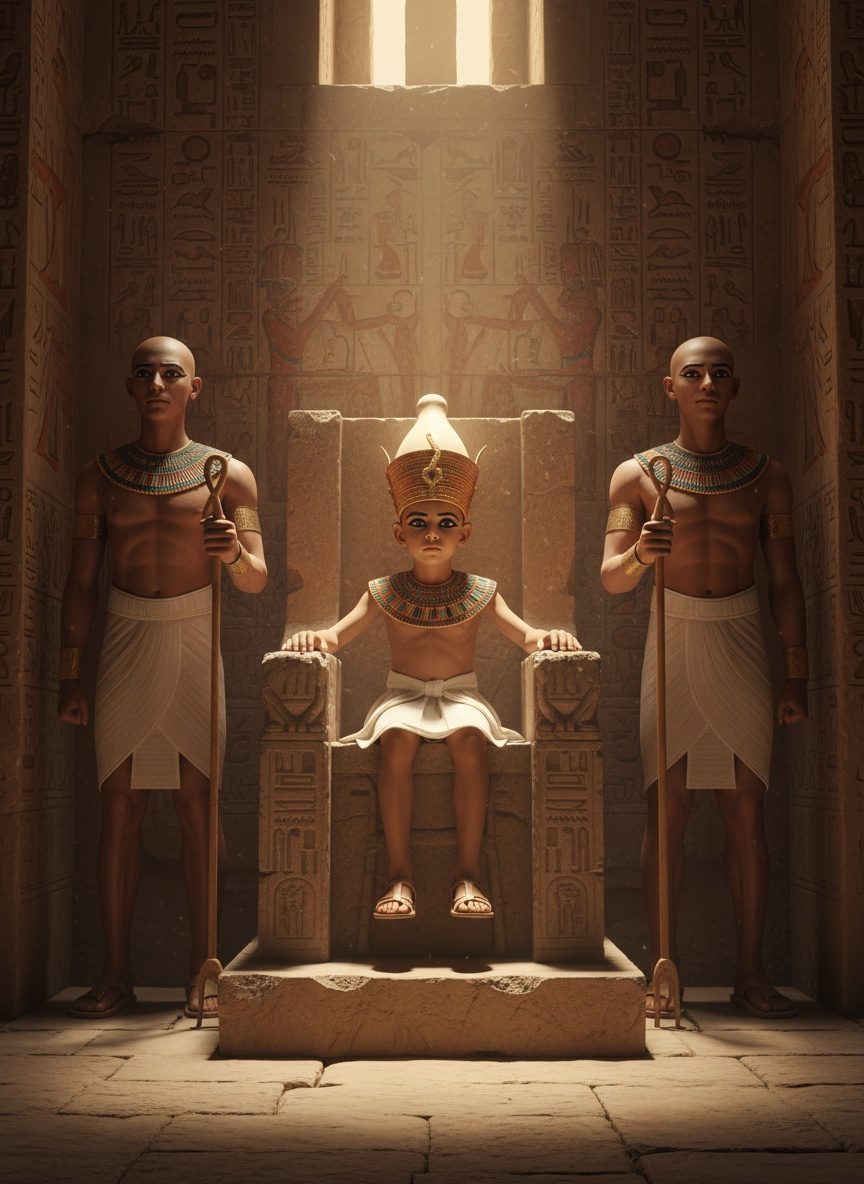
The Persian sun bore down on the royal court like a hammer, baking the stone columns and sending shimmering waves up from the scorched earth. Within the sweltering hall, a tense silence hung heavy, broken only by the occasional shuffle of sandaled feet on mosaic tiles. Courtiers in their resplendent robes stood rigid, lips poised in perpetual agreement with the whims of their sovereign. It was here, amidst the gilded opulence of his regime, that Cambyses II, son of the legendary Cyrus the Great, sought answers to silence the gnawing dread within.
The Testing Ground of Truth
After a series of brutal campaigns and unexplained deaths, rumors had begun to swirl around Cambyses’ sanity. Whispers echoed through the corridors of the capital, weaving tales of a king slowly succumbing to the madness of power unbridled. Perhaps in a rare moment of doubt, or perhaps to further expose the treachery he perceived everywhere, Cambyses gathered his courtiers and posed a dangerous question: had he crossed the line from cruelty into madness?
Each courtier, conscious of the invisible sword hanging by a thread over their own heads, answered with assurance. No, they said, the King’s actions were justified, necessitated by divine purpose and imperial duty. Their voices sang with a chorus of deceit, each tone meticulously crafted to soothe the ruler’s fears. Yet, standing apart in this symphony of lies was Prexaspes, a man whose heart still beat for truth.
The Lone Voice of Dissent
To speak honestly before a king feared more than loved was an act of unthinkable audacity. Prexaspes, a trusted advisor privy to the deepest layers of Cambyses’ confidences, took a step forward. His was not the path of safety but of integrity, honed over years of witnessing the fine line where power and morality collided. With measured words, he laid bare the truth—the heavy hand of Cambyses had indeed begotten the kind of wildness indistinguishable from madness.
His indictment carried the weight of sincerity but fell upon ears attuned instead to the music of flattery. Cambyses’ temper, already legendary for its unpredictability, simmered to a boil. In this rigid world of power politics, where loyalty was traded for self-preservation, Prexaspes had made a gamble that cost him dearly. But while Cambyses never forgave the transgression, Prexaspes’ commitment to truth left an indelible mark on history—a brief eruption of clarity amidst the murk of tyranny.
Beyond the Throne’s Shadow
Despite the king’s ire, Prexaspes did not retreat into the shadows. His life, though spared from immediate execution, was forever altered. No longer a favored advisor, he became a specter in the court, an unwelcome reminder of inconvenient truths. Yet, he remained undeterred. In the secrecy of hushed meetings and coded exchanges, Prexaspes continued to champion the cause of honesty and moral governance. His influence spread like a slow river, unseen but reshaping the landscape nonetheless.
In a court steeped in intrigue where power shifts were as sudden as sandstorms in the desert, Prexaspes’ stand could have easily been forgotten. Instead, his resilience became a rallying cry for those who longed for the virtues of Cyrus the Great’s reign, leaders who led not by fear but by the strength of equitable rule. In those furtive conversations, where ideas flowed like water, the seeds of dissent and reform took root.
The Echoes of a Risk Taken
Cambyses’ reign, as turbulent as it was brief, nonetheless shed light on the fragile nature of unchecked power. As the years passed, the story of Prexaspes’ courage became a symbol far greater than the man himself. His choice to stand up for truth, even in the face of ruin, dared others to consider the costs of silence. For in the grand tapestry of history, it is often the quiet acts of defiance that thread the most vibrant colors through its weave.
In the end, Prexaspes’ narrative holds relevance beyond the annals of Persian courtly intrigue. It speaks to the eternal struggle between truth and power, a battle as old as civilization itself and as contemporary as the present day. In choosing to witness truth over comfort, Prexaspes did more than stand up to a king. He offered a reminder to the generations that followed: the ultimate test of leadership is not merely might but the moral courage to listen, even when the truth is a bitter pill to swallow.