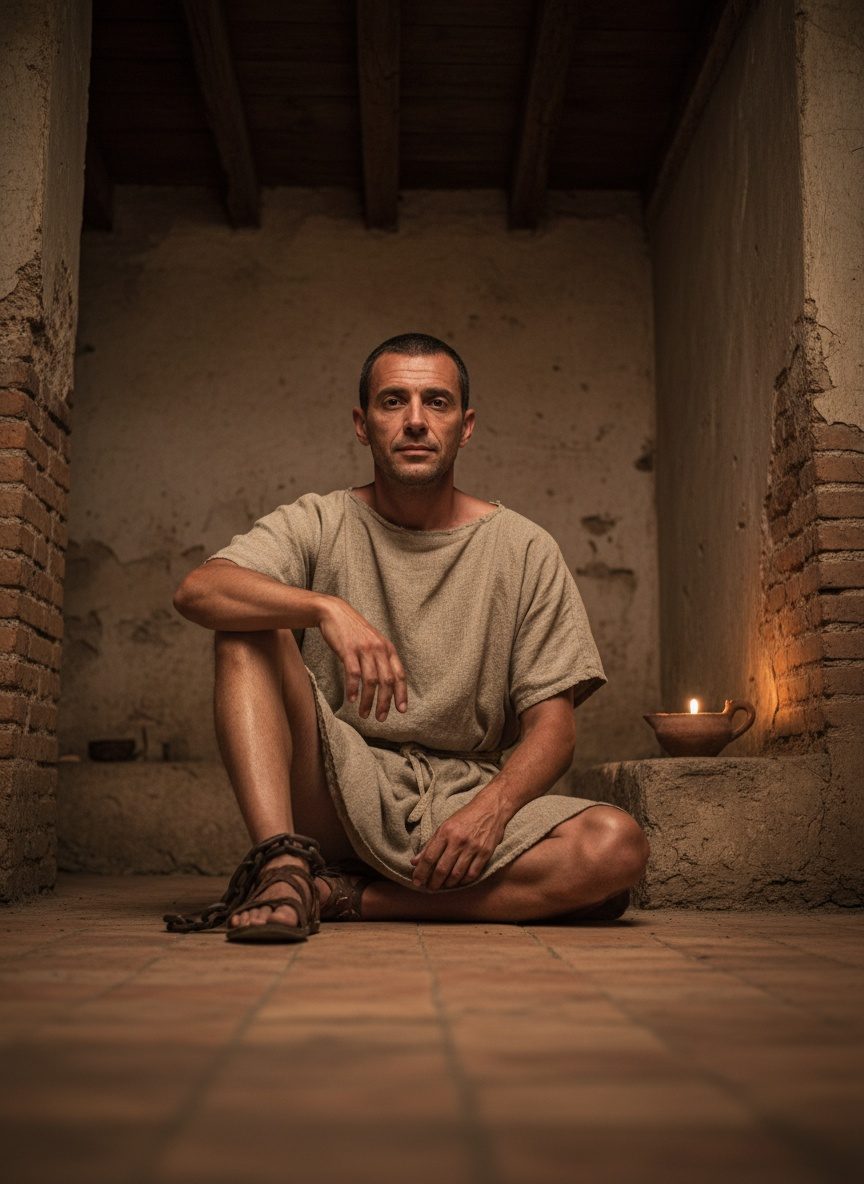
The cobblestones of ancient Rome glisten under the dewy morning light, their surfaces worn smooth by the tread of countless inhabitants. Birds flit through the crisp dawn air as the muffled clamor of the city begins to stir to life. It is 60 CE, and the scent of baking bread mingles with the more acrid smell of the smithies starting their fierce fires. Yet, within a darkened room nearby, the atmosphere is far from tranquil. It is here, on this morning, that the chains rattle ominously, a reminder of the cruelty and power dynamics that permeate society. A slave sits, shackled and stoic. His name is Epictetus, and today would mark another test of unyielding spirit against merciless power.
Chains and Philosophy: The Early Life of Epictetus
Epictetus was born into servitude, a life bound not just by iron chains but by the immutable restraints of social hierarchy in the Roman Empire. Slavery in this epoch was a pervasive institution, indifferent to human dignity, often rendering individuals mere property to be used at a master's whim. Epictetus’ master, Epaphroditus, was notably harsh, with a penchant for cruelty that extended beyond the norm even in those hardened times.
The tale of his resilience is centered on an incident so emblematic of his philosophy that it survives in anecdotes today. On a brutal occasion, driven to exert dominance, Epaphroditus twisted Epictetus' leg painfully. The chained slave, observing with calm detachment, warned, "If you continue, you will break it." His words proved prophetic when his master persisted, snapping the fragile limb. Epictetus simply remarked with an equanimous smile, "There, did I not predict that you would break it?" From this moment of physical and psychological torment emerged a man who could inspire resilience and wisdom in the face of adversity.
The Blossoming of a Stoic Mind
Despite his early trials, Epictetus did not succumb to bitterness; instead, he sought understanding in Stoicism, a philosophy that teaches the development of self-control and fortitude as a means of overcoming destructive emotions. Unlike other philosophies that might propose altering external conditions, Stoicism focuses on interior transformation, viewing virtue as the highest good.
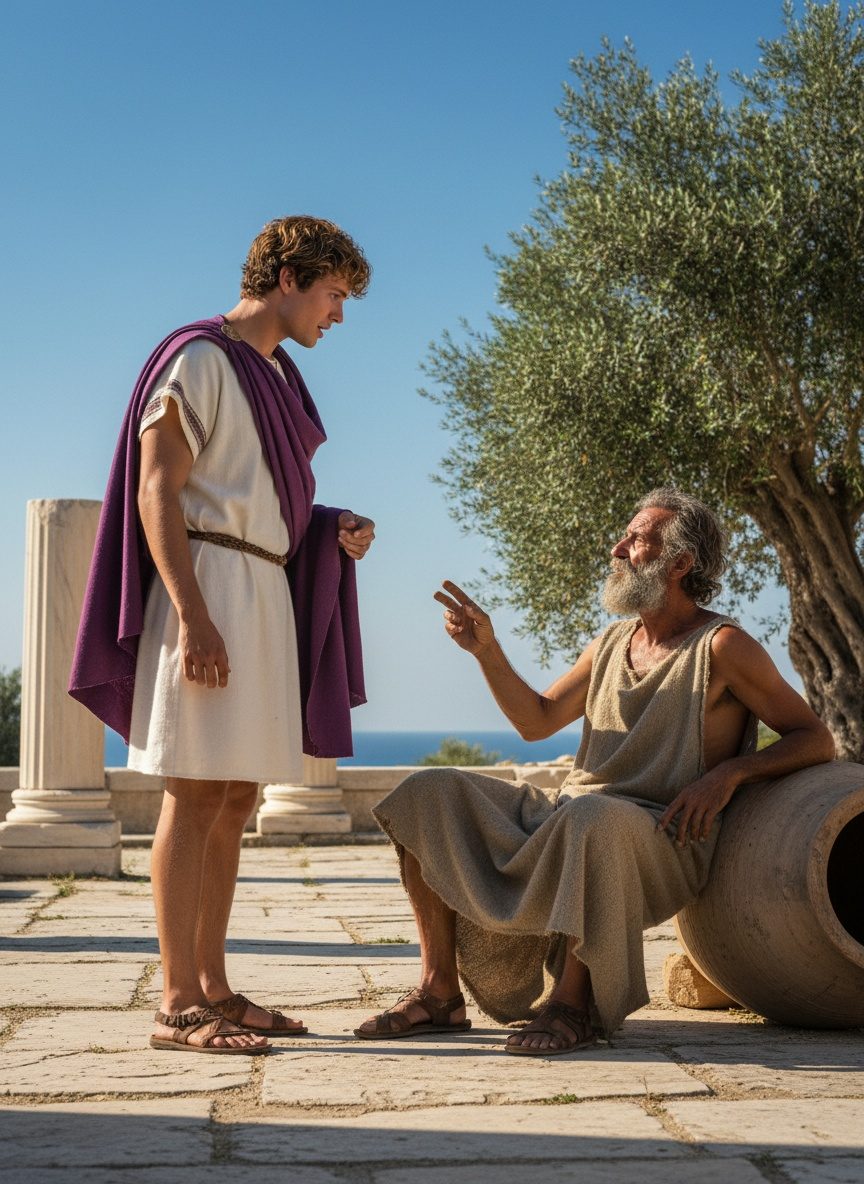
Once freed from bondage—the exact circumstances of his manumission remain shrouded in history's mysteries—Epictetus embarked on a journey to educate himself more deeply in philosophy. He studied under the celebrated Stoic teacher Musonius Rufus, honing the principles that would guide his teachings and immortalize his name. Over time, he opened his school in Nicopolis, where his discourses attracted students from all walks of life, including emperors, echoing beyond the marble halls of Rome throughout the empire. It was here that Epictetus became not only a philosopher but a spiritual guide, imparting teachings on freedom not through the absence of chains but through mastery over one's inner world.
The Influence of Epictetus on the Roman Elite
The pull of Epictetus’ teachings was profound. His philosophy reached the ears of the highest echelons of Roman society, including the emperors. Even though Roman matrons and patrician scholars clung to their positions of power within the empire, they were drawn to the unique perspective offered by Epictetus—a view that true power lay not in wealth or status but in sustaining wisdom and virtue.
Among his most attentive followers was the young Emperor Marcus Aurelius. Though Marcus never met Epictetus personally, his writings clearly illustrate the deep impact Epictetus had on him. The Meditations of Marcus Aurelius, a compendium of his personal thoughts and reflections on Stoicism, extols virtues of serenity, patience, and rationality—values that had been championed insistently by the handicapped philosopher.
Epictetus did not pen any books himself; his teachings survive primarily through the notes taken by his devoted pupil, Arrian, who later published these as the Discourses and the Enchiridion. In these works, the real magic of Epictetus lies in simple yet profound precepts, stripping away pretenses and addressing the universal challenges of human existence in direct, unsparing language that cuts like a blade through the fog of moral ambiguity.
Breaking Chains: The Enduring Legacy of Epictetus
The survivor emerges not by accident but by choice, and perhaps this is why the story of Epictetus resonates across time. It teaches not a lesson of passive acceptance but of the inner liberation that comes through self-mastery. In an empire characterized by its sprawling affluence and sharp social divides, Epictetus offered a distinct kind of liberation, drawing attention not from social ascent but from mastering oneself despite outward conditions.
Today, Epictetus’ teachings endure as a testament to the possibility of finding freedom within oneself, irrespective of circumstances. His life serves as a poignant narrative that challenges us to reassess how we confront adversity, embracing resilience not as an abstract concept but as a lived reality. Epictetus walked with a limp for the rest of his life—a haunting reminder of his suffering—but what truly hobbled him never tainted his spirit. Even today, his smile, a simple gesture of triumph, serves as a powerful reminder of the freedom that lies in the depths of the human soul.