The plain of Plataea lay bathed in the relentless glare of the late afternoon sun, the air thick with the scent of trampled earth and sweat. The cries of the dying had long faded into an eerie silence broken only by the distant rustle of olive trees in the warm breeze. On this land, once vibrant with the thunderous march of Persian troops, the outcome of more than a decade of tension reached its cataclysmic end. Greece had not merely survived—she had conquered. It was here in 479 BCE, amidst the dust and decay, that a moment of profound humanity defied the expectations of victors and vanquished alike.
The Aftermath of Battle
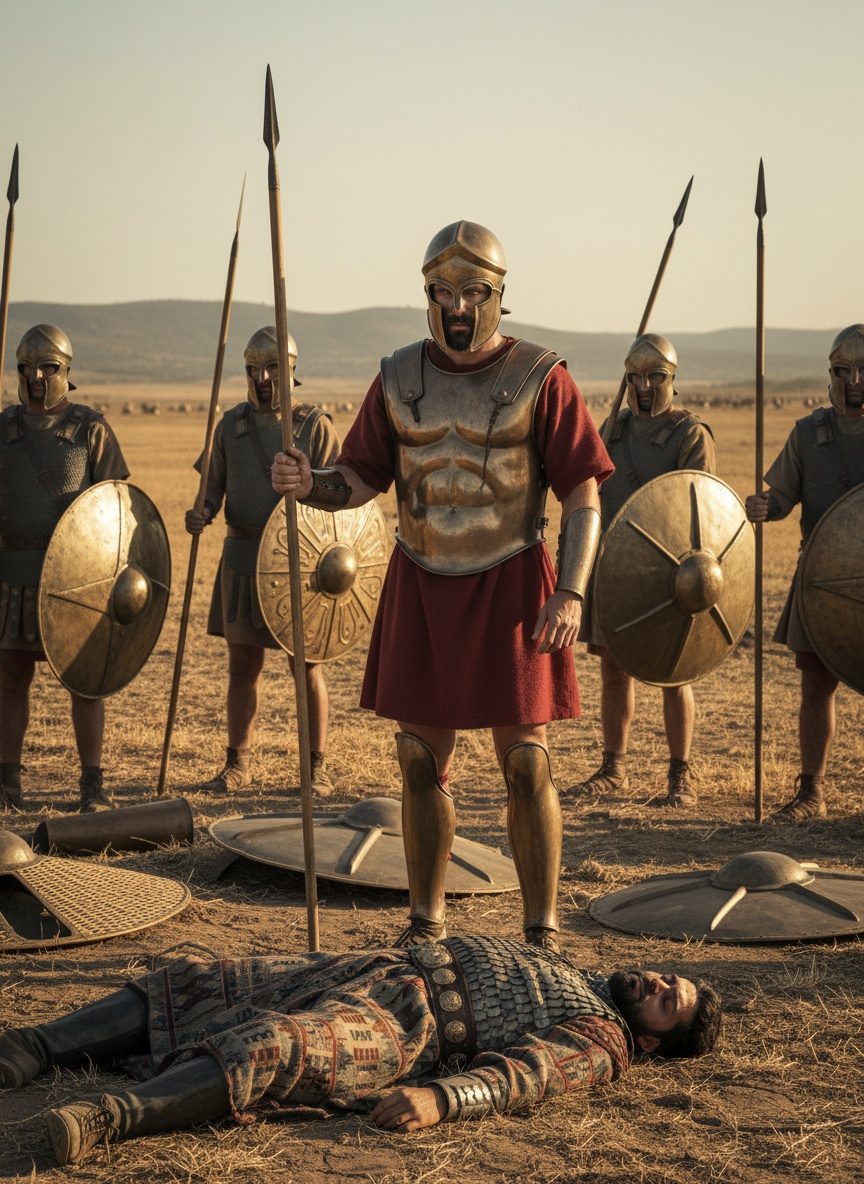
As the sun inched towards the horizon, casting elongated shadows across the battlefield, the Spartan general Pausanias surveyed the scene from atop a gentle rise. The ground was littered with the remnants of shattered spears and splintered shields, the tools and tragedies of war. Amidst the Persian dead, which lay strewn like autumn leaves unsettled in a chaotic gust, one figure drew his attention—Mardonius, the commander of the once-mightiest invading force Greece had ever faced.
The sheer scale of destruction that lay around was unprecedented. Over two decades of Persian incursions had brought devastation, yet today, the land bore witness to the resilience of Greek unity. Pausanias, heavily armoured, stood as a pillar of Spartan discipline. His men, renowned for their unwavering resolve, awaited his signal. Would he choose vengeance, or something nobler?
A Moment of Decision
Pausanias, son of Cleombrotus, was not merely a warrior—a tactician shaped by a land where honour was currency. Sparta demanded valour both in battle and, lesser-known, in times of victory. As his gaze met that of the fallen Persian commander, there was a pause, a moment suspended between time-worn customs of war and the whisper of a higher calling.
It was during these precious few seconds, with the anxiety of battle still vibrating through the air, that Pausanias enacted an unorthodox decision. Bowing respectfully over the body of Mardonius, he issued the unexpected order for silence. This act, so contrary to the unbridled celebrations or vengeful retributions history had taught men were due, hushed the murmurs of his troops. The men who revered strength above all took note; their leader was not merely commanding a battlefield, but the annals of memory itself.
The Burial with Honour
With the command issued, Spartan soldiers, joined by their Greek allies, moved with solemnity to prepare Mardonius’s body. It was not the ritual of victors ridiculing the vanquished; this was a scene echoing with respect, a gesture of tribute to a worthy adversary. The task was meticulous; hands, unshaken by battle but sombre and respectful, laid the Persian to rest with all the rites befitting a warrior of noble standing.
In doing so, a profound message was sent across the plains of Plataea: humanity could reside even in the relentless heart of war. This was not a lesson anticipated amid swords and shields, but Pausanias had elevated the day’s triumph beyond mere tactical victory. Underneath the unyielding sun, a Greek general honoured the ethos of xenia—hospitality, respect, and understanding, even towards an enemy who had threatened to uproot their world.
An Unexpected Reverberation
Those who had braced for pillage and slaughter instead witnessed an act of kindness that radiated outwards, a seismic tremor in the way conflicts might be imagined hereafter. For the surviving Persian soldiers, spared as much by the Greek's respect as by their victory, this burial was more than a funeral—it was acknowledgment, a concession that their effort was not mere folly.
This decision did not simply disarm the immediate aftermath; it resonated deeply within the walls of Greece itself. Stories of the battle’s close spread like wildfire through the tongues of survivors. A warrior's story, but also one of diplomacy, stretched its tendrils back to the city-states, infusing the air with notions of honour entwined with compassion as a requisite for nobility in the aftermath of war.
The Mark of True Victory
The memory of Pausanias’s actions endured, whispered in hushed tones across generations. It spoke of victory won not just through brute force, but with the elegance of a spirit keen on recognising the shared threads of humanity. An unexpected legacy from the dust of Plataea: the potential for humility in the hearts of those who wielded power over life and death.
In the fabric of history, as wars and rivalries continue to shape the human experience, the tale of Pausanias in 479 BCE at Plataea challenges us to ponder what true victory might mean. It suggests that our greatest strength lies not in the intensity of our might, but in our capacity for unexpected grace. A king was honored, and in this rare act, a page of history was gilded with the wisdom to perhaps live by another day.