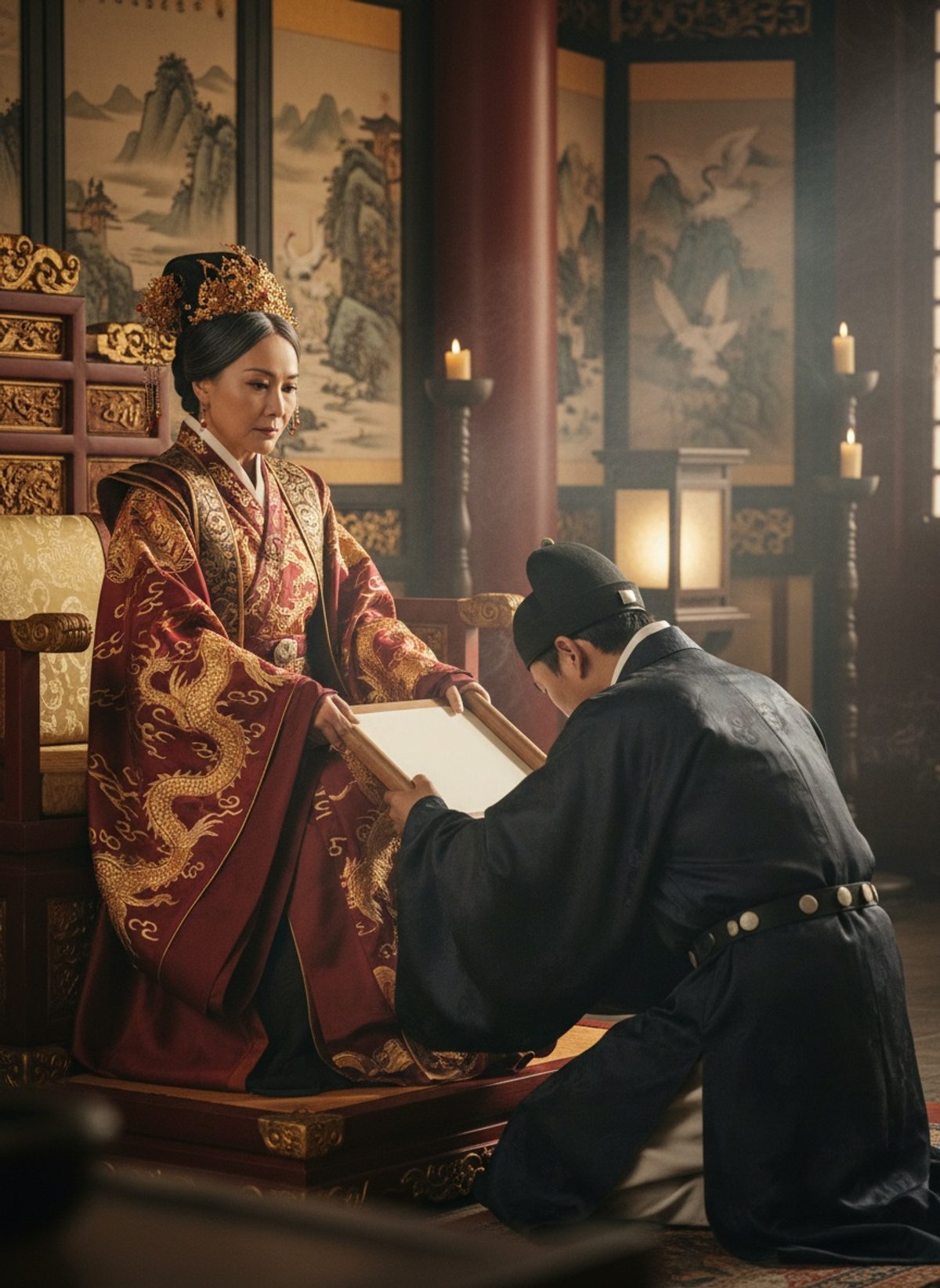
The sun cast long shadows on the ancient stones of Ur, painting the thick walls with a golden hue as a relentless desert wind swept dust across the land. It was a city of enduring grandeur, but turmoil festered beneath its surface. In this ancient cradle of civilization, events were unfolding that would not only alter the course of empires but would also echo down the corridors of history through the words of one extraordinary woman.
Amidst the upheaval, Enheduanna, the esteemed high priestess and daughter of Sargon, ruler of the Akkadian Empire, found herself at the center of a political maelstrom. Her father, Sargon of Akkad, was a legendary figure, renowned for building the world's first empire. As a prominent figure in the city of Ur, Enheduanna wielded considerable influence, both religious and political. However, such power was as perilous as it was prestigious.
In the year 2285 BCE, the balance of power shifted violently. A rebellion tore through the city, and a dissident faction, emboldened by defiance, seized control of Ur. The uprising was swift and brutal, and Enheduanna, embodying the spirit of both her father and the goddess she served, was dragged from her place of sanctuary. Stripped of her status and exiled from the temple, she found herself at the mercy of the elements, her voice silenced and her positional authority uprooted.
Kneeling in the dust, Enheduanna faced a stark reality. Her enemies had intended to erase her influence and extinguish her light. Yet, in the throes of adversity, she did something unprecedented—she wielded the power of poetry, crafting hymns with the intimate fervor of a devoted supplicant. Her words were not just pleas for divine intervention but an expression of human resilience, a bridge between mortal and divine realms.
Enheduanna composed hymns to the goddess Inanna, her patron and the archetype of feminine power, love, and war. The verses resonated with the fervency of a believer and the authority of a scribe unyielded by circumstances. "Lady of all the divine powers," her hymn began, echoing off the desolate walls of her exile, weaving a tapestry of devotion and determination. Through these lines, Enheduanna did what no one before her had dared; she signed her name to her work, stepping out of obscurity to claim her voice in a male-dominated tradition.
Her plea found its mark. Through divine providence or human agency, fortune favored Enheduanna once more. The political tides shifted, and she was restored as high priestess of Ur, her name and words vindicated by an alliance with the goddess of love and war. Her hymns to Inanna, laden with passion and erudition, survived millennia, preserved on clay tablets that defied the ravages of time. The world came to know Enheduanna not just as a daughter of empire but as history's first named author, a testament to the power of self-expression enduring across centuries.
The intricacies of her writing reveal glimpses of a sophisticated culture, interconnected with divine myths and earthly struggles. Enheduanna did more than compose; she forged a literary identity that breathed life into her people's religion and history. Her invocation of deities and her vibrant depictions are echoes of a civilization reaching for the divine. Her work illuminates the enduring legacy of the goddess Inanna, establishing a cultural tapestry that influenced the religious practices and literary traditions of Mesopotamia and beyond.
Ahead of her time, Enheduanna personified a unique blend of intellect, authority, and spirituality. Her courage to affix her name to her creations acted as a beacon for future generations, demonstrating that the pen could wield power equal to the sword. The resonance of her writing served not only her contemporary peers but continues to inspire those who discover her story in the silent corridors of museums and the pages of history books.
In a narrative swept away by the annals of forgotten libraries and buried tombs, Enheduanna's lived experience tells a compelling story of survival and triumph. Her hymns remain one of the earliest and most vivid examples of a human voice transcending the temporal, capturing the universal human struggle for meaning and identity. Across four thousand years, the vibrancy of her verses has lingered, unlocking the past with the whisper of an ancient tongue, offering us a rare glimpse into the heart of humanity at the dawn of history.
Enheduanna's journey from exile to restoration reflects not only a personal odyssey but a broader acknowledgment of the transformative power of words. Her ability to rise above rebellion and reclaim her place is emblematic of a timeless struggle, highlighting resilience as a core facet of the human condition. And so, her legacy, inscribed on fragments of clay, survives as a chronicled victory of spirit over suppression. It remains an enduring reminder of the potential each voice possesses to shape the world beyond its time, asserting that even in the face of obscurity and silence, words have the power to transcend, to heal, and to endure.