The air was thick with the acrid scent of burnt timber and the low, mournful sound of wind winding through the skeleton of a once-great city. A relentless drum of footsteps marked the advance of Assyrian soldiers, their silhouettes stark against the brooding horizon. Ashurbanipal, perched on a rise, watched as the last plumes of smoke curled up from what remained of a defiant settlement. The scene was a testament not just to the power of his armies but the unwavering determination behind his gaze—a monarch who knew the value of both annihilation and preservation.
In 668 BCE, as Ashurbanipal ascended the throne of the Neo-Assyrian Empire, he inherited not only the title of king but also the weight of ambition—an ambition that would carve his name permanently into the annals of history. Renowned for his wisdom and feared for his ferocity, Ashurbanipal was an enigma of dualities. He was as much a scholar as he was a warrior, dedicating himself with peculiar fervor to collecting the knowledge of the world while wielding brutality in battle like an artist's brush. Under his rule, Ashurbanipal amassed the world's greatest collection of clay tablets, inscribed with tales of gods and calculations of stars, alongside brutal victories wrought by Assyrian steel.
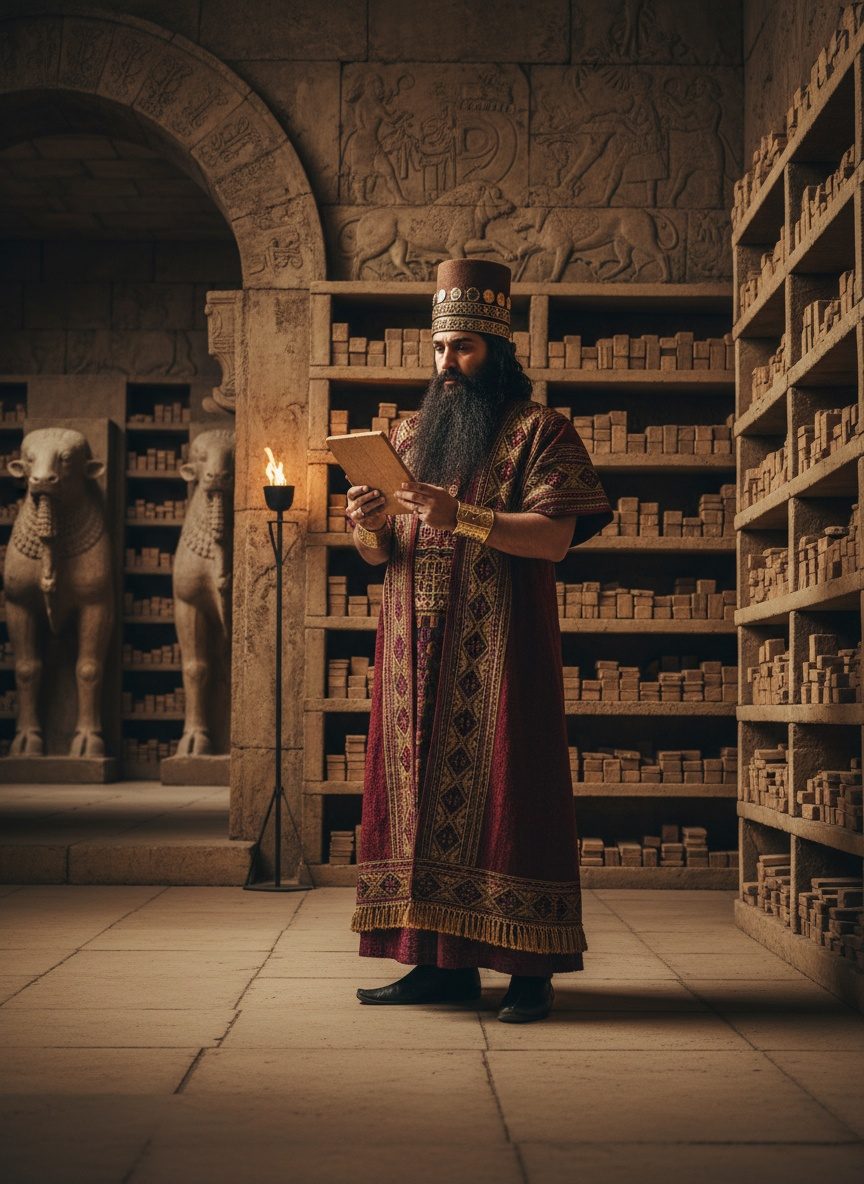
The Library of Ashurbanipal, nestled in the heart of Nineveh, was nothing short of a marvel. It was a repository for over 30,000 clay tablets, painstakingly gathered, written in the ancient Akkadian and Sumerian languages. These tablets spanned across disciplines: astronomy, medicine, literature, and legal texts—the collective wisdom of ancient civilizations. Within its walls, epic poems like the "Epic of Gilgamesh" found sanctuary, preserved for epochs beyond Ashurbanipal’s reign. For this king, knowledge was indispensable. Not just a tool for administration but a means to assert dominance over the intellectual sphere of his time—a dominance echoing the sprawling extent of his empire.
Yet, Ashurbanipal's thirst for knowledge was mirrored by an unrelenting quest for power, which manifested in the calculated ferocity with which he quashed rebellion and dissent. His campaigns were focused, yet devastating. He pursued his enemies with an almost personal vendetta, understanding well that the stability of his library, and indeed his empire, was underpinned by fear as much as admiration.
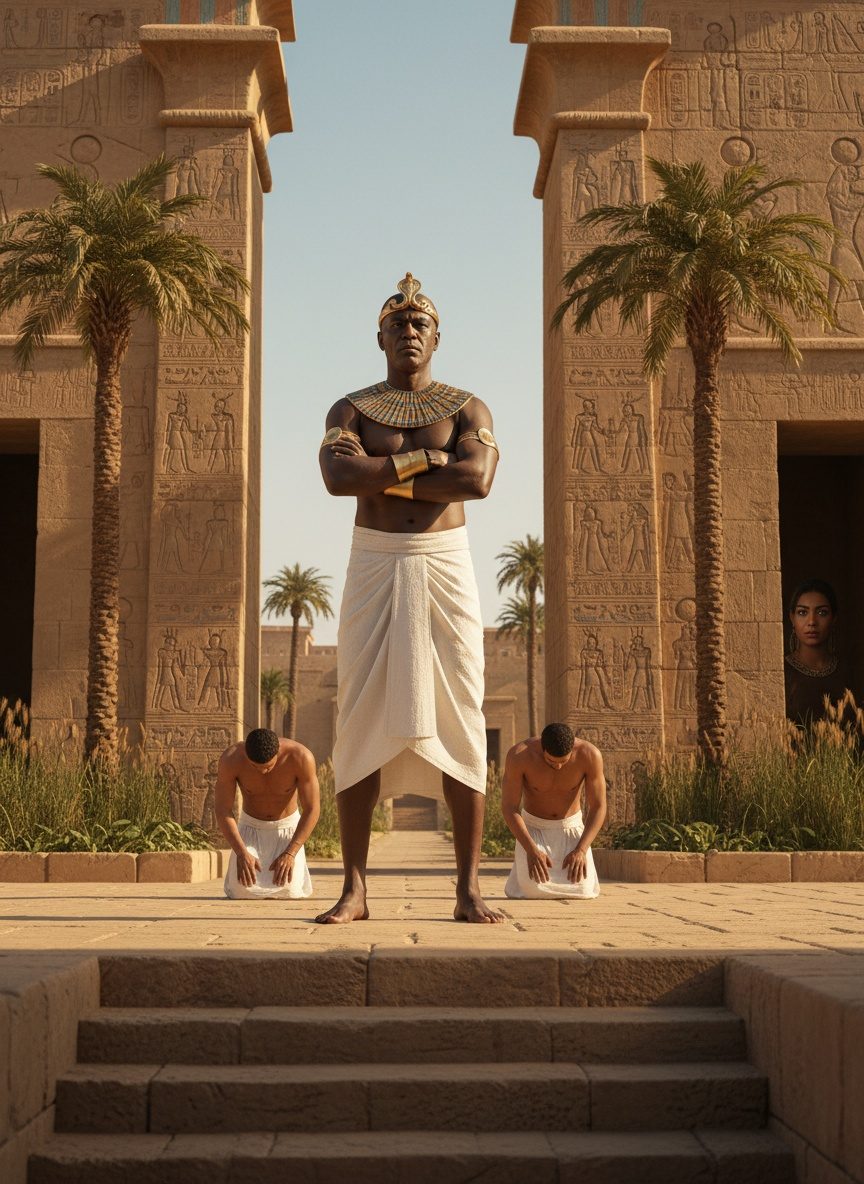
Consider one infamous campaign against the Elamites. Elam, a storied city with its own proud history, came under the full wrath of the Assyrian king. Ashurbanipal's army turned the ancient site into a charred wasteland, so thorough in their destruction that it echoed the blunt and final nature of his conquests. The systematic demolishment was meant as a warning to other rebellious regions and a testament to the price of defiance amid Ashurbanipal's relentless march. Entire Elamite cities were ground to dust, and captive monarchs were paraded, their humiliation a spectacle for all to see—a visual cue that insubordination was tantamount to obliteration.
In this dual role as literary patron and military tyrant, Ashurbanipal exemplified an imperial contradiction. His reign was both progressive and regressive—marking a zenith in cultural preservation on one hand, while on the other, etching devastation into the soil of conquered lands. That his passion for literature flourished in tandem with campaigns of terror is a juxtaposition as fascinating and complex as the tablets nestled in the depths of his grand library.
Back within the confines of Nineveh, the library was meticulously organized. It was here that Ashurbanipal's literary passion became evident—his marginalia on tablets hinting at a king deeply engaged with the knowledge he curated. Ashurbanipal didn't just value the accumulation of texts; he engaged actively with them, his fingerprints literally and metaphorically throughout. Assyrian scribes possibly copied much material at his behest, reissuing ancient knowledge in a refurbished format that could last for centuries.
Ironically, the relentless drive that fueled Ashurbanipal's violent campaigns also underpinned the thorough and methodical creation of his library. His was a legacy of calculated ferocity matched only by his intellectual aspirational heights— feeding an empire with stories and knowledge while extinguishing resistance with fire and sword. The very traits making him a cultural beacon also painted him a despotic ruler to those subject to his whims, a contrast as indelible as cuneiform on clay.
As the sun set on Ashurbanipal’s era, the Library of Ashurbanipal stood as a beacon amid the ruins he himself had sown. It survived as a silent witness to the complexity of a man whose paradoxical reign would echo through history—the calculated tactician who saw in storytelling a way to endure beyond the sword, the poet-king who understood well that stories have the power to bind as firmly as chains.
The tale of Ashurbanipal matters precisely because it challenges our understanding of power and legacy. It is an intricate dance between light and shadow, preservation and destruction, understanding and obliteration—a vivid reminder that often the forces most committed to saving culture can also threaten to obliterate it. In the Library of Ashurbanipal, the paradox of civilization finds its mirroring—the narratives of people in clay, preserved amid the ashes of empire.