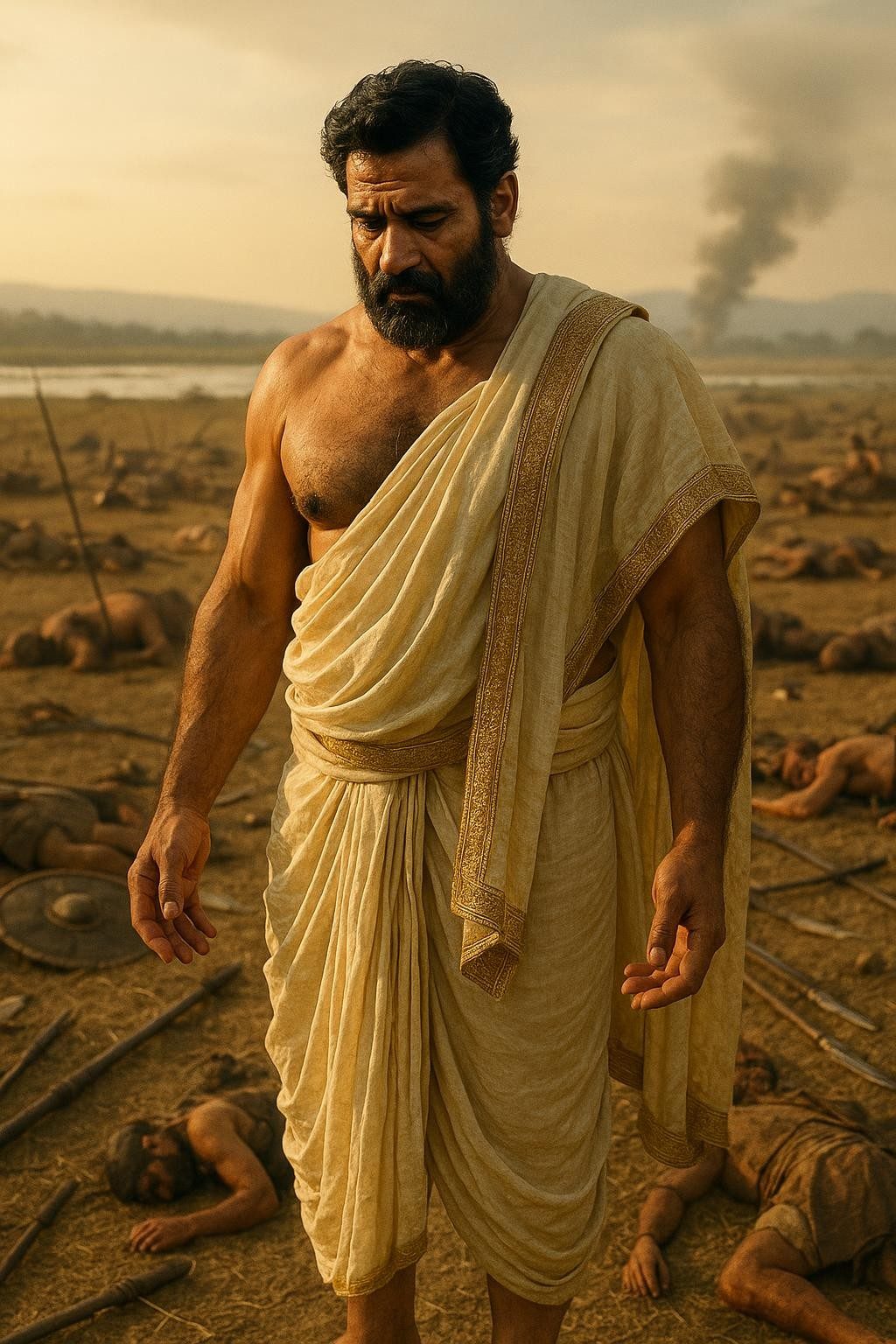
The warmth of the midday sun beat down relentlessly on Kalinga, a kingdom nestled along the eastern coast of the Indian subcontinent. The air was thick with an eerie silence, broken only by the distant caw of crows circling overhead. Underneath the azure sky, the land lay scarred and broken, strewn with the remnants of a battle the likes of which the world had never seen. It was here, amidst the finality of life and the weight of victory, that Emperor Ashoka stood over the lifeless bodies of 100,000, king of a conquered land yet captive to a crushing revelation that belied his triumphant sovereignty.
Only hours before, the kingdom of Kalinga had been wrapped in the chaos of war, the clangor of swords and cries of the wounded echoing off the unforgiving cliffs lining its shores. The Maurya Empire, over which Ashoka ruled, had expanded its boundaries with methodical precision, but Kalinga resisted his dominance fiercely. Spanning from the embattled banks of the Daya River to the heart of its fertile lands, the Kalinga conflict had drawn the empire's greatest military might — and left its mark in the form of one of history's bloodiest confrontations.
For Ashoka, the battle was more than the conquest of territory; it was a passage through the labyrinth of ambition to the hollow core of human suffering. As morning fog lifted to reveal the harrowing aftermath, the true cost of his victory began to suffocate him. This was not a story of glory nor a reflection of his father's legacy, but rather a mirror revealing the harrows of human desire unchecked by compassion. In the stillness of that battlefield where the living were haunted by the cries of the fallen, Ashoka experienced a seismic shift within his soul.
Looking across the fields ravaged by the turmoil of his own making, Ashoka was enveloped by a profound grief, an agony searing in its intensity. His gaze lingered on the faces of the slain, each one a testament to a life extinguished, a family shattered. Amid this personal reckoning, he realized that his throne, gleaming and seemingly indestructible, was forged not of power and prestige but of the crushed spirits and bodies of conquered people. It was in this fleeting eternity, amidst the acrid scent of charred pyres, that Ashoka resolved never again to wield the sword as the arbiter of his rule.
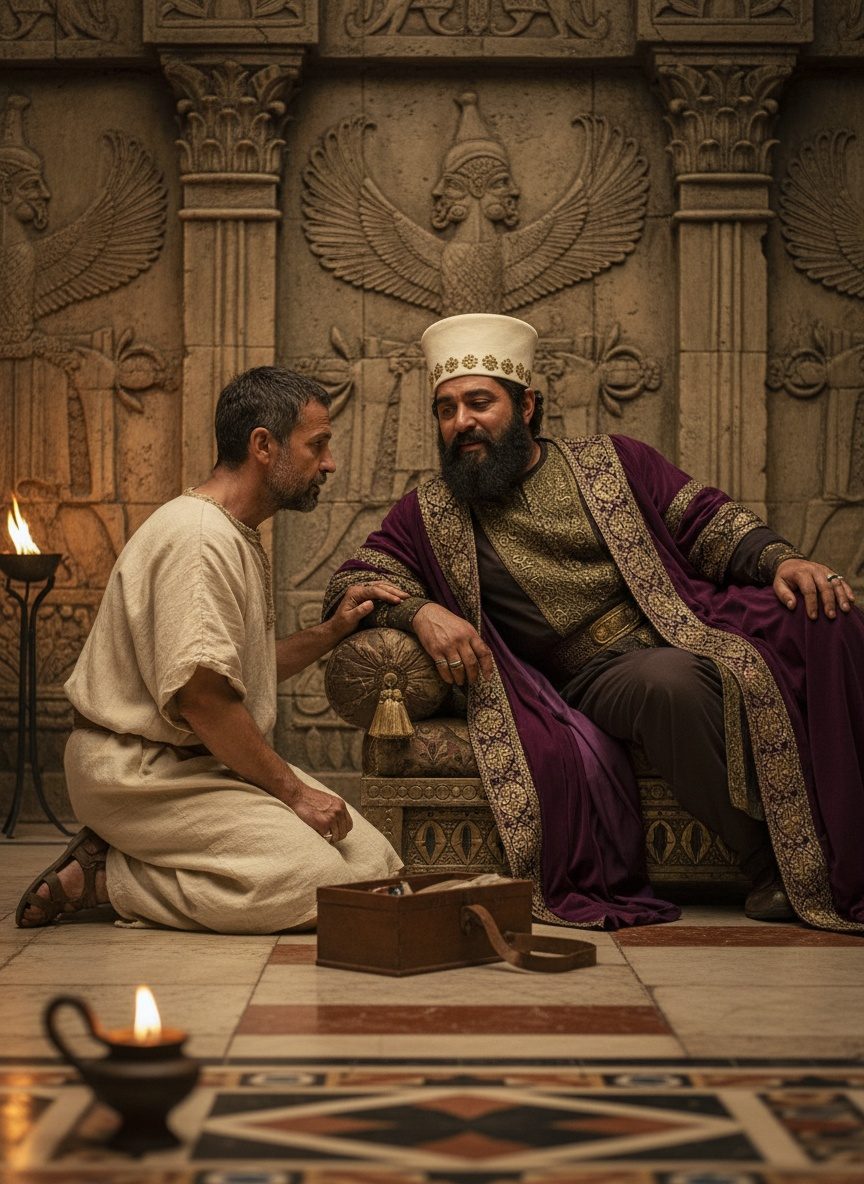
Renouncing the path of conquest was not merely an act of remorse; it was a radical transformation of governance. Returning to the capital of Pataliputra, Ashoka turned his energy towards building an empire grounded on the principles of Dhamma — a philosophical commitment to truth, non-violence, and moral living. He cast aside the traditional symbols of triumph, choosing instead to adorn his rule with edicts carved into stone pillars and caves across his realm. These proclamations, detailed and unequivocal, called for the compassionate treatment of subjects, animals, and even prisoners of war, an unprecedented move in an era dominated by might and retribution.
The edicts, towering and immortal, extended beyond mere words into a blueprint for governance that embraced inclusion and respect for all faiths. Ashoka embraced Buddhism, not as a state-imposed religion but as a guiding ethos to meld his personal transformation with his imperial obligations. He sent emissaries across distant lands, advocating for a world unified by shared values rather than divided by strife, thus sowing the seeds of a spiritual awakening and cross-cultural dialogue that transcended borders.
For Ashoka, peace was not an ephemeral concept but an enduring pursuit. The aftermath of Kalinga altered his trajectory from a warrior king to a proponent of social welfare. He redirected resources to erect hospitals, universities, and irrigation systems that nurtured prosperity and well-being across the empire. His strategies laid the groundwork for a unified Indian cultural and political identity, echoing through centuries with the principles that would eventually find resonance in periods of reform and revolution.
The transformation of Ashoka, from a conqueror consumed by the spoils of victory to a ruler enlightened by the value of every life, stands as a poignant testament to the possibility of redemption and change. It is a narrative that challenges the traditional portrayal of history's leaders as immutable vessels of fate, unfolding instead as a profound introspection that reshapes the very nature of power itself — from dominion over people to a commitment to their welfare.
In the silence that had once wrapped the field of Kalinga in despair, a quiet revolution was born. An emperor, having stood amid the ruins of war, chose to kindle the flame of compassion over the fires of conquest. This decision transcended Ashoka's mortality, reverberating across centuries and civilizations, a story they never taught you in school, but one fundamentally altering the course of human history.
So, what do we draw from Ashoka's story? In an age filled with echoes of past identities, his journey reminds us that true power lies not in the force of arms but in the courage to transform our intents and actions. Ashoka teaches that in moments of darkness, a beacon of compassion can illuminate the path to enduring peace, a lesson that continues to resonate, urging humanity forward through the ever-circling caws of history's unending cycles.